
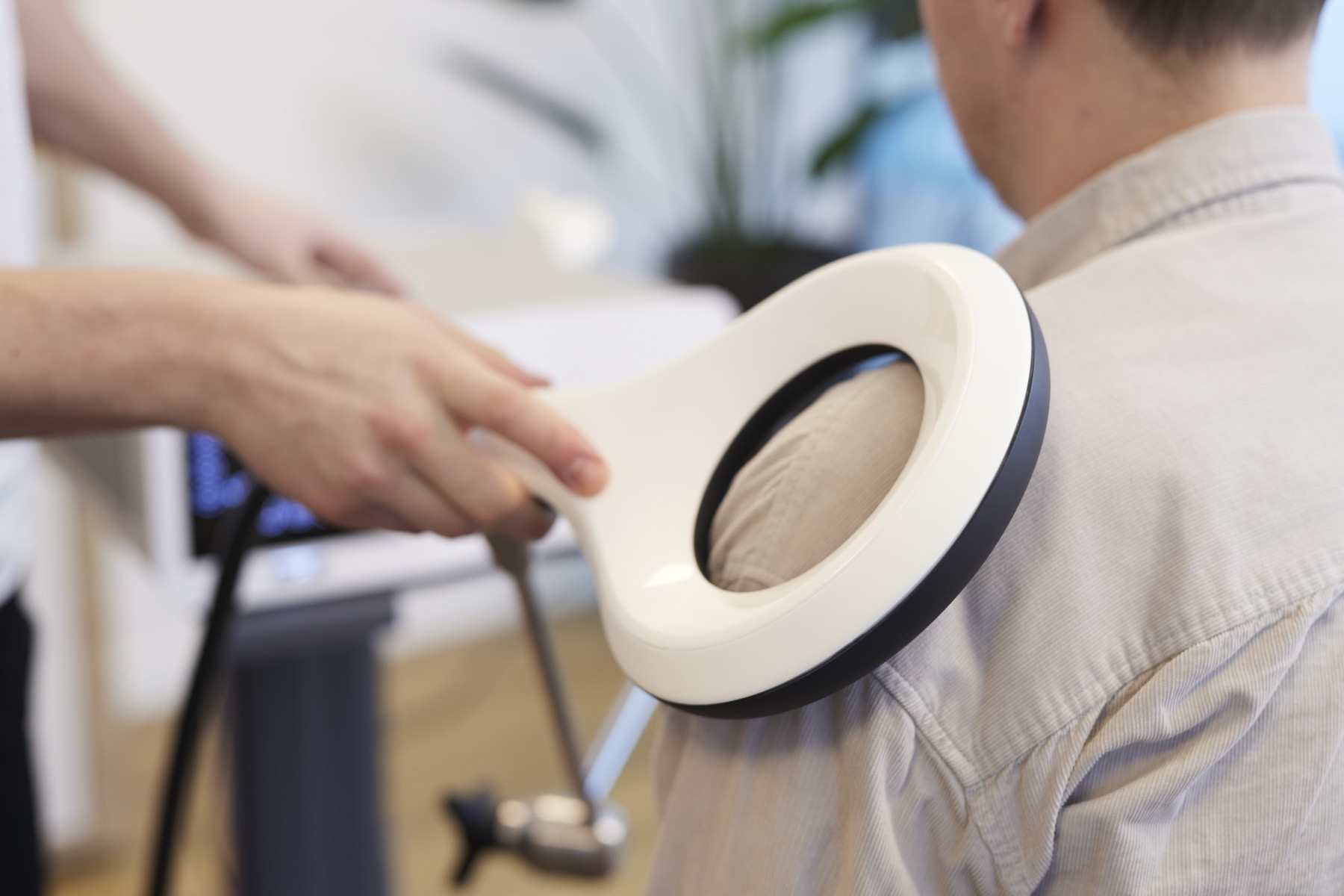
What is EMTT?
EMTT stands for Extracorporeal Magnetotransduction Therapy. An applicator releases magnetic pulses from the outside to the treatment area, usually through the clothing. This is a different technique than the acoustic shock waves of shockwave.
What symptom has improved the results?
In a randomised study in 86 adults with long-term symptoms of tendons in the shoulder without calcification, pain and shoulder function improved on average more with focused shockwave plus EMTT than with focused shockwave plus placebo EMTT. The benefit was visible for up to 24 weeks. Both groups also received physiotherapy.
What does that mean to you?
This study suggests an additional benefit from EMTT within this particular combination. It does not prove that the combination works better for all shoulder symptoms, heel pain or Achilles tendon symptoms. People with calcific shoulder tendinopathy were excluded from the study. The 2025 JOSPT guideline recommends against shockwave for non-calcific rotator cuff tendinopathy. The positive combination study therefore does not make this approach an established standard. We discuss these differences and the alternatives for your diagnosis.
A personal choice, with evaluation
EMTT is not a standard extra treatment for every route. We discuss the expected added value, the costs, possible side effects and alternatives. Temporary discomfort or redness may occur. Your health and any implants will be assessed in advance using the device's instructions for use.
Pre-clearance
During the intake we assess whether additional EMTT can be relevant. You will receive a separate treatment proposal with explanation and costs. The ultrasound in a paid intake does not mean any obligation to take EMTT or shockwave.
The justification for the combination concerns one study in a specific group of patients, no guarantee of individual outcome. Availability per location is confirmed prior to take-off.