Two different ways of treating
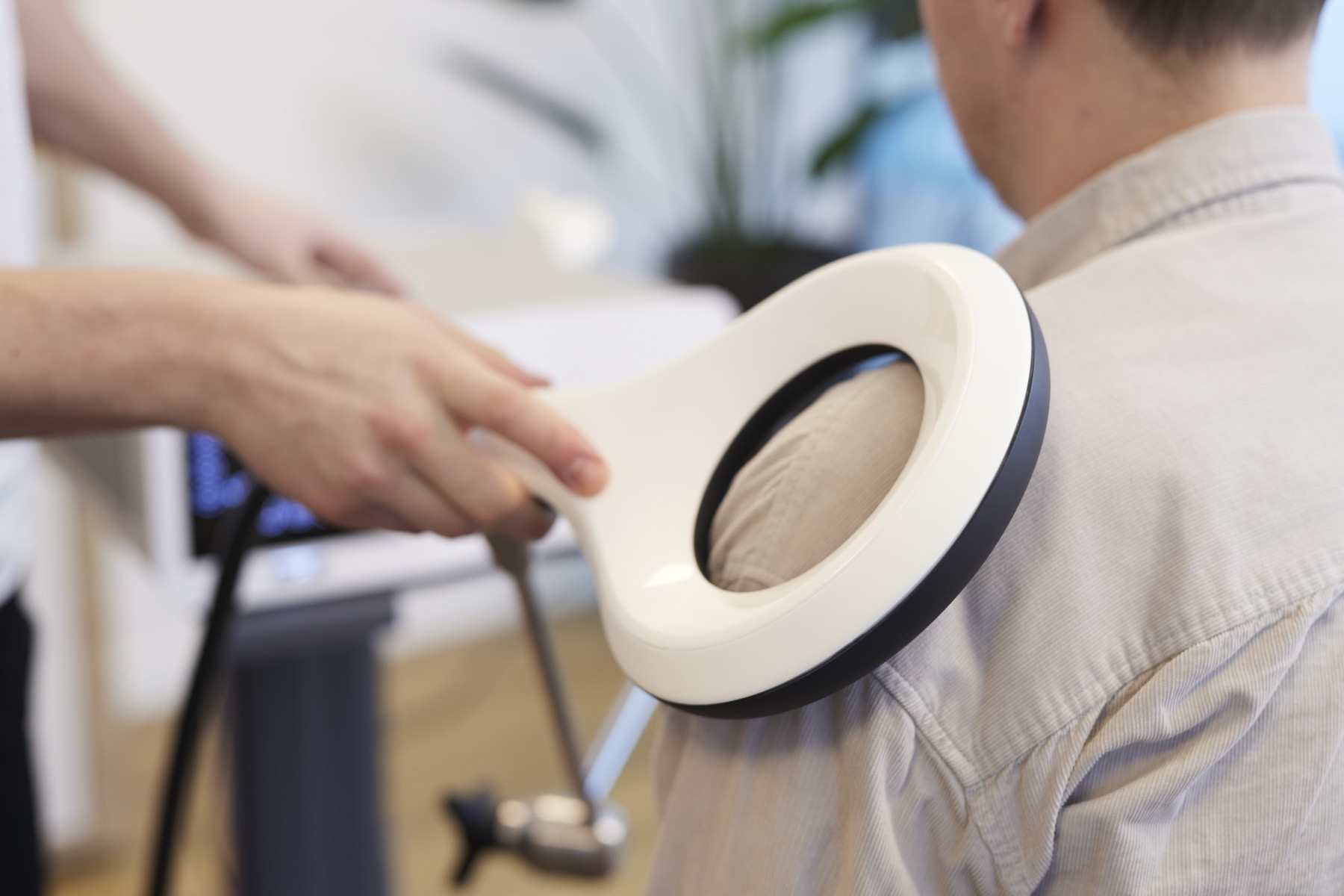
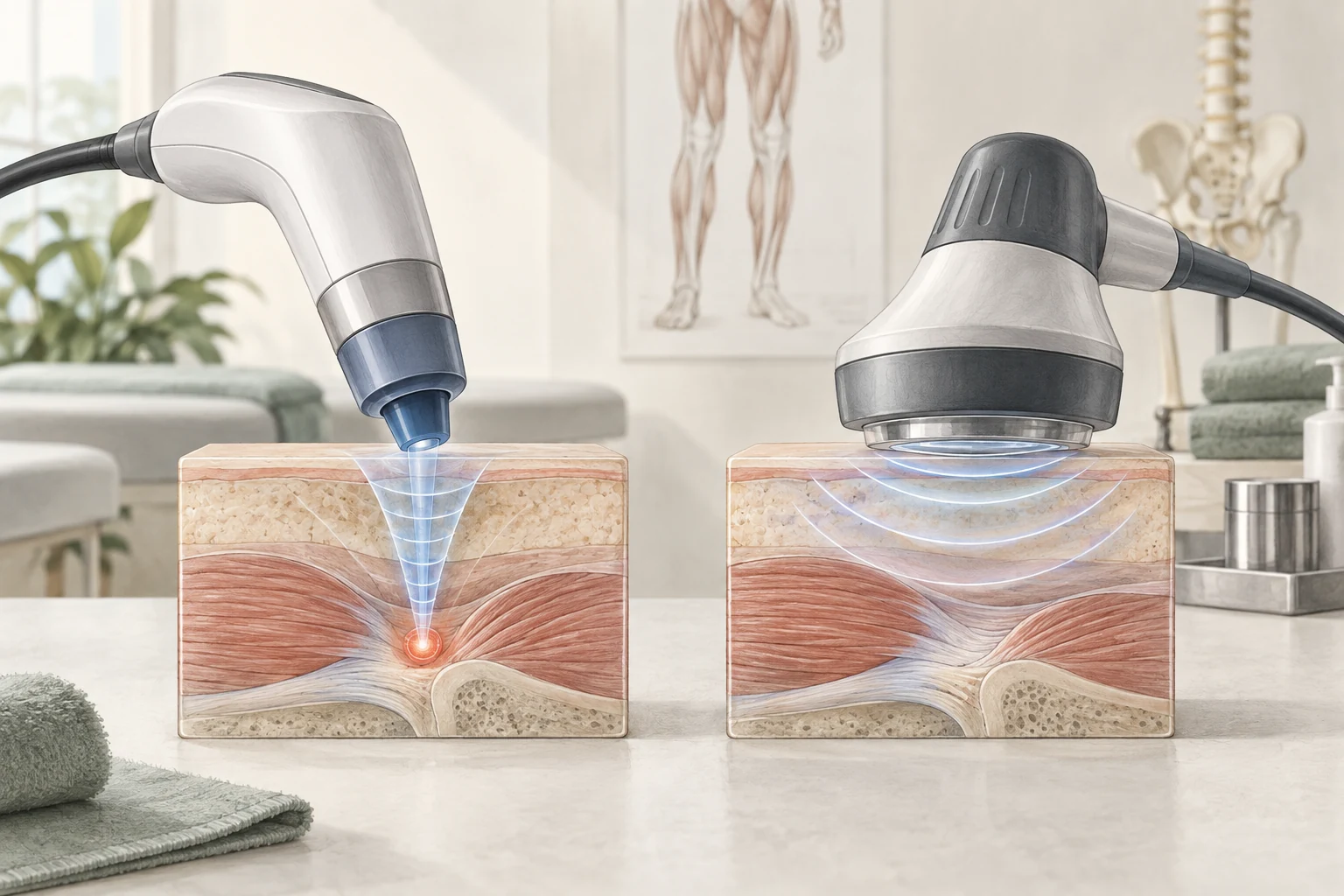
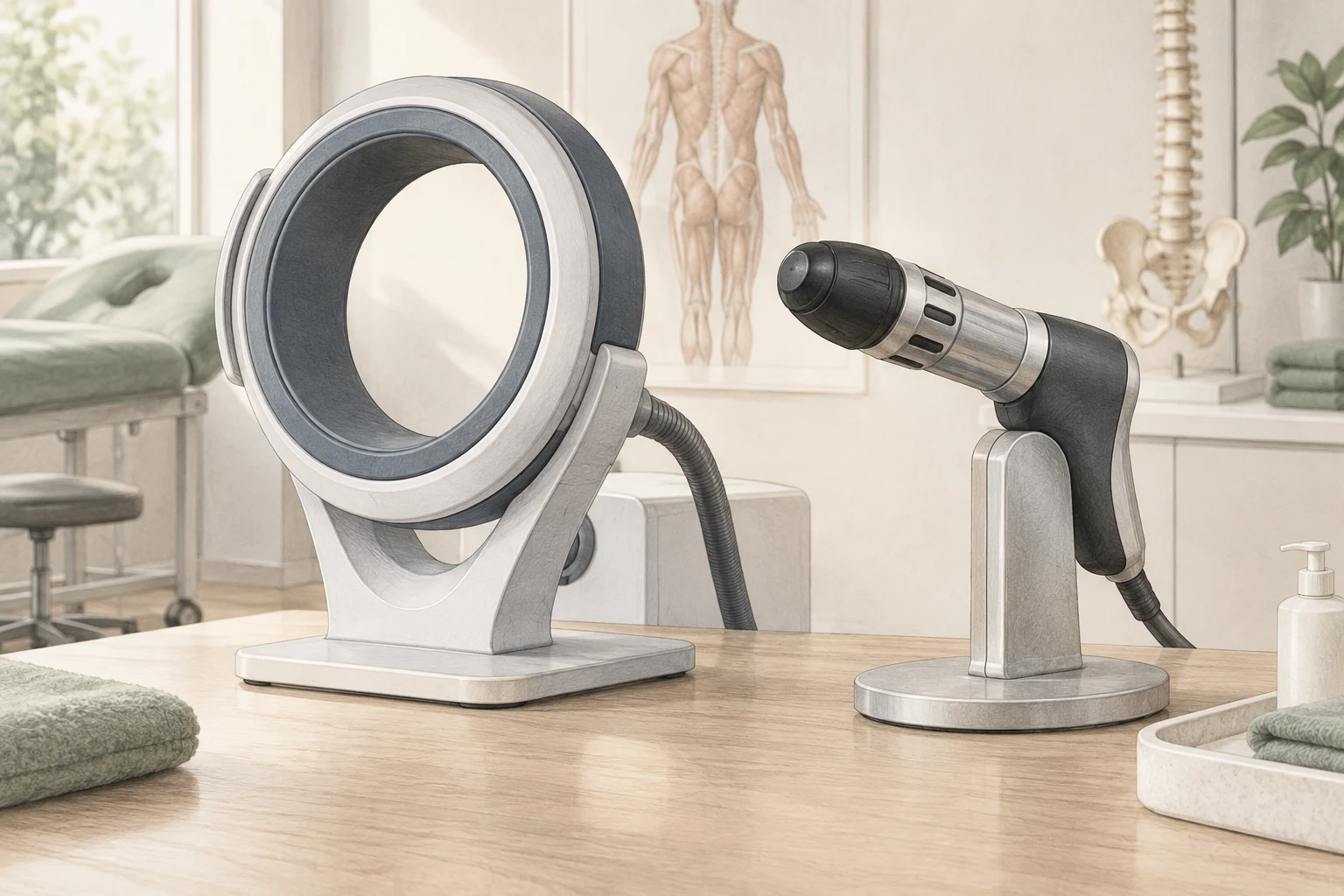
An applicator and a device can make two treatments look alike. However, the physical principle used differs. In shockwave mechanical pulses are transmitted. EMTT uses a pulsating electromagnetic field.
There are also differences within shockwave. The ISMST distinguishes focused shock waves and radial pressure waves. A comparison between EMTT and shockwave thus remains incomplete if it is not clear which shockwave application is meant.
The technical explanation is relevant to the possibilities and security. It does not in itself prove which treatment for a specific symptom works best. For that, you need to look at clinical trials and the site within a treatment plan.
Compare the question, not just the experience
EMTT may feel different during a session than shockwave. This may be important for tolerability, but more comfortable treatment is not automatically a more effective treatment. Also a striking sensation says little about the final result.
So start with the goal. Are you looking for less pain with a particular task, support an active build-up or an alternative after previous care did not help enough? A clear question prevents you only choosing on the basis of how a device treatment sounds.
Then ask what change is reasonably expected and on which basis. An explanation of possible biological processes should be distinguished from a demonstrable improvement in patients with your diagnosis.
What do competitions learn and not?
One recent placebo-controlled study of EMTT found favorable outcomes in a mixed group with musculoskeletal symptoms. That study compared EMTT to placebo, not to a full-fledged shockwave program. It therefore does not provide a general ranking between the two techniques.
A combination study answers another question. When everyone gets shockwave and only one group of additional EMTT, you investigate the addition. You don't automatically know how EMTT only relates to shockwave alone.
So when you make a claim, pay attention to the word better. Better than what, to whom and at what point? Without that information, a technical difference may be mistakenly presented as clinical superiority.
A comparison in five parts
| Component | Shockwave | EMTT |
|---|---|---|
| Principle | Mechanical waves or pressure pulses | Electromagnetic fields |
| Specification | Focused or Radial should be clear | The concrete application must be clear |
| Evidence | Difference per diagnosis and protocol | Still limited and applicable |
| Security | Depending on area, technique and medical situation | Own screening, including on electronic devices |
| Evaluation | Pain and functioning at appropriate load | The same clinical targets, not only technical results |
This table is a call help, not a self-choosing menu. The clinician must indicate which parts are decisive for your situation. Some personal circumstances may rule out an option before comparing comfort or cost makes sense.
Also ask about the practical load of a route. The number of appointments, travel time and possible additions may vary, even when the sessions themselves are short.
When is combining a separate decision?
A combination deserves its own justification. It is not enough to say that two different mechanisms complement each other by themselves. A plausible explanation for an effect is not yet evidence that patients experience more benefit.
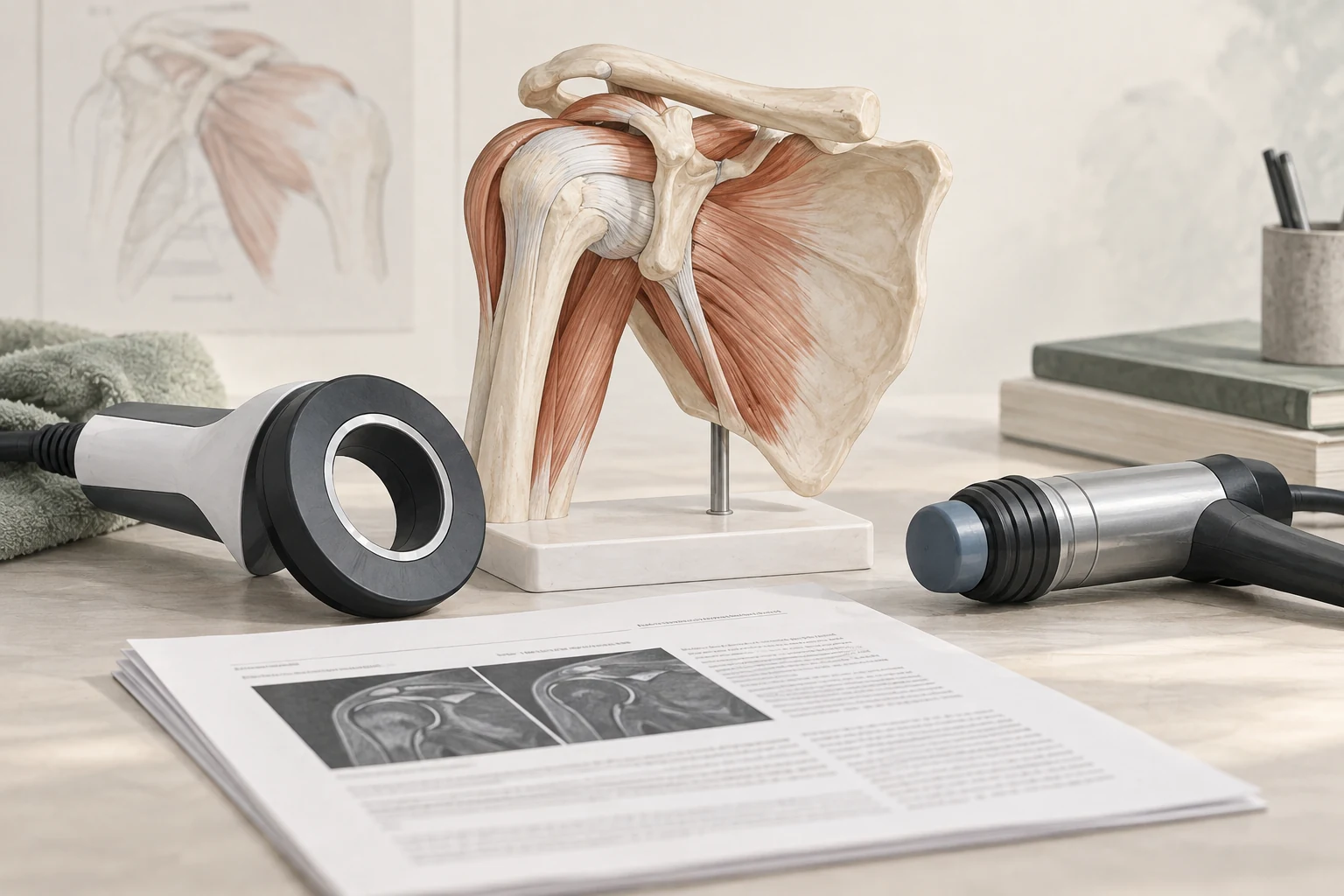
The specific shoulder examination for focused shockwave plus EMTT gives a positive but limited signal in long-term non-calcified rotator cufftendinopathy. The JOSPT guideline from 2025 does not recommend shockwave without calcification; it is not a general standard for shoulder symptoms or other tendons.
In case of a package, ask what each component adds and when the addition is assessed. If the proposal is related only to the available equipment, there is still a patient-related reason. A simpler programme can sometimes be easier to follow and evaluate.
Make the choice part of an active plan
In case of symptoms from the tendons, recovery is also about what you want to be able to do again. A device choice should not overshadow the build-up of activity. Discuss how the treatment is related to guidance, exercises and daily stress.
Please note one identifiable target and a baseline before take-off. If multiple treatments start at the same time, your personal experience cannot determine exactly which part is responsible. A clear evaluation of the overall plan remains possible.
A good decision contains room to refrain from an additional technique. Uncertainty, cost or limited expected profit can be legitimate reasons for this. You don't have to try every available treatment to work carefully on recovery.
Frequently asked questions
Is EMTT the successor to shockwave?
No. It's another technology with its own research base. A newer technique does not automatically replace an older one. The relevant question is what application fits the diagnosis and what the expected added value is within the overall plan.
Can I choose based on what's less painful?
Tolerability may be considered when several appropriate options exist. First, it must be clear whether the treatment is appropriate in terms of content and medical fitness. A comfortable technique without sufficient reason for application is not automatically a better choice.
Does a combination prove that both techniques are mutually reinforcing?
Not automatically. A strong judgement on mutual reinforcement requires research that carefully compares the individual components and the combination. A positive result of addition alone does not prove a general biological synergistic effect.
Do EMTT and shockwave have the same contraindications?
No. The safety weighting must be made by technology and apparatus. Report relevant conditions, implants and aids to both. An earlier safe shockwave session does not give automatic permission for EMTT, and vice versa the same applies.
Sources and evidence
- ISMST – Recommendations and definitions ↗
Technical differences, clinical selection and safety balances in shockwave.
- Hollander et al. – EMTT versus placebo in musculoskeletal symptoms (2026) ↗
Study in 126 participants, without shockwave combination, with outcomes up to 12 weeks.
- Klüter et al. — ESWT plus EMTT for non-calcific rotator cuff tendinopathy (2018) ↗
Randomised study to add EMTT to focused ESWT in 86 adults; specific population and follow-up up to 24 weeks.
- Desmeules et al. – Rotator-cufftendinopathy guidance (2025) ↗
Diagnostics and active treatment of rotator-cuff symptoms; ESWT not recommended without calcification and possible option for calcification.
A personal follow-up step
From insight
to an appropriate plan.
At a paid intake, we'll discuss your symptom and do targeted research. ultrasound is included at no extra cost when it makes sense. Any treatments are agreed separately.
View the initial consultation