The question determines the research
Applying for a study ideally starts with a concrete uncertainty. Do you want to look at a tendon, assess a bone disorder or collect information for a possible procedure? The technique is chosen on the basis of that question.
It's understandable that in case of prolonged pain, you want the most extensive study. However, more image information does not always provide a better treatment decision. An investigation may also show findings that have little to do with your symptom.
So ask what a rash would change. When a normal and abnormal rash leads to the same plan, it is useful to discuss whether research is now needed. This makes the choice more substantive than just to be sure.
What can ultrasound add?
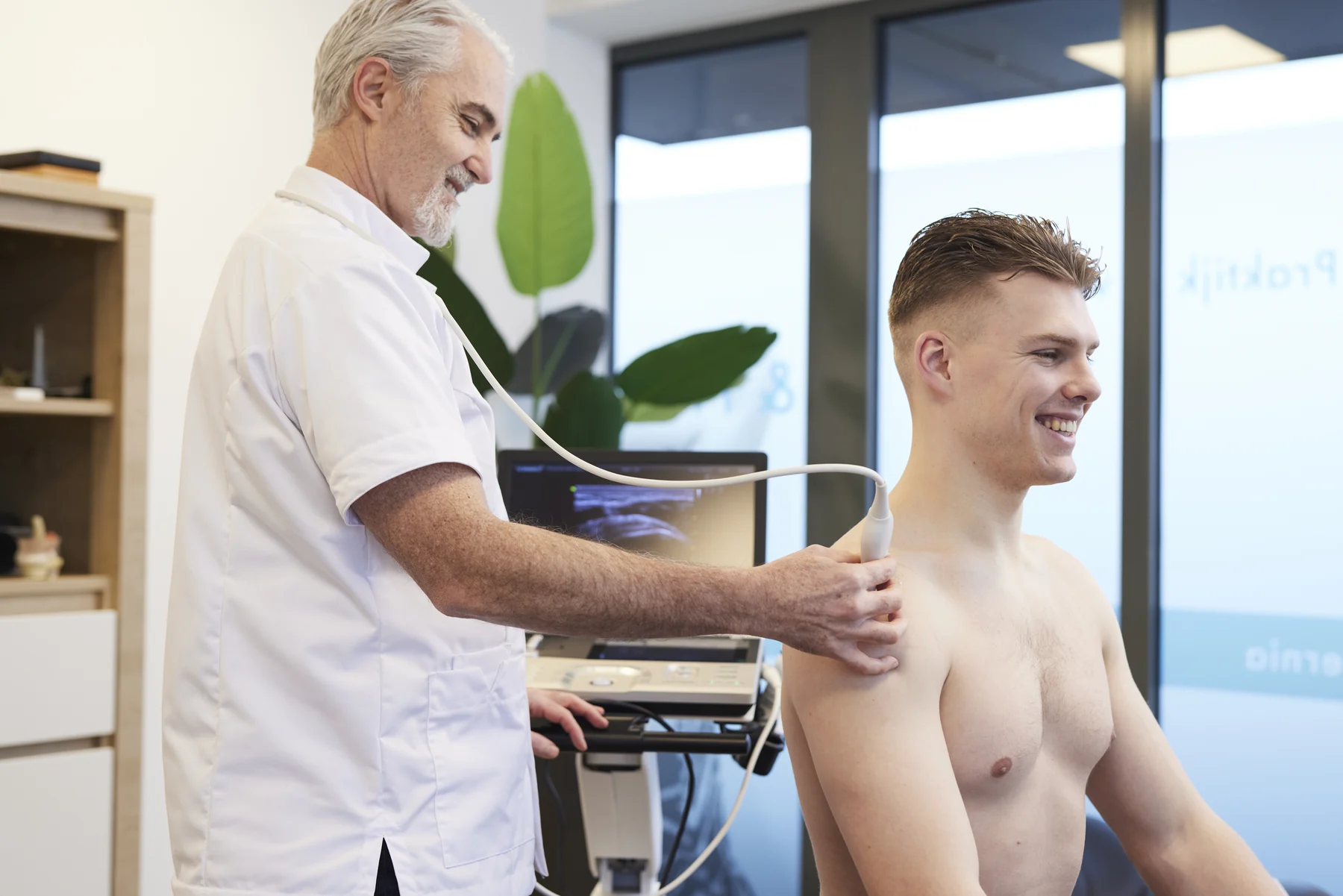
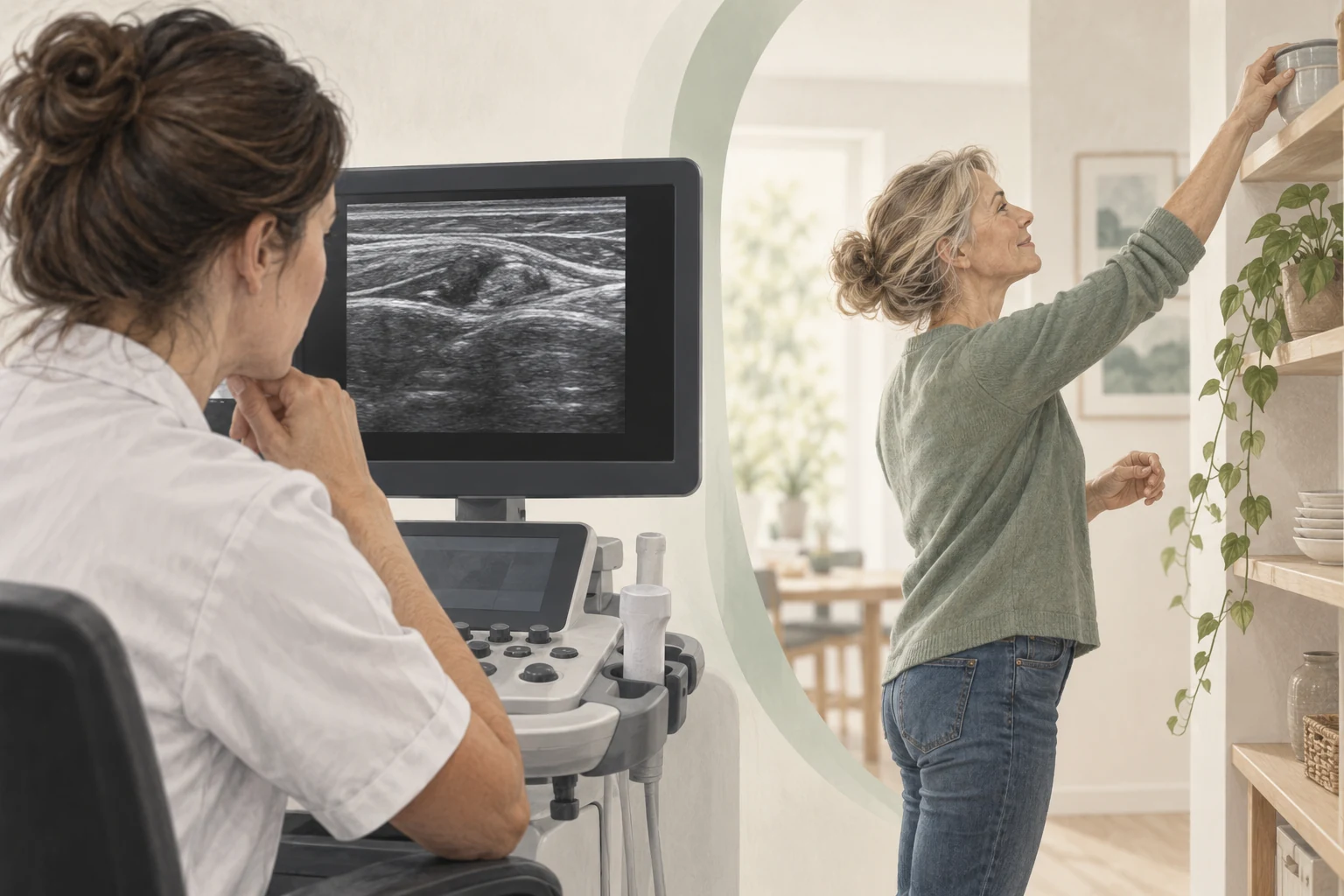
ultrasound uses sound waves and can make certain tendons and surrounding structures visible. The research can be tailored to a specific area. The interpretation remains dependent on a good question and expert execution.
At the Achilles Tendon is ultrasound according to the Dutch guideline is often the first choice when imaging is considered necessary. That doesn't mean every Achilles Tendon symptom needs an ultrasound.
An ultrasound can be a practical first step because it can answer a specific question. If the images and clinical findings do not match, that difference should be discussed. It is not a reason to automatically believe or ignore the scan alone.
When can MRI answer another question?
MRI may be considered when additional information is required that is not sufficiently obtained by ultrasound. The Achilles guideline mentions, among other things, unexplained differences between ultrasound and clinic, specific additional diagnoses and preparation for surgery.
As a result, MRI is not an automatic reward for long enough existing symptoms. The added value lies in the additional information needed for a decision. Ask which structure or possible explanation one wants to assess with it.
An MRI also has limits. A precise image does not automatically tell which finding causes pain or how quickly you recover. The explanation after examination therefore remains as important as the choice for it.
What place does an X-ray have?
An X-ray is used, among other things, to assess bone structures and certain calcifications. In case of symptoms to the Achillestendon insertion a question about the heelbone may be relevant. That is a different question than assessing the tendon structure itself.
A photo on which a bone protrude is visible does not yet give a complete explanation for the pain. The finding must be consistent with the symptoms and physical examination. It should also be clear whether it changes treatment.
The choice for a photo does not mean that soft fabrics are insignificant. It means that a bone or lime demand is part of the assessment at that time.
Compare without making a ranking
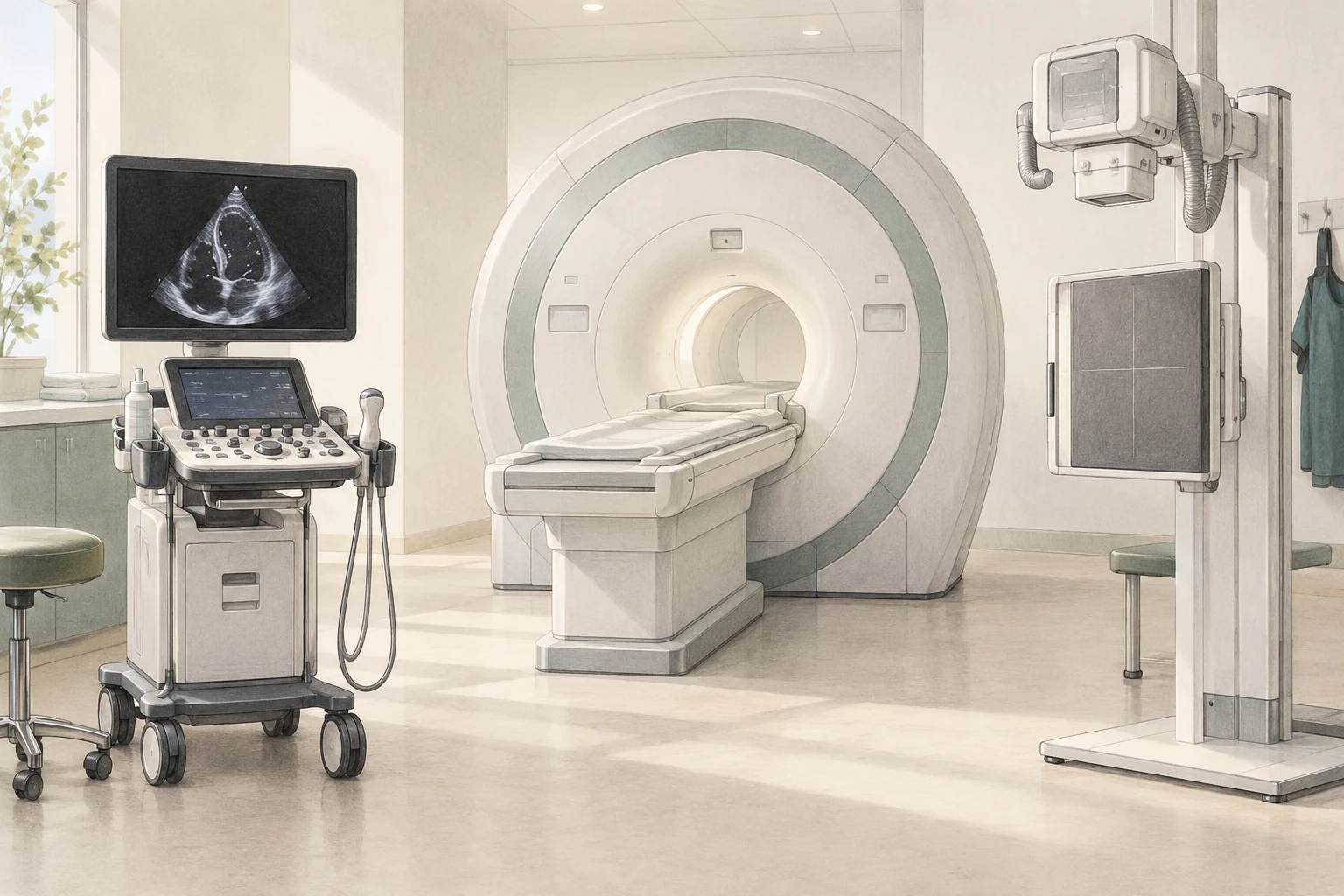
| Research | Example of a targeted demand | Which it doesn't tell itself |
|---|---|---|
| ultrasound | What does this tendon and its surroundings look like? | Or every finding causes the pain. |
| MRI | Is additional structural information necessary? | How fast you'll be able to recover personally. |
| X-rays | Are there any relevant bone or lime findings? | How your full strength is. |
In case of rotator-cuff symptoms, the JOSPT guideline from 2025 a targeted choice, focusing on suspicion, properties, availability and cost of research. It's not a general call to scan everyone directly.
A choice can also be practically influenced by availability or personal circumstances. Then discuss whether the alternative can answer the same question sufficiently and what the difference means for the follow-up.
Prepare application and removal together for
Take previous reports and tell me which studies have already been done. A new scan is sometimes needed, but repetition without new question can add little. To help determine the date and outcome of previous research whether that information is still usable.
Ask for three answers on the outcome: what has been seen, what does it mean for my symptom and what changes? When a finding is uncertain, it should not be hidden behind technical language.
Thus imaging remains a part of careful diagnostics. The goal is not the greatest number of images, but sufficient reliable information to choose an appropriate next step.
Frequently asked questions
Is MRI always more accurate than ultrasound?
That depends on the structure and the research question. One technique can give more information for one question and add little for another. Ask why this research is needed and whether another study can also answer the question sufficiently.
Can I choose which scan I want?
Your preferences and concerns may be discussed. The medical choice does require an assessment of what is suspected and what results may change the policy. Choosing a scan just because it sounds more extensive is not a reliable way to determine appropriate diagnostics.
Why am I sometimes not getting a scan despite prolonged pain?
Long-term pain does not automatically make additional studies meaningful. If diagnosis and policy are sufficiently clear, added value may be limited. In the event of an unexpected change or permanent diagnostic doubt, that consideration may be changed.
Do you need to treat an anomaly on every scan?
No. A visible finding may be relevant, incidental or uncertain. The meaning arises in combination with symptoms, research and functioning. Ask what concrete consequence the finding has and avoid that only the image determines how much more you dare to move.
Sources and evidence
- guideline Achilles tendinopathy – types of imaging research (2020) ↗
Targeted ultrasound, MRI, and X-ray in Achilles Tendon symptoms.
- Desmeules et al. – Rotator-cufftendinopathy guidance (2025) ↗
Diagnostics and active treatment of rotator-cuff symptoms; ESWT not recommended without calcification and possible option for calcification.
A personal follow-up step
From insight
to an appropriate plan.
At a paid intake, we'll discuss your symptom and do targeted research. ultrasound is included at no extra cost when it makes sense. Any treatments are agreed separately.
View the initial consultation