Two words often used interchangeably
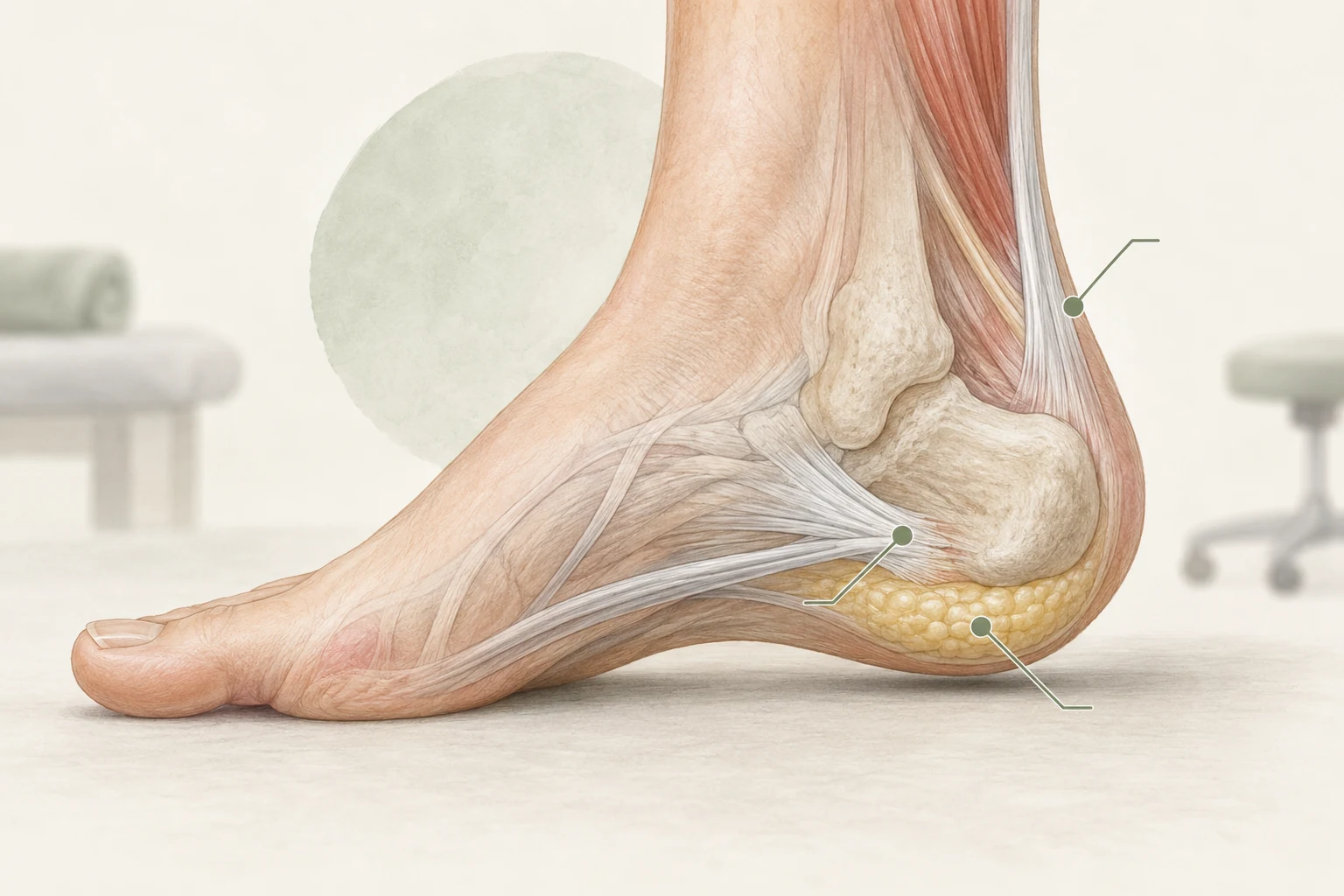
Those looking for heel tracks get advice on shoes, stretching exercises, injections and shockwave. This makes it look like there's one clearly identifiable piece of lime that needs to be removed. However, the concept has two meanings. In ordinary conversations, heel spur is used as a collective name for a recognizable pain pattern. In a radiological report it refers to a bony growth in the heel bone.
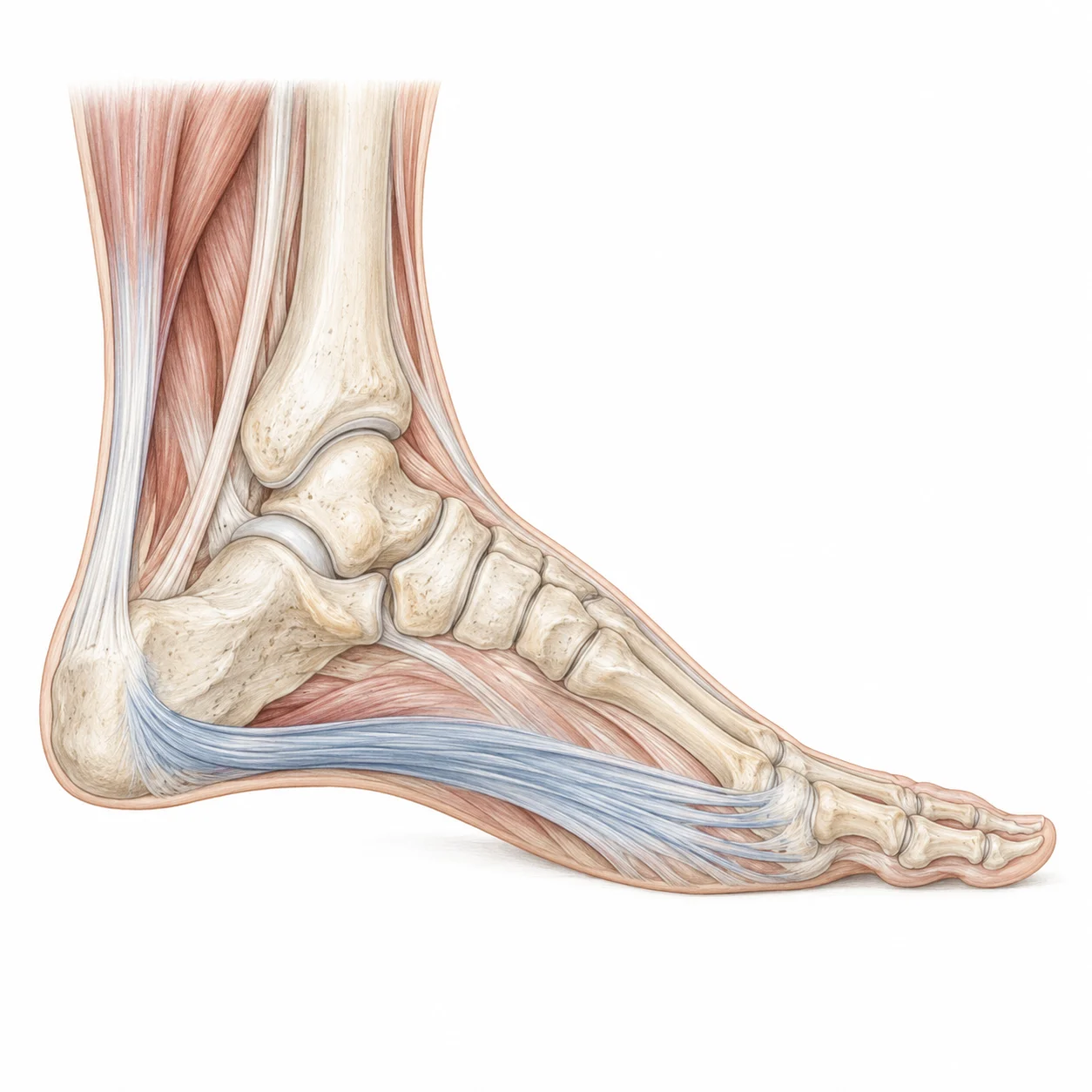
Fasciopathy plantar is about the plantar fascia: the sturdy connective tissue plate that runs from the heel bone towards the forefoot. In case of symptoms, the attachment region is often sensitive. The word says nothing about how much pain someone must have or how long recovery will take. In the case of a diagnosis, therefore, ask what meaning the treatment is referring to. That prevents a photo from determining the whole explanation.
A bone protrude is not a pain gauge
A deviation can be visible on imaging without any symptoms. Conversely, a person can have a clear helper without striking bone protrusion. The Dutch guideline on education stresses that imaging changes do not directly tell how much pain someone is in or what the prognosis is.
An example of thinking makes this distinction practical. Let's say two people have similar bone points. The first walks without restrictions; the second can hardly walk home comfortably after a working day. The same photo does not justify the same treatment plan. The symptoms, strength, medical context and demand for help differ. A treatment does not need to make a visible bone tip disappear before someone can function better.
The place and pattern indicate direction
In the assessment, questions are useful such as: is the pain below the heel or is it behind the heel? Are the first steps especially annoying after sitting? Will standing tall be harder? When did it start and what changed around that time? The answers help to sharpen the research question, but are not an online diagnosis.
Physical examination will look at where recognizable pain is and what movements or loads that evoke. Pain in the middle of the heel cushion, burning sensations and pain after a clear trauma may be a reason to look wider. There is little point in putting every different pattern under the name of heel track. symptoms on both feet also deserve attention to the wider context.
When does an ultrasound or photo add anything?
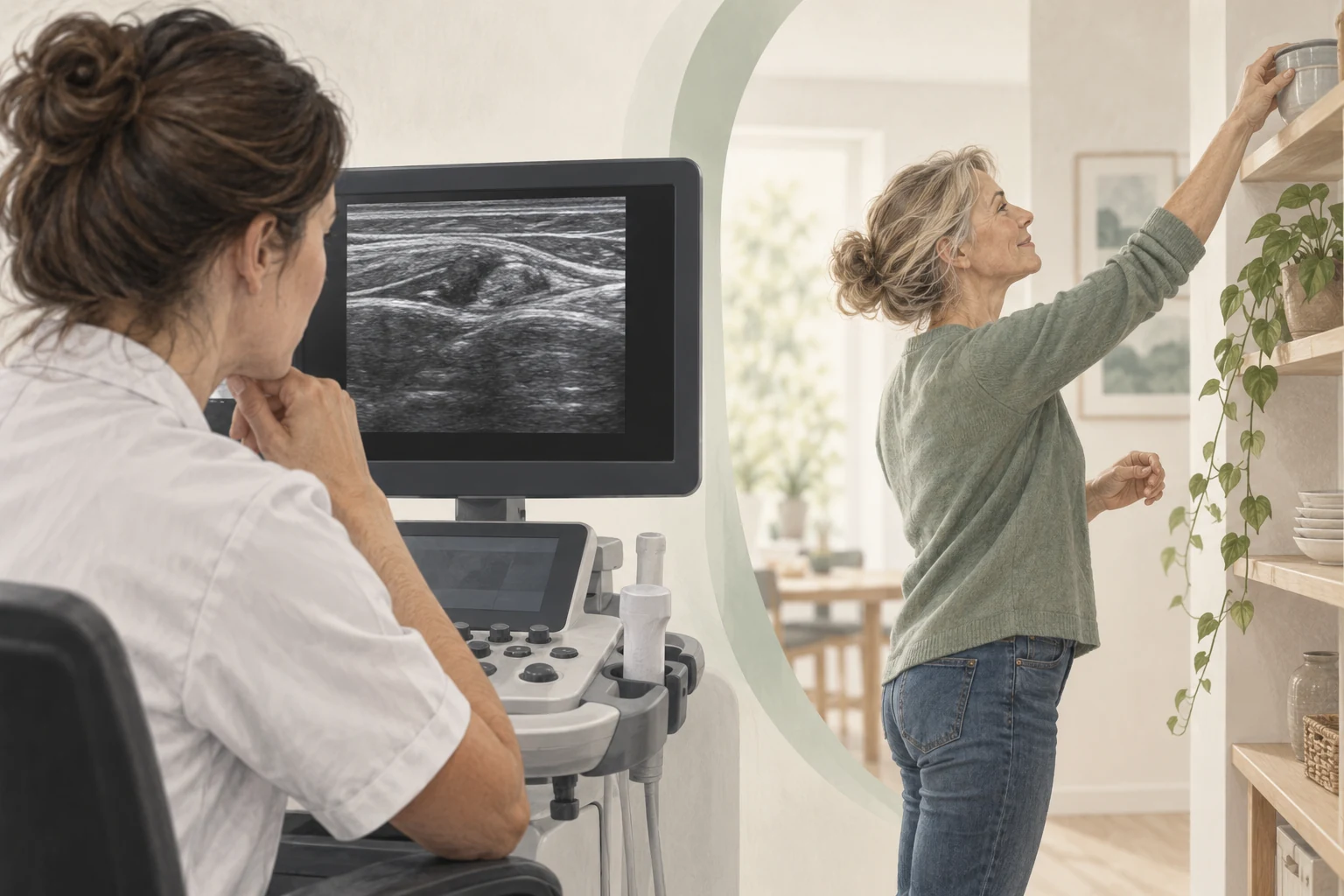
A clearly appropriate story does not require an automatic scan. The Imaging guideline advises to consider additional studies in case of diagnostic doubt or insufficient response to initiated treatment. An X-ray only to show a heel spur is not recommended.
The most useful question before imaging is: what possible answer changes the follow-up? An ultrasound can answer a question other than an X-ray. In case of suspicion of a bone problem, a different route of investigation may be needed than in case of a question about the fascia. A detailed report with no connection to your symptoms sometimes gives more uncertainty. Let us therefore explain which finding is important, which can be coincidental and what one is going to do with it.
What does this mean for treatment?
An approach is focused on the reviewed symptom and what you want to be able to do again. Fascinopathy is often about explanation, appropriate stress and exercises. Footwear or supplementary treatment may be the subject of conversation, depending on the situation. Only the presence of a bone protrude is not a reason for shockwave or surgery.
Be wary of the promise that shockwave simply crumbles a heel track. The indication and the expected effect should be explained from the examination of the condition. Also agree how progress is being made. For example, easier start-up, better persevere a working day or complete a walk. A change in a photo is usually a less useful personal purpose than a function.
Five questions to clarify a result
Take these questions with you when the term heel track causes confusion:
- Do you mean the pain syndrome or a visible bone protrude?
- What finding fits the place where I feel my familiar pain?
- What other causes have been considered and why?
- Does imaging change the treatment plan in my situation?
- What kind of activity will we find out about the chosen approach?
Note what does not work in a normal week. A short description of getting up, work, sports and hiking is more useful than just stating that a scan was different. Bring existing reports so that research is not repeated without a clear question. In the event of a sudden change in the pattern of symptoms, it is wise to re-assess, even if the label has already been followed.
Frequently asked questions
Can a heel spur disappear by itself?
Bone growth can remain visible while symptoms decrease. Therefore, the disappearance of the protrusion does not have to be a treatment goal. Discuss whether pain, walking and daily stress improve, and have a scan repeat only if it answers a relevant question.
Is fasciitis the same as fasciopathy?
The words are often used for similar symptoms. Fasciitis emphasizes inflammation; fasciopathy is a broader definition of a condition of the plantar fascia. The chosen term alone does not say which processes dominate you or which treatment is needed.
Didn't I get help with the photo without a heel track?
Yes. A bone protrusion is not necessary to experience pain under the heel. The place and course of the symptoms, physical examination and, where necessary, targeted supplementary examination shall determine which explanation is plausible.
Does every heel need to be treated with a bone protrude?
No. An image-forming finding without symptoms does not automatically require treatment. In the case of pain, it is assessed whether the finding is relevant. Decisions should be consistent with limitations and objectives, not just with the words in a radiological report.
Sources and evidence
- guideline Fasciopathy plantar — Education (2026) ↗
Personal explanation, load weighting and meaning of image-forming deviations.
- guideline Fasciopathy plantar — Image (2026) ↗
Limited role of routine scans and additional study indications.
A personal follow-up step
From insight
to an appropriate plan.
At a paid intake, we'll discuss your symptom and do targeted research. ultrasound is included at no extra cost when it makes sense. Any treatments are agreed separately.
View the initial consultation