Age provides context, no personal endpoint
In case of symptoms from the tendons, getting older may be part of the statement, but it is not a complete answer. People of the same age differ greatly in activity, health, strength and goals. A plan must therefore go beyond the remark that it is age-related.
Describe what you did before the symptoms and what you want to keep. For one sport, it is self-service shopping for the other or taking care of a partner. Those daily requirements help determine which guidance is relevant.
A realistic approach takes into account changes in the body without writing off recovery in advance. Ask which factors have actually been investigated in your situation and which are mainly mentioned as general assumptions.
Image changes do not automatically become symptoms
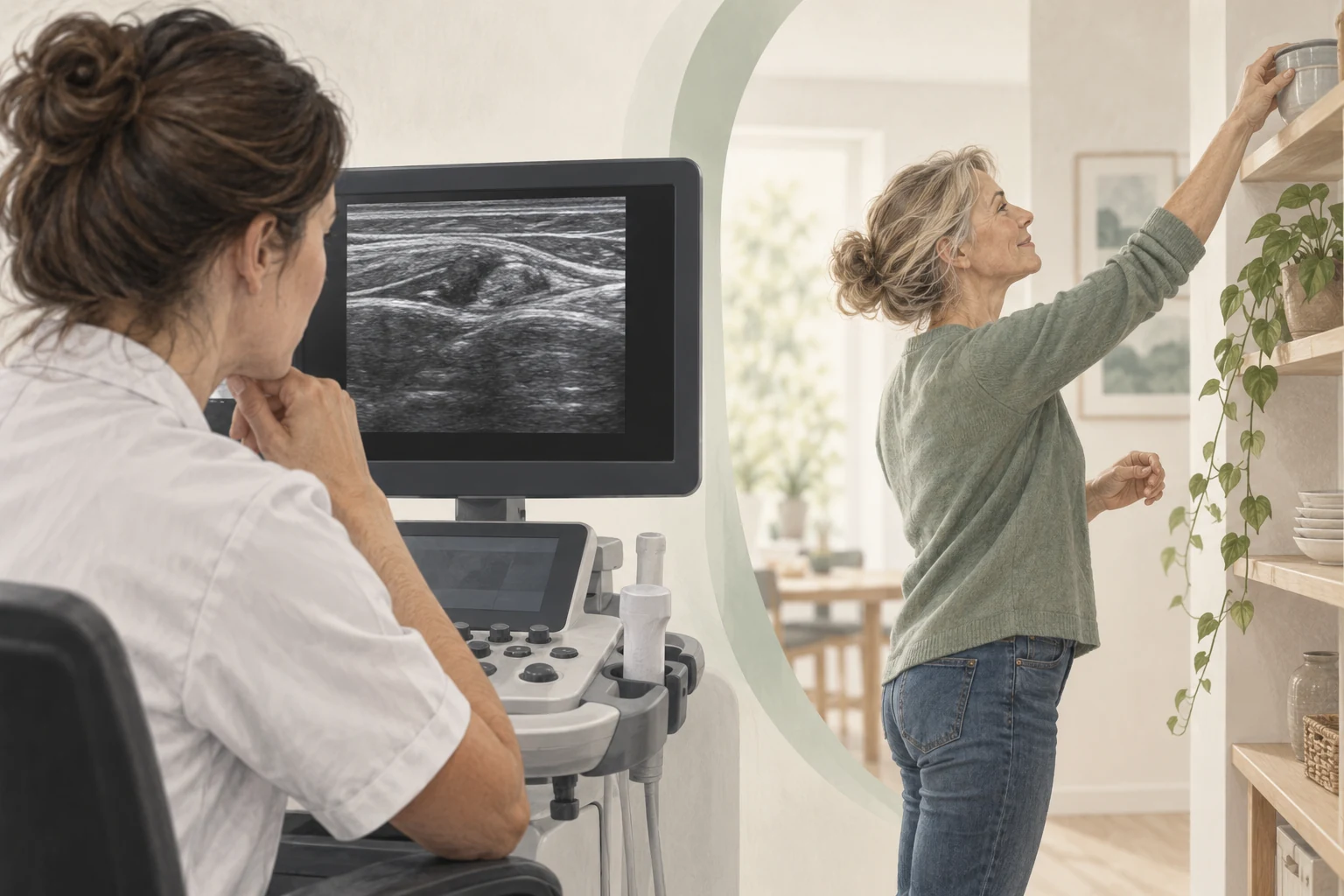
One examination in people without shoulder discomfort found rotator cuffs that were more common in older age groups. This supports the distinction between a visible structural characteristic and the presence of pain.
The finding does not mean that every tear in a tendon is insignificant. Origin, power loss and functioning remain relevant. She does prevent a scan from being translated into the message that your shoulder is unusable or irreparable.
In the event of a rash, ask what changes the finding in your situation. The answer should not only consist of a comparison with a young, completely normal tendon. The relevant question is what you can build safe and feasible.
Other health factors may be considered
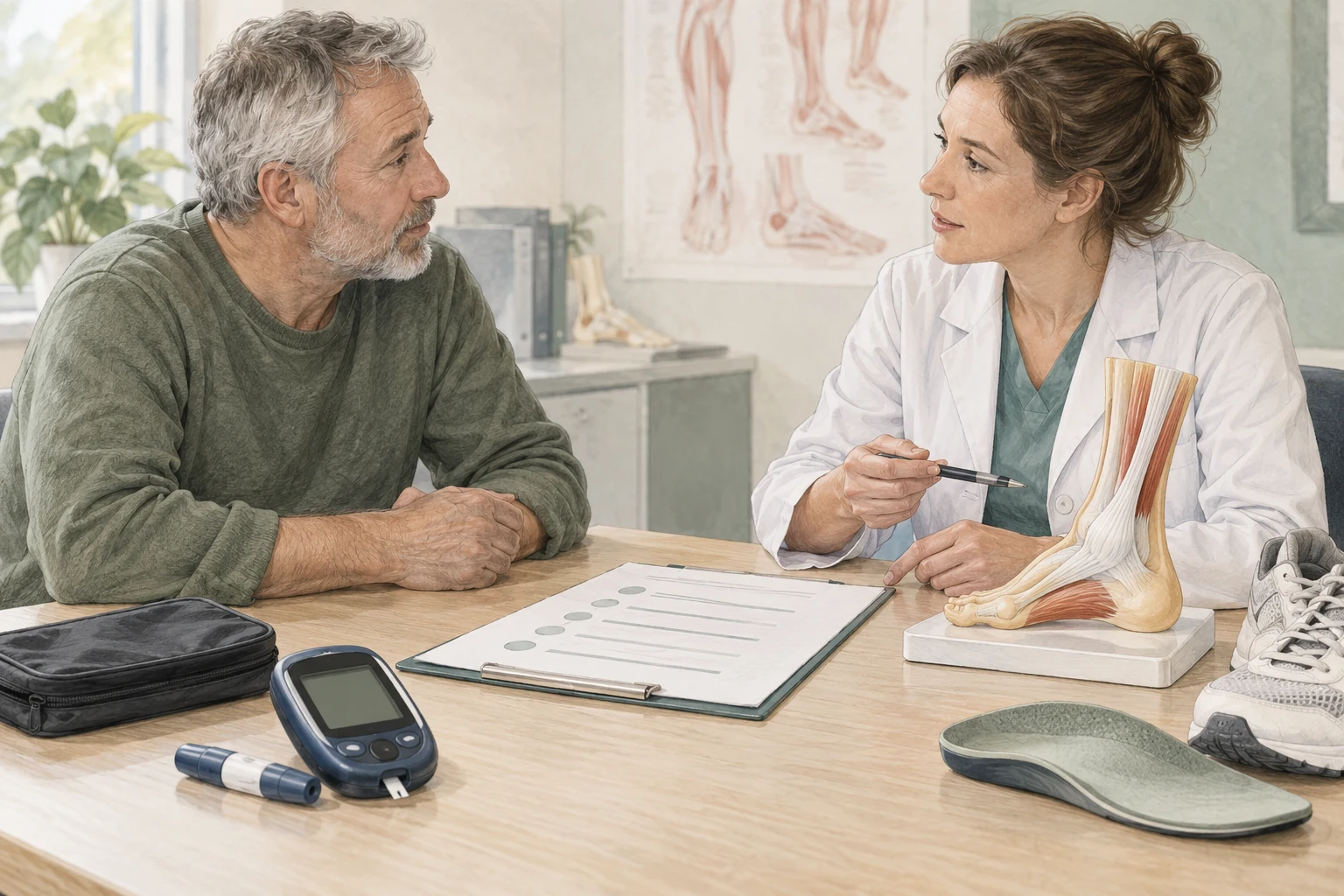
Medication, diabetes, vascular problems or limitations to other joints may affect the overall plan. Not everyone has such factors, but it is useful to discuss them when they are present.
For example, an exercise can be difficult due to balance or another painful place, while the tendon itself could tolerate the movement. The implementation will then have to be adapted. The problem is not automatic lack of motivation or impossibility of training.
Take a current medication review and tell about changes in health. Do not stop medicines independently to try treatment of a tendon. Alignment with other healthcare providers may be necessary to keep the plan feasible and orderly.
Building up is part of what you can now
The Dutch Achilles guideline recommends active treatment tailored to the individual patient. Practical feasibility and reactions to physical load are part of that choice.
The start doesn't have to be the same as that of a younger athlete or a peer from a practice video. Look at your own starting level, available support and daily workload. An exercise must be an appropriate step towards your goal.
Progress can also have different forms. Less breaks during a walk, easier coming out of a chair or performing a task more independently can be meaningful results. Not every improvement needs to be expressed in sports performance.
A target overview for the conversation
Put three activities on paper that are important:
| Activity | What's going on? | What do I want to change? |
|---|---|---|
| Daily independence | … | … |
| Movement or hobby | … | … |
| Work or care for others | … | … |
Then choose a priority together. Wanting to improve everything at the same time can make the plan unnecessarily difficult. A first feasible step provides information on how further construction is to be tolerated.
Also discuss practical support. Another practice position, clear written instruction or assistance in planning can make a difference. Such adjustments are part of good guidance and do not mean that you train less seriously.
When is new assessment important?
Do not automatically attribute a sudden change to age. A new incident with obvious loss of strength, a strong change of function or a symptom that does not fit the known pattern requires assessment.
Even in the event of gradual deadlock, rethinking can be useful. Perhaps the goal no longer fits the plan, the exercise is not sufficiently practicable or another condition is involved. The next step does not need to be a more intensive device treatment.
A careful conversation holds both sides: age and health can be relevant, and your personal possibilities deserve a personal assessment. This creates a plan that takes into account limitations and what you want to continue to do.
Frequently asked questions
Am I too old for tendon exercises?
Age alone doesn't answer. Diagnosis, health and current possibilities determine which form is appropriate. Exercises can be adapted to strength, balance and practical conditions. Let's assess what you can build instead of excluding yourself based on age.
Does wear on an ultrasound mean that recovery is not possible?
Not automatically. A visual feature does not tell enough about pain and functioning. Ask which finding is really relevant and what your purpose may be. Improvement of daily possibilities can be valuable, even if not every structural change on a scan disappears.
Do I need shockwave because of my age?
That doesn't follow from age alone. The choice of shockwave or any other supplement requires a diagnosis-related consideration and assessment of previous care. Safety, tolerability and potential added value should also be discussed. Age is not an independent indication.
What if my exercises collide with other symptoms?
Tell me which movement or attitude is difficult due to another problem. The execution or planning can sometimes be adjusted. In the case of multiple conditions, coordination between treatment providers can help prevent a plan for the tendon from losing sight of other limitations.
Sources and evidence
- Moosmayer et al. – asymptomatic rotator cuffs (2009) ↗
Echographically proven rotator cuff tears can occur without shoulder discomfort.
- guideline Achilles tendinopathy – Conservative treatment options (2020) ↗
Education, stress and exercises as a basis; consideration of additional treatments.
A personal follow-up step
From insight
to an appropriate plan.
At a paid intake, we'll discuss your symptom and do targeted research. ultrasound is included at no extra cost when it makes sense. Any treatments are agreed separately.
View the initial consultation