Start with the sport you want to resume
A quiet swim training, a paddle contest and a mountain walk make different demands. That's why a test call starts with the target. Do you want to join the warm-up again, finish a training or perform at your previous level? Without that clarification, the same result may lead to different conclusions.
The Bern Consensus on Return to Sports describes resumption as a process with multiple phases. Tests provide information within that process. They're not a single mark that explains a body fully repaired. The chosen tasks must be linked to sport and to the decision that is required at that time.
So finish one sentence in advance: I want to judge whether I can start this specific sport activity again. That keeps the investigation focused. A test that is interesting but has no effect on the next step does not necessarily have to be part of the appointment.
Strength, movement and repetition answer other questions
A strength test indicates the force you can produce at a particular moment. A repeated task shows how performance changes over several attempts. A movement test can show the available range of motion. None of these measures, alone, describes complete sports performance.
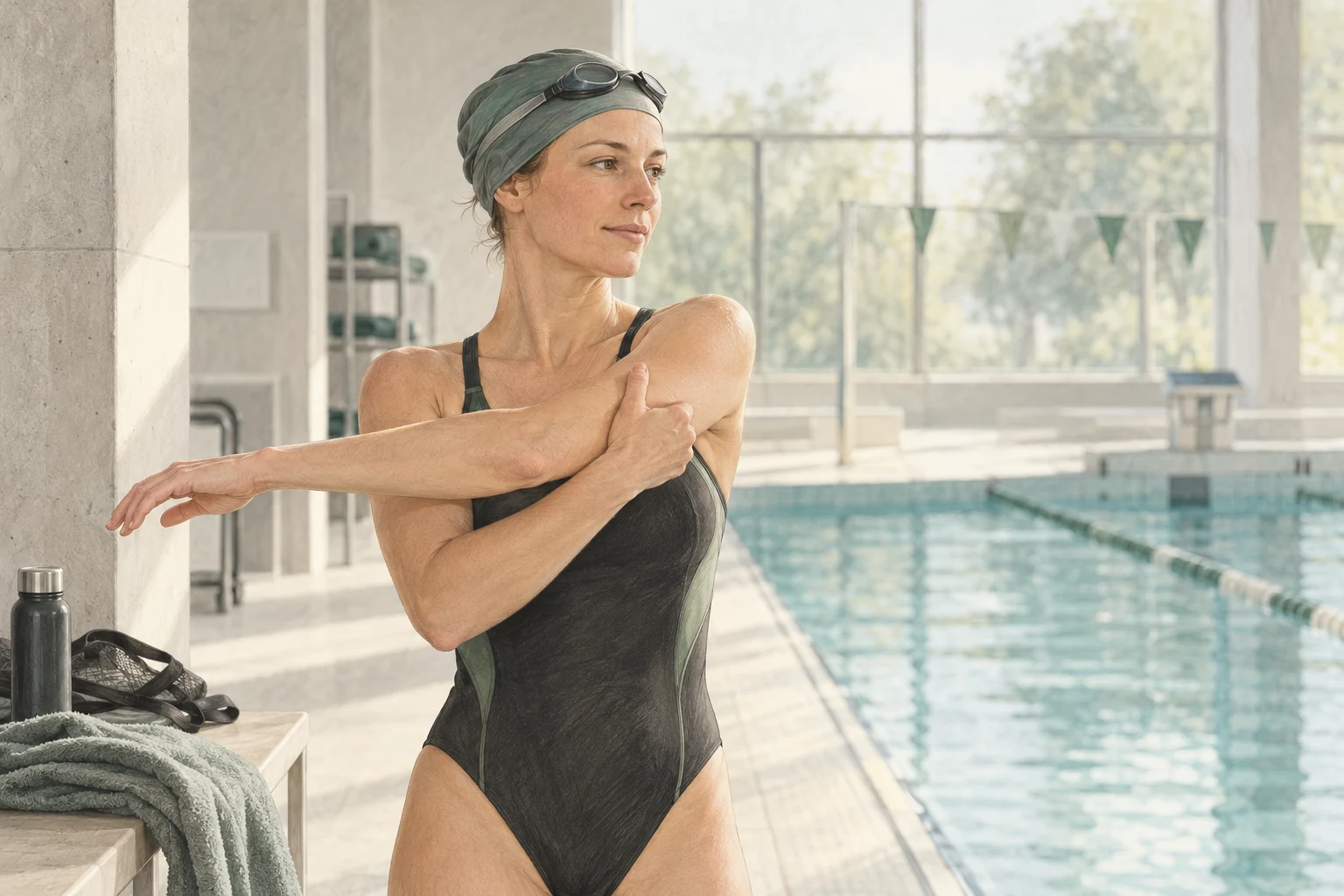
In the case of shoulder symptoms, the rotator-cuff guideline from 2025 including symptoms, capacity, functioning and sports load when deciding on sport. The guideline supports a broader assessment; it does not provide a universal cut-off point for each shoulder and sport.
Ask what a rash means in your situation. A difference between left and right may be informative, but the other side is not automatically the perfect target. Use results in conjunction with your history, sports tasks and previous measurements. Let's also tell what a test can't prove.
Build a task ladder for your sport
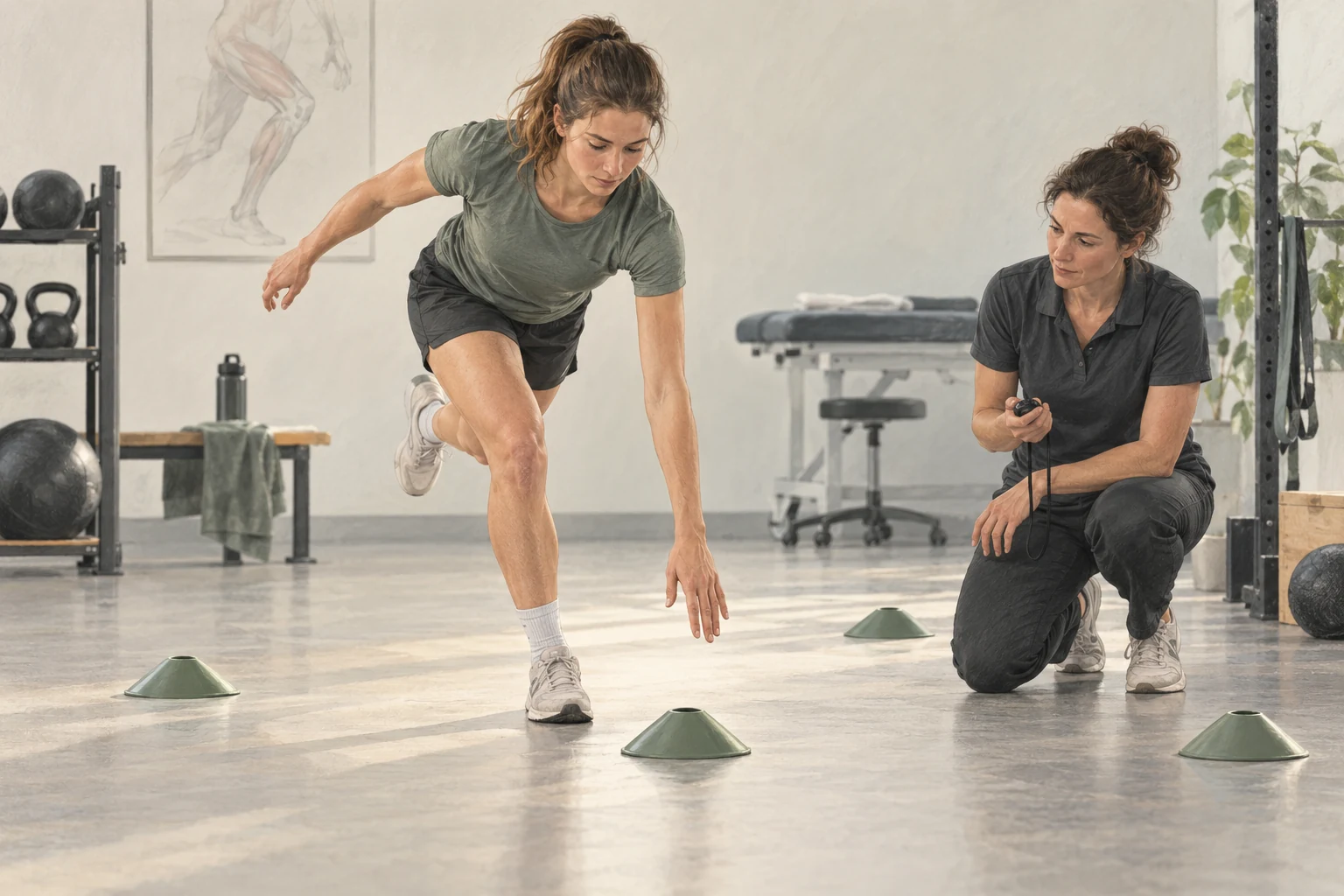
You can make the requirements of a sport clear without designing a medical test protocol yourself. Share a task from predictable to more complex. This helps the clinician choose which step can be investigated at the moment.
| Component | Example of a question | What do you want to know? |
|---|---|---|
| Basic motion | How's the necessary movement coming along? | Is the task technically feasible? |
| Resistance | Any luck with the same movement with the load? | How does the execution react to strength? |
| Repeat | Will the task continue to be executable? | What changes with fatigue? |
| Speed | Can you move at sports speed? | Does the speed match the capacity? |
| Unpredictability | Any response to a ball or opponent? | Is a real game situation feasible? |
This is a discussion ladder, not an invitation to try out all parts in a row. A caretaker determines which tasks are appropriate and when you should not test yet. In case of acute injury, new severe swelling or apparent loss of function, assessment may first be required.
As an example, a superhand sport can start with a predictable exercise and later a focused game situation. A good result in the first situation makes the second one negotiable; it does not replace it.
Trust belongs in the same conversation
Maybe movements are technically feasible, but you're afraid to participate fully. That's relevant information. Describe as precisely as possible what you expect to go wrong: sudden pain, loss of control, collision, or repeated prolonged fallout. Different concerns require different preparation.
The Bern Consensus involves psychological readiness and the sports context in the decision. That doesn't mean that doubt proves that you're physically ready, or that you just have to think more positively. It means that a plan has to deal with both physical questions and trust.
A useful step can be to explore the dreaded situation first under agreed, clear conditions. Discuss in advance what you want to learn and when you stop. This creates a concrete experience about which you can talk back, rather than a general task to be less afraid.
Test how the step in your week fits
A test takes place at a certain time. The sports week often includes more: travel, work, other training and recovery options. A single good session therefore does not tell everything about being able to repeat the same task.
For a trial training, record what you're going to do, what parts you're going to miss and what reaction you're going to feedback later. Observation may include both symptoms and functioning. Decide together what change is the reason to adjust or contact the load again. Do not use the Internet threshold as if it has been validated for every tendon and every sport.
Make sure a trainer knows what the agreed step is. Just saying you're allowed to practice again leaves a lot of room for interpretation. A concrete job description helps prevent a planned exercise from turning unnoticed into a complete match simulation.
Decide together and make the decision temporary checkable
A useful test report ends with a decision that you can make: try a particular training, continue the same phase or first prepare a missing part. Write down the reason, the appointments and the evaluation moment. A result without follow-up will leave you with the same uncertainty.
The athlete, clinician and possibly trainer have different information. You know what's important and feasible, the clinician assesses the medical and functional situation, the trainer knows the sports content. Not everyone needs to get every detail of your medical record; share the appointments needed for the execution.
No test can rule out any future sports injuries. The goal is a better informed choice and a workable follow-up step. If the practice is different than expected, adaptation is part of the process. An earlier positive decision should not be a reason to ignore new symptoms.
Frequently asked questions
Is there one test that says my tendon has recovered?
No. A test describes a part of your functioning under certain conditions. Sport resumption requires a combination of information and a translation into the requirements of your sport. Discuss which question each measurement answers.
Do I have to be completely pain-free before I can exercise?
There's no universal answer to that. Diagnosis, sport, chosen load and reaction determine which step is appropriate. Speak individual criteria; only a pain score or only a calendar date is insufficient to bear the decision.
Can my trainer make the decision alone?
A trainer can help describe sports requirements and performance well. In case of persistent or unclear symptoms, medical or physiotherapeutic assessment is also required. Tune rolls so that sports content, your preferences and health questions are taken together.
What if the test goes well but the training doesn't?
Reconnect what was different in the training: expensive, tempo, repetition, fatigue or unpredictability. The test was information for one step, no guarantee for all circumstances. Use the experience to choose the following load more targeted.
Sources and evidence
- Bern-consensus: return to sport (2016) ↗
Sport resumption as a shared process with physical, psychological and contextual factors.
- Rotator Cuff Tendinopathy: Clinical Practice Guideline (2025) ↗
Review of symptoms, capacity, functioning and sports load in rotator-cuff-related sport resumption.
A personal follow-up step
From insight
to an appropriate plan.
At a paid intake, we'll discuss your symptom and do targeted research. ultrasound is included at no extra cost when it makes sense. Any treatments are agreed separately.
View the initial consultation