Why the calf comes back into the plan
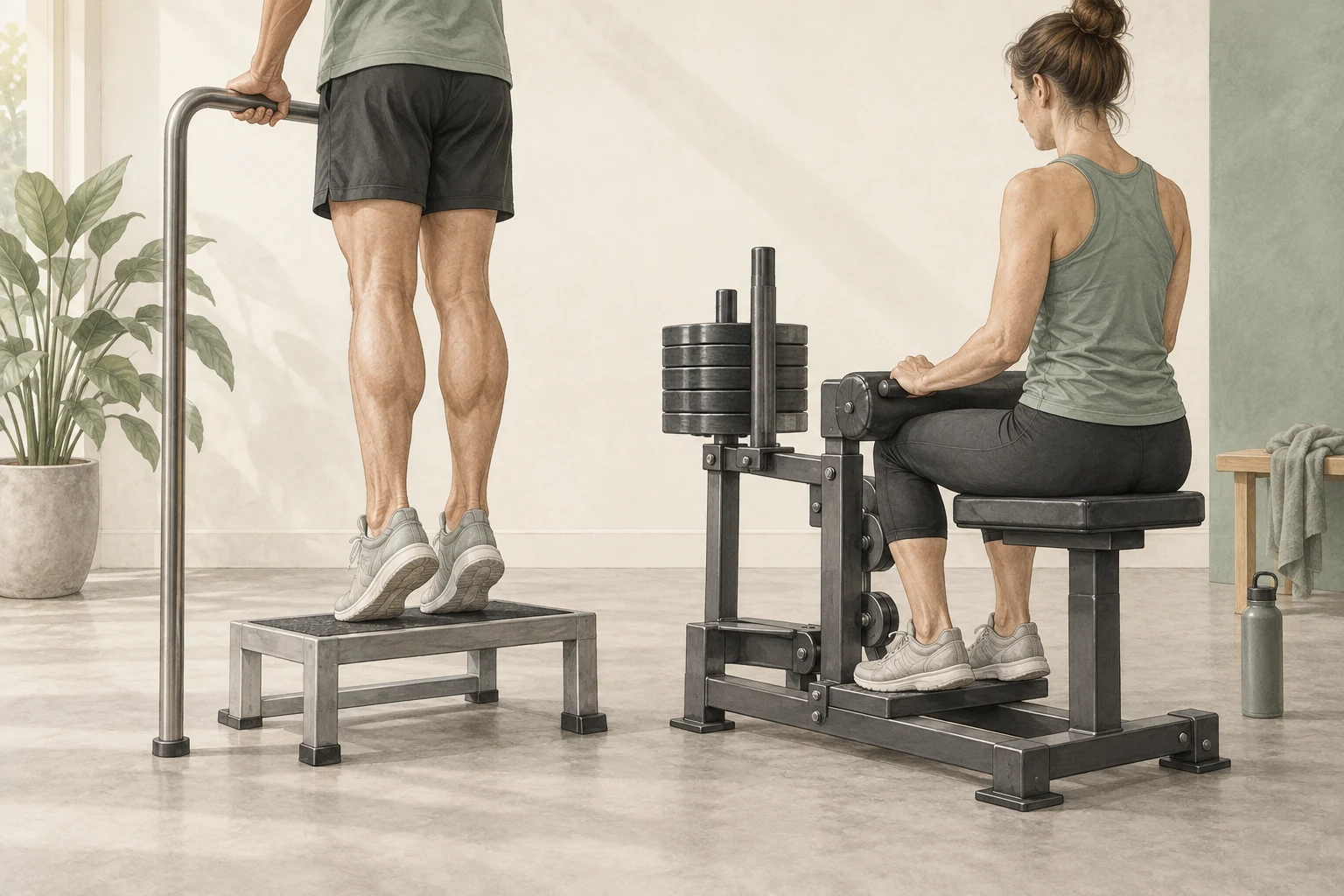
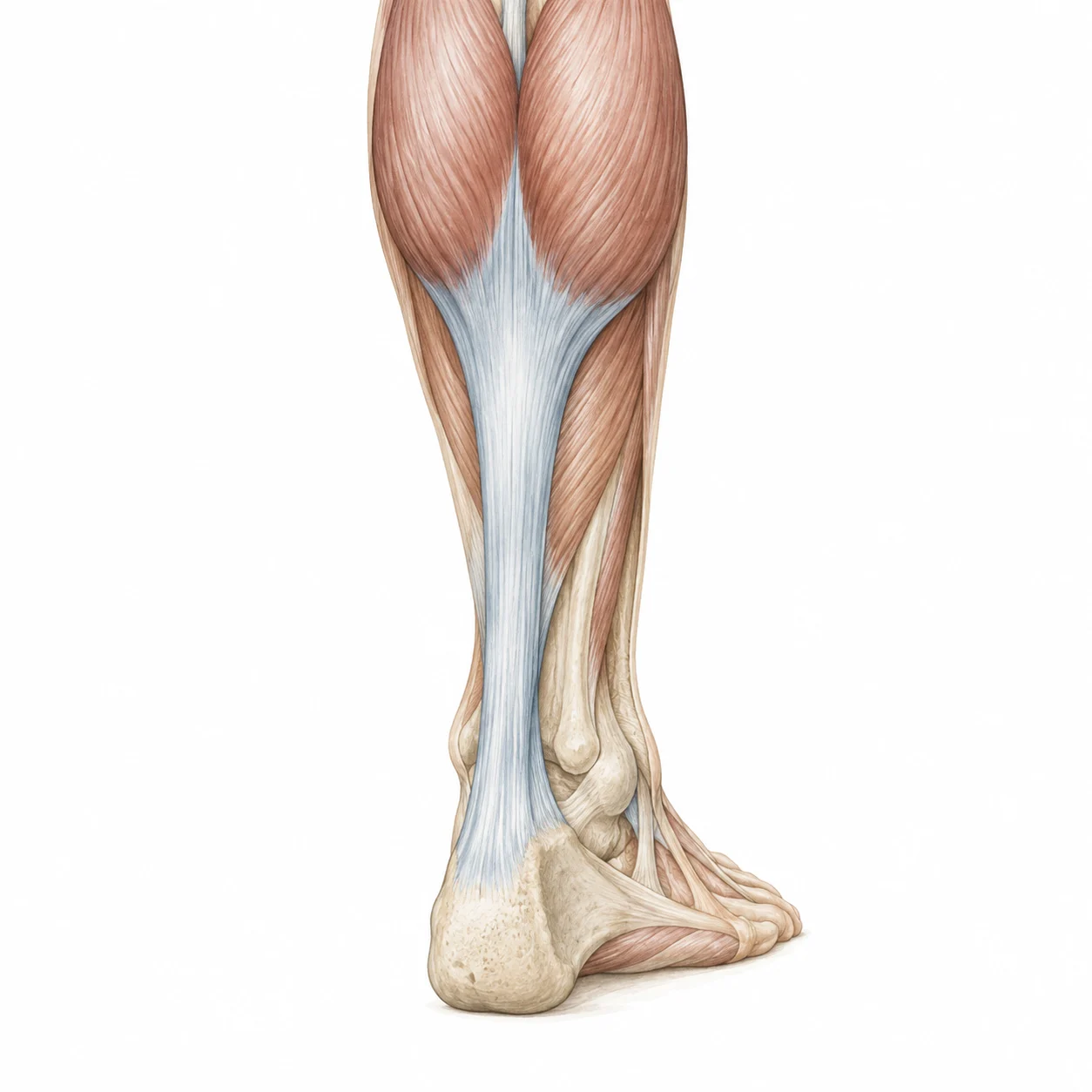
The calf muscles provide strength through the Achilles Tendon for dropping during walking, jumping and running. It is therefore logical to involve this muscle-tied chain in the treatment. The Netherlands guideline places constructive strength exercises alongside explanation and load advice as the basis of an active approach.
That starting point is not the same as training for everyone instantly. An exercise must be executable and connect to what you want to be able to do again. Someone with a limited walking distance has a different starting question than someone who only experiences symptoms in fast jumps. The name strength training doesn't say anything about the right weight, the chosen position or the necessary guidance.
First determine your starting point
Discuss what is possible at the moment: walking normally, walking stairs, getting on the toes or a certain sports act. A controller can assess relevant functions and, if necessary, choose variants more easily. Also balance, other joint symptoms and fatigue can influence the execution. The plan doesn't have to act like there are no circumstances.
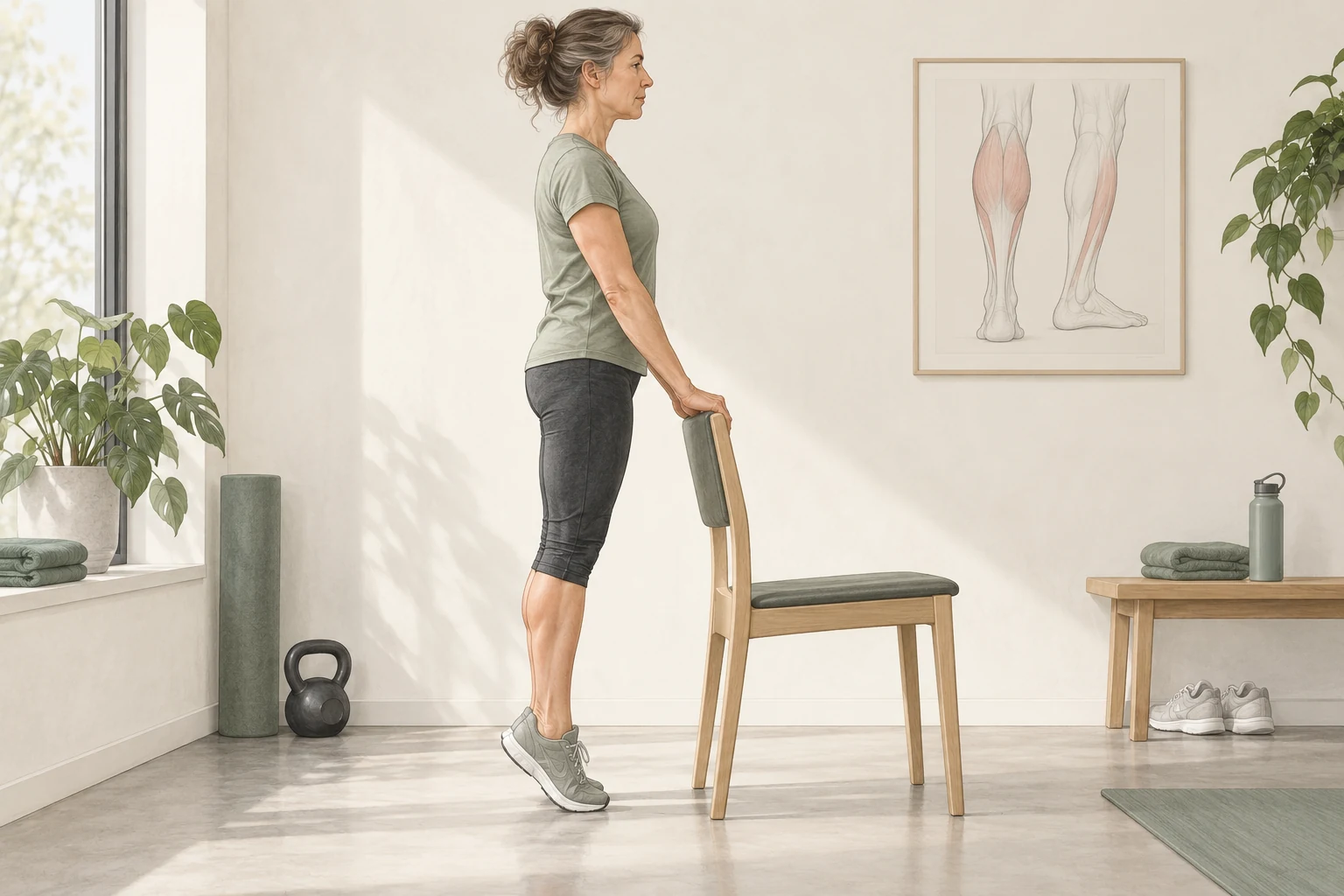
The pain location is also important. In case of attachment problems, a flat surface can initially be chosen, so that the heel does not fall deep below the forefoot. Thuisarts makes that difference explicitly. As a result, an exercise by a known person with the same injury... could be an inappropriate start for you.
Dosing more than just weight
Resistance is only one part of the load. Also the number of repetitions, range of motion, tempo, support and week-by-week distribution determine how an exercise is experienced. A minor change may already be relevant. Without explanation several parts at the same time make it difficult to understand an adverse reaction.
Ask which part is first built and why. Perhaps a reliable implementation with support is the first step. In another situation, more resistance is needed to match the functional goal. There is no universal combination of sets and repeats that can be prescribed online for any Achilles Tendon. Personal alignment is part of the treatment, no sign that the plan needs to remain unclear.
Make the exercise visible in your week
A training program comes on top of walking, work and sports. So don't plan it apart from the rest. A day with many stairs or a long walk can change the response to the same exercise. Also tell me when you have little time, no material or limited opportunities to practice at home. A feasible plan should take precedence over a theoretical ideal that is not being implemented.
One example: you can only practice briefly on three working days, but try to catch up on weekends. Then the distribution changes greatly. Discuss whether planning can be simpler and what amount is really needed. The aim is a repeatable approach. Doing missed sessions in duplicate without weighing can make the load more unpredictable.
Arrange a response and buildup plan
A useful exercise instruction answers the following questions:
- Which variant am I running and what is the purpose of it?
- What do I pay attention to during the performance, apart from pain?
- What reaction later or the next morning is acceptable to me?
- What do I do if the response is clearly stronger than agreed?
- When and how will the exercise become more difficult?
- What activity do we use to assess progress?
Not every slight sensitivity means that the exercise is wrong. The other way around you do not have to accept increasing inconvenience or loss of daily functioning as necessary proof of training effect. The agreed plan helps to avoid both extremes and allows timely adjustment.
Strength is a base, not a final test for every sport
When a strength exercise gets better, that's progress. For a sport with fast marketing, repeated jumping or unexpected directional changes may later follow other requirements. Simulating a quiet exercise is not the same as all sports load can handle again. Discuss which intermediate steps belong to your goal.
The guideline describes a sufficiently long active treatment period and evaluation. That gives room to actually build, without promising a fixed date for full recovery. If progress is not achieved, assess execution, total load and diagnosis before adding more exercises or treatments automatically. A good plan can also be simplified if it is clearer and more practicable.
Frequently asked questions
Should calf strength training be pain-free?
This varies from one situation to another and from one plan to another. Some sensitivity may sometimes fit, but a clearly unfavourable response requires adjustment. Not only discuss pain during the exercise, but also walk, drop off and the reaction later. A general pain rate does not replace that consideration.
Can I practice without a gym?
Often there are executable variants at home, but the choice depends on your goal and output level. Let's assess what support or resistance is needed. A gym is not an automatic condition, and a simple exercise does not have to stay the same without building up.
Why am I getting an exercise on a flat floor?
That can be a conscious choice, including in case of symptoms to the attachment. It limits part of the deep movement. Ask what the reason is and when a wider range can become appropriate. Practicing flat doesn't mean training doesn't do anything.
When should the exercise plan be reviewed?
If you do not understand the execution, cannot adjust the load, deteriorates day-to-day operation or changes little after a properly executed journey. Take what you really did and how you reacted. This will allow the next step to be chosen.
Sources and evidence
- guideline Achilles tendinopathy — Conservative treatment options (2020) ↗
Active treatment, calf power and patient adjustment of exercises.
- Thuisarts — I'm suffering from my Achilles Tendon (2026) ↗
symptom pattern, morning stiffness and various advices on attachment symptoms.
A personal follow-up step
From insight
to an appropriate plan.
At a paid intake, we'll discuss your symptom and do targeted research. ultrasound is included at no extra cost when it makes sense. Any treatments are agreed separately.
View the initial consultation