Start pointing out exactly where it hurts
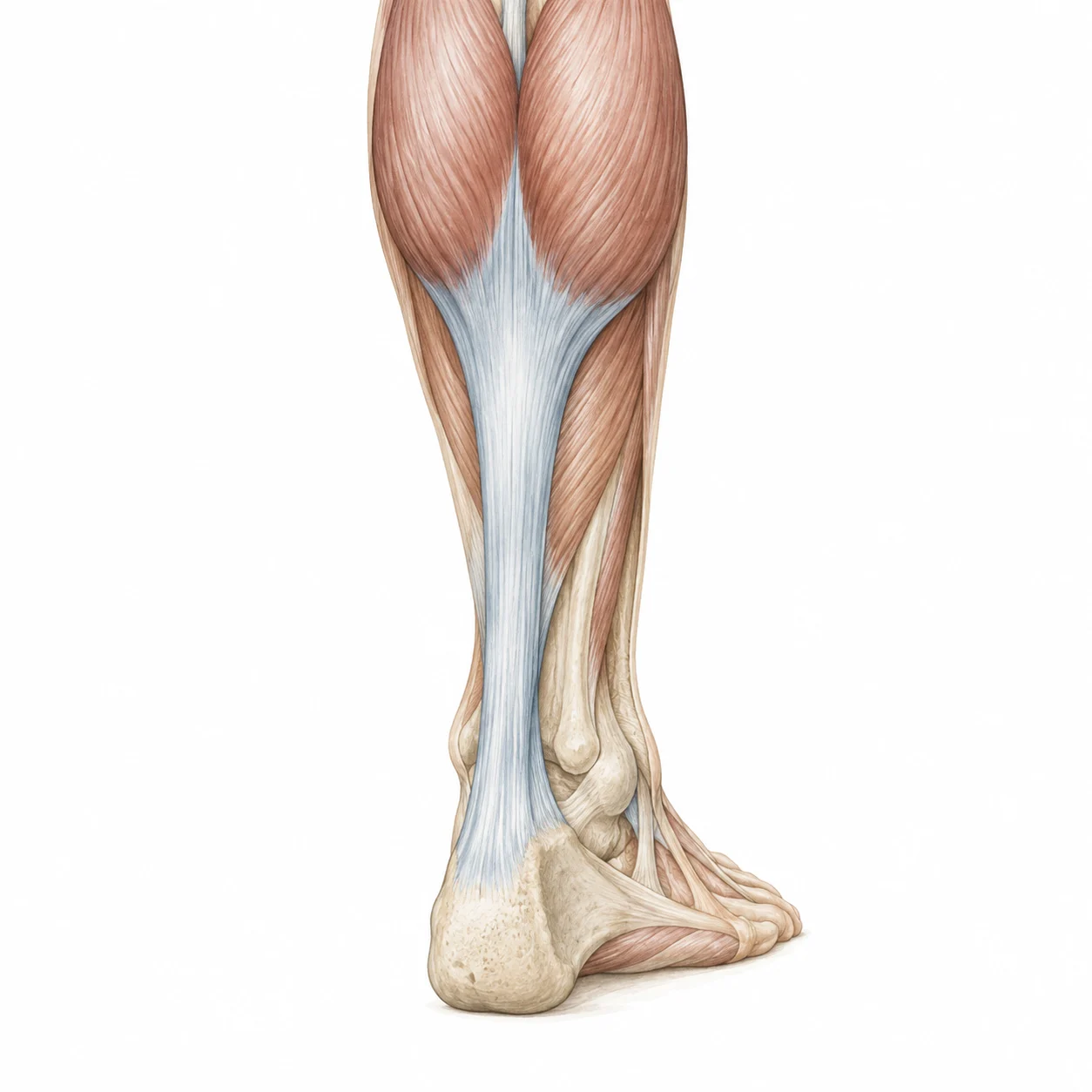
The Achilles Tendon connects the calf muscles to the heel bone. So when you say that the Achilles tendon hurts, it can be different areas. Point out where you feel the familiar pain, preferably without first pressing or squeezing. Also indicate if the pain remains in one place or spreads.
The Diagnosis guideline distinguishes symptoms close to the attachment of symptoms in the middle part, several centimeters higher. The location is one part of the assessment. Pain in relation to load, possible thickening and recognizable sensitivity in research also count. Only measuring how many centimeters above the heel is sensitive is not enough to make the diagnosis itself.
Why the difference in practice can be relevant
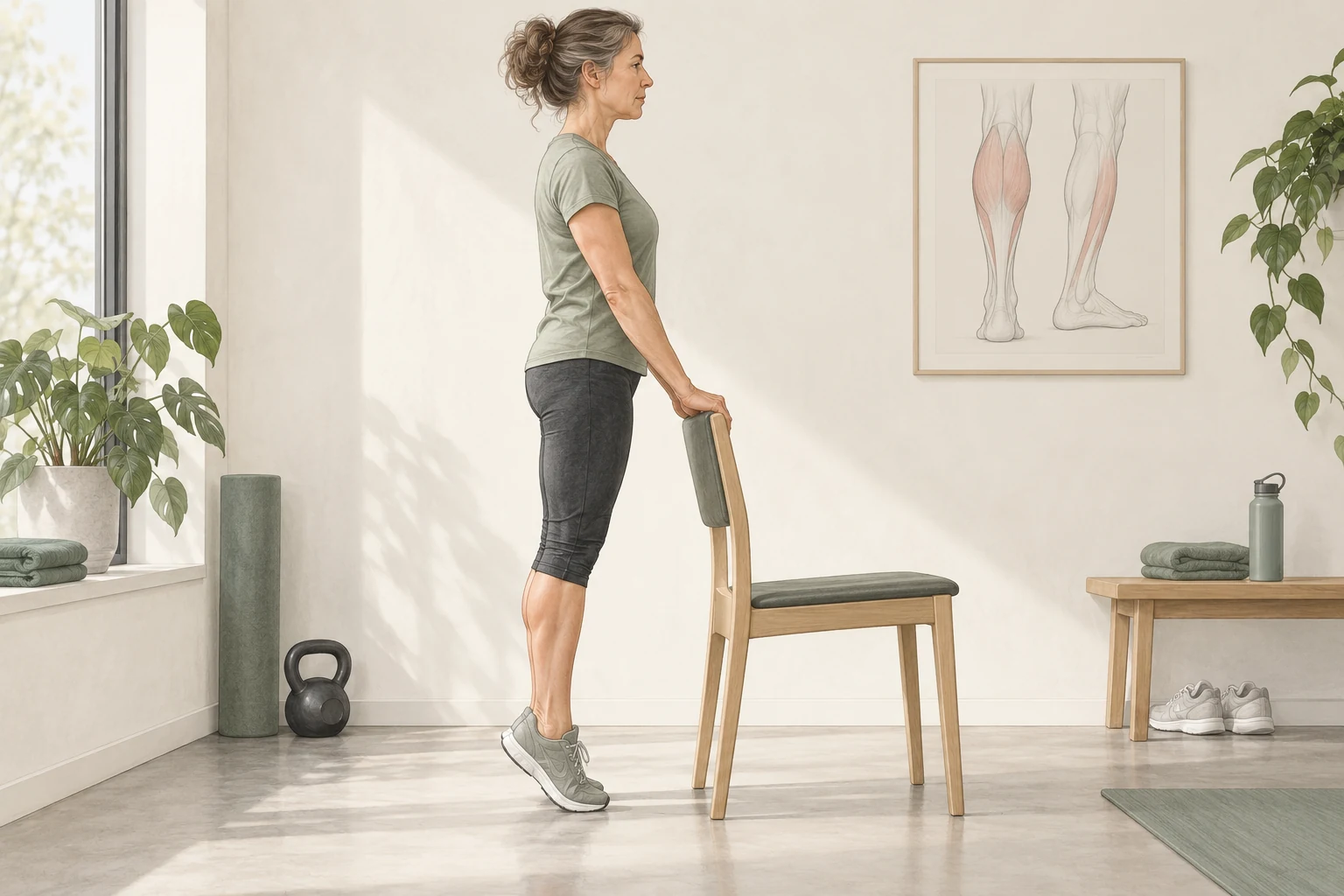
In case of attachment problems, a deep movement in which the heel falls under the forefoot may be unpleasant. The starting position and range of an exercise therefore require attention. The guideline on treatment in the case of insertion problems, the initial practice from a flat surface is mentioned.
This does not mean that any movement towards rack is permanently prohibited. It means that a standard program is not copied without consideration. Ask what range is intended, what the response may be and when enlargement is envisaged. In case of middle symptoms, personal dosing is also required. The name of the location does not give a licence to perform an exercise instantly heavy or deep.
Shoe pressure and surroundings of the tendon count
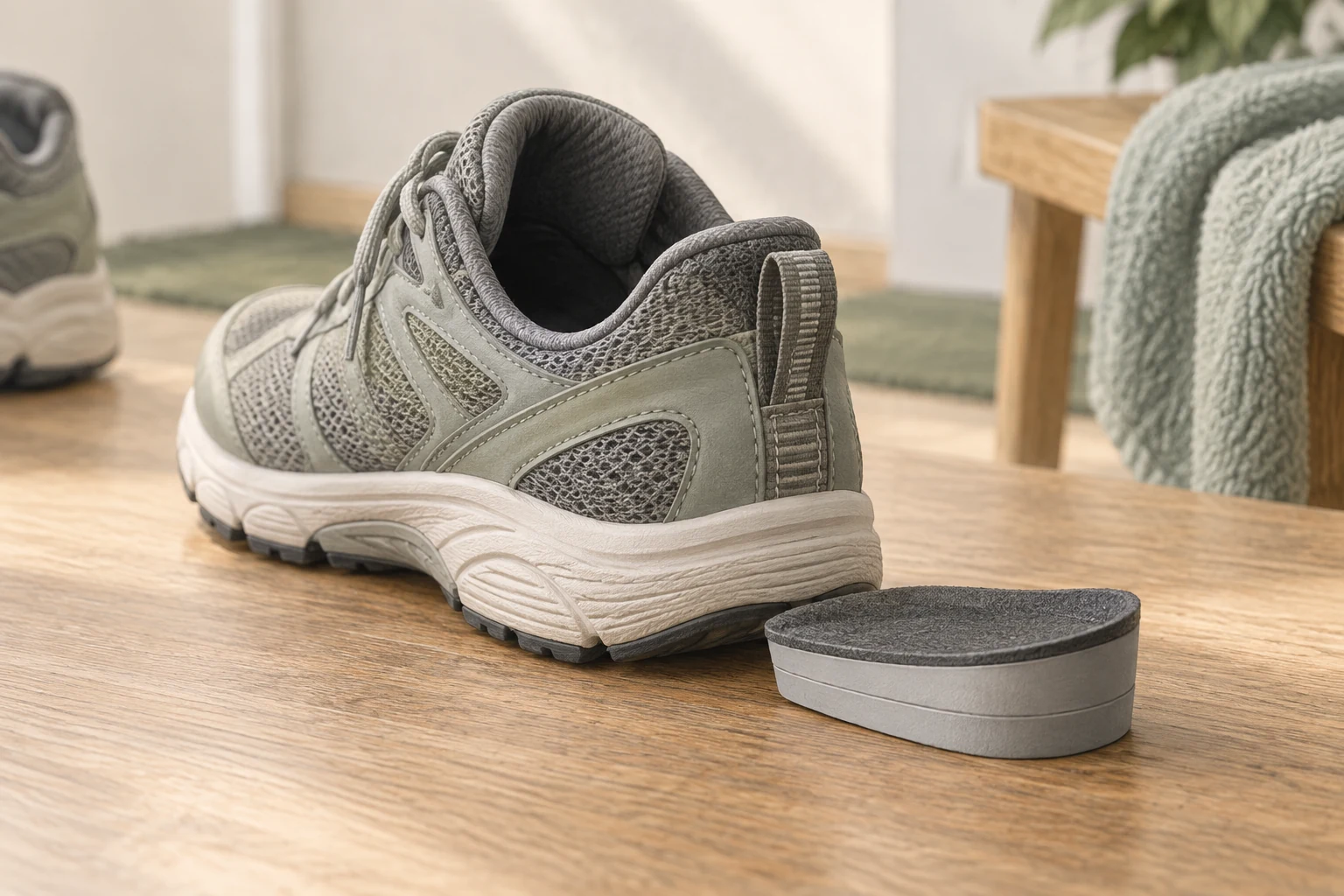
Pain behind the heel can noticeably change with a stiff shoe edge. That's useful information, but doesn't prove that the shoe is the only cause. Other tissues that may be involved in the assessment are also present in the area. A clinician therefore looks beyond one painful spot on the tendon.
Tell us whether a shoe without pressure on the back is more comfortable, or whether it gives a certain activity symptoms regardless of the shoe. Changes in training, work or walking are also included. One example: pain does not arise during the quiet exercise at home, but especially in a work shoe during a long shift. Then a conversation about the real conditions of use is at least as relevant as adding a new exercise.
What questions can research answer?
A conversation and physical examination can often give sufficient direction. Additional studies may be considered in case of doubt, abnormal pattern or unexpected change. Ask what a possible ultrasound should clarify. A visibly abnormal structure doesn't have to match exactly how much pain you're in.
Also indicate symptoms on both sides, other painful attachments and relevant medical history. Sometimes the assessment has to be broader than just a sports load. You don't need to know the diagnosis that goes with it. It is sufficient to provide the information so that the healthcare provider can decide what needs to be investigated further and which is probably less relevant.
A practical comparison for the treatment interview
| Question | In case of pain low on the heel bone | In case of increased tendon pain |
|---|---|---|
| What are you pointing at? | The region where the tendon is stuck | The sensitive part above the attachment |
| What do you ask for in exercises? | Start from flat, range and response to deeper bags | Suitable resistance, execution and construction |
| Which day-to-day information helps? | Shoe pressure and activities with a lot of single bending | Load during drop-off, walking and sport |
| What's the deal with both? | A diagnosis based on the whole | A diagnosis based on the whole |
The table is a call help, not a decision rule. Precise overlap or an unclear pattern can be reason to revisit the first assumption.
The plan remains focused on what you need
A treatment for someone who wants to walk comfortable again does not have to have the same structure as for a sprinter. Therefore, in addition to the location, also discuss the end goal and the current limitations. Gutting power and load alignment may remain important, but the way you practice should be appropriate.
In the case of a sudden handsome, acute marked change or loss of marketing power, this is not an ordinary choice between two forms of tendinopathy. Then let the same day assess whether there may be a crack. In the case of gradually existing symptoms, the value of the distinction is that research, exercises and expectations are more closely aligned, without a name replacing the individual story.
Frequently asked questions
Can I have pain at the same time as the attachment and higher up?
This can occur and requires assessment of the entire area of symptom. The two locations do not need to have exactly the same sensitivity or load response. Please indicate where the identifiable symptom is for you, instead of choosing one category yourself.
Do you mind if I practice on a stair tread when I'm attached?
That is not an automatic start. In the case of attachment problems, a flat surface is often considered first. Have the range of motion and the structure tuned. An online schedule with deep pockets may require too much for your situation.
Is a painful shoe edge evidence of a bursa problem?
No. Shoe pressure can make different tissues sensitive in the same region. It is useful information for the investigation. The diagnosis follows from several findings and not only from which shoe is more comfortable.
Is one form always harder to treat?
You can't predict the prospects from the location alone. symptom duration, functioning, load and other circumstances differ. Ask which factors are important in your situation and how progress is assessed, without linking a fixed recovery time to the label.
Sources and evidence
- guideline Achilles tendinopathy — Diagnosis (2020) ↗
Distinctive insertion and centerpiece and clinical diagnostics.
- guideline Achilles tendinopathy — Conservative treatment options (2020) ↗
Active treatment, calf power and patient adjustment of exercises.
A personal follow-up step
From insight
to an appropriate plan.
At a paid intake, we'll discuss your symptom and do targeted research. ultrasound is included at no extra cost when it makes sense. Any treatments are agreed separately.
View the initial consultation