Why a ligament can seem attractive
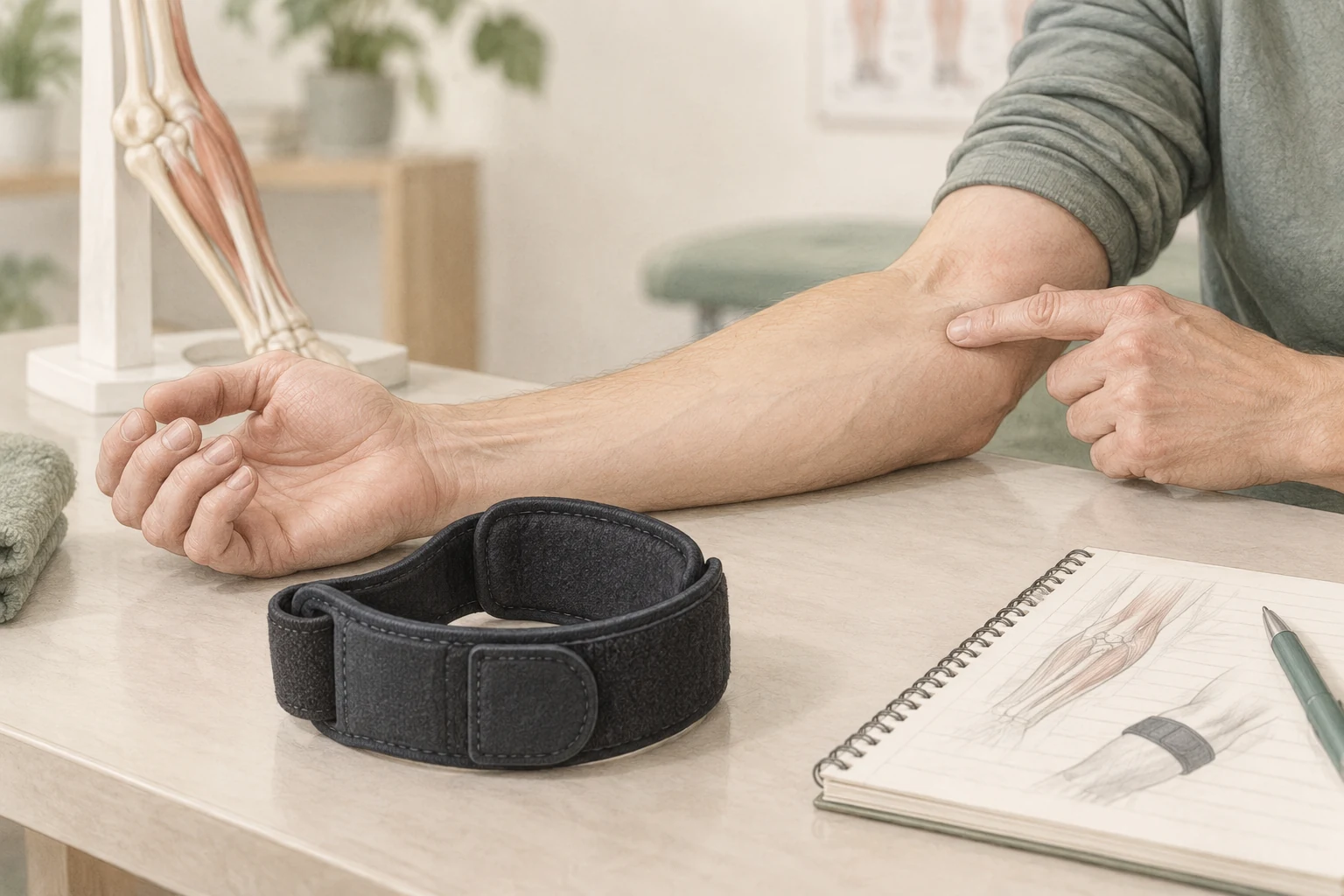
An elbow strap is visible, easily available and makes you feel like you're doing something. When grabping or lifting hurts, that thought is understandable. Nevertheless, ease of use and the idea of support should be kept separate from proven effect on pain and functioning.
The NHG Explanatory Note does not recommend brace treatment in epicondylitis. Thuisarts agrees with this and states that a brace is probably not helping or hardly helping, while there may be disadvantages.
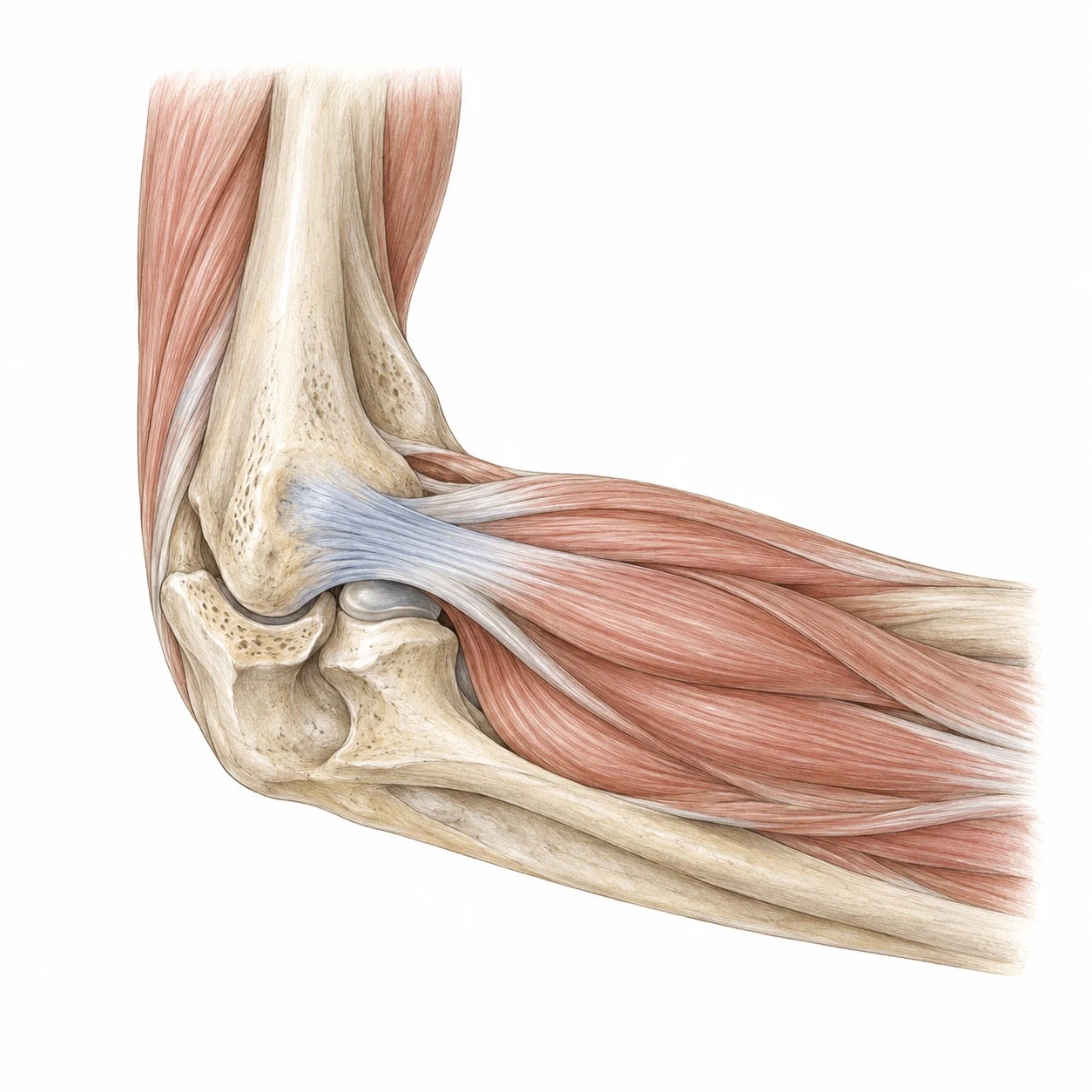
That information is relevant before a purchase. A product description can be extensive about material and pressure distribution, but it has not yet been demonstrated that your tennis elbow moves faster. In an opinion ask for a brace which concrete advantage is expected.
Temporarily comfortable is not the same as recovery
You can notice that a certain support or execution feels more comfortable at a time. That experience is useful to discuss, but does not answer the question of whether long-term wear is the best approach.
Compare what the brace makes you do. Do you really use the arm more easily, or do you keep doing the same incriminating job for longer because you think you're protected? The second is not evidence of greater recovery capacity. A ligament does not grant a general exemption to ignore signals and previous agreements.
Keep the question small and concrete. For example, why should I use this tool in this task, when the guideline does not recommend it? A careful answer describes both uncertainty and possible disadvantages. Only a lot of people like it is not enough for that.
Immobilising also has a price
A brace is not the same as a splint or sling, but tools can change the use of the arm. Thuisarts advises the arm to keep moving normally with appropriate activity reduction in a normal tennis arm. Keeping quiet for a long time is not a natural solution.
Don't wear a tool any tighter because the pain persists. New tingling, sensational changes, skin problems or additional discomfort are reasons to stop the trial and ask advice. In the case of a medically prescribed device for another condition, the appointments with that prescriber apply.
That last distinction is important. An advice against a brace at tennis elbow does not say that every splint is unsuitable for any elbow disease. The diagnosis and reason for the tool determine which information applies to you.
What question are you trying to solve with the brace?
First determine what you are missing: less pain in a task, certainty that you may move or help with the distribution of work. These are different needs and they do not automatically ask the same answer.
If you're afraid that just arm use can cause damage, explaining the grievance pattern can be more important than a ligament. If a specific task is too heavy, the execution or quantity may need to be adjusted. If your work doesn't allow for variety, a tool doesn't automatically help with that organizational question.
So describe not only that you want support, but for what. A clinician can then connect the plan to the real obstacle. This prevents a range of products from trying without a clear purpose or stop moment.
An alternative four-step conversation
This scheme helps to create a concrete plan without choosing a product immediately.
| Step | Question |
|---|---|
| naming task | What day-to-day operation is tricky? |
| Select Load Factor | Is it weight, duration, repetition or execution? |
| Try customization | What change is practically feasible? |
| Evaluate | What else should be noticeable? |
Example: holding a heavy bag for a long time is difficult. Discuss whether the content can be shared or whether another way of carrying is feasible. This does not prove that the symptom disappears more quickly; it does make daily life more manageable.
Choose one or two relevant tasks. A long list of prohibited movements can make the problem seem bigger than necessary. The aim is to make targeted adjustments and continue what is manageable, with support if you need it.
What if you're already using the brace?
You don't have to blame yourself for buying a tool. Use the experience as information. What did you notice, what task and how long? Was there really a difference in functioning or especially a sense of protection?
Discuss these observations in addition to the guideline opinion. Continuing a treatment or purchase just because you have already started is not a necessary step. Ask how you can organize your arm usage without the tool if there is uncertainty about it.
Let the diagnosis be re-evaluated in case of new swelling, clear movement restriction, tingling or loss of strength. A brace shouldn't hide a changed image of symptoms. If the original target gets out of sight, explanation and re-evaluation is more useful than purchasing a sturdier model.
Frequently asked questions
Does the GP recommend a tennis elbow brace?
The Dutch NHG standard does not recommend brace treatment in epicondylitis. The expected added value is not convincing enough. If you do get a brace advice, ask for the purpose, the justification and why in your situation there is a deviation from the general advice.
But my brace feels nice. Is that bullshit?
No. An experienced comfort difference can be real to you. It just doesn't prove that the tendon recovers faster or that long-term wearing is the best choice. Discuss what is functionally changing and whether you exceed load agreements without being noticed.
Should an elbow strap be as tight as possible?
No. Extra pressure isn't proof of any more effect. New tingling, skin discomfort or discomfort are reasons to interrupt use and seek advice. For a device that is medically prescribed for another diagnosis, follow the individual instructions.
What can I do instead of buying a brace?
Start with one tricky task to make concrete and discuss a feasible adjustment of execution, duration or weight. If necessary, ask for guidance in normal arm use. The goal is daily function, not as many tools or treatments as possible.
Sources and evidence
- NHG: revised standard Epicondylitis ↗
Explicitly do not recommend brace treatment in epicondylitis.
- Thuisarts: I have a tennis arm (2025) ↗
Recommendation against braces or splints, and the importance of appropriately adapted movement.
A personal follow-up step
From insight
to an appropriate plan.
At a paid intake, we'll discuss your symptom and do targeted research. ultrasound is included at no extra cost when it makes sense. Any treatments are agreed separately.
View the initial consultation