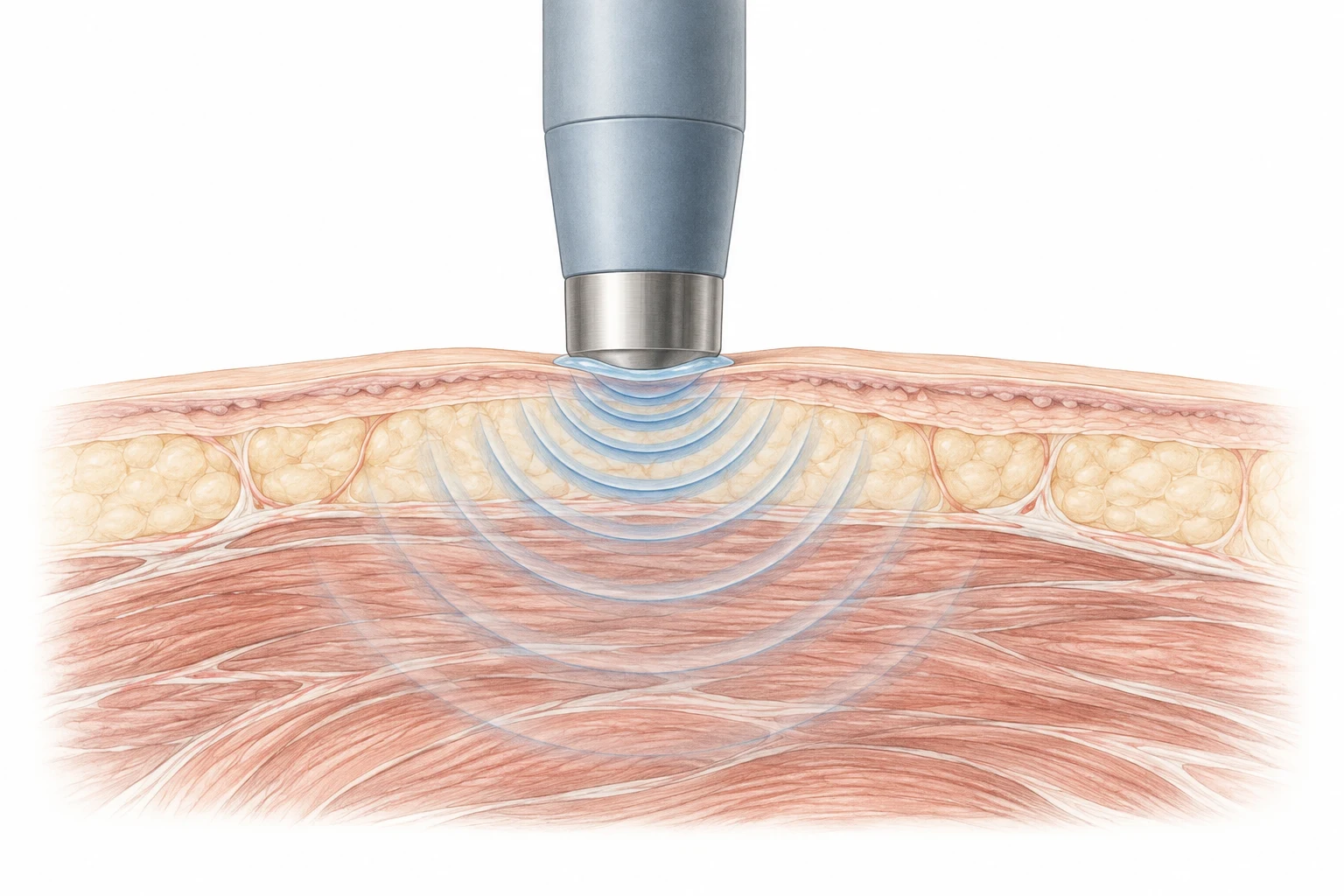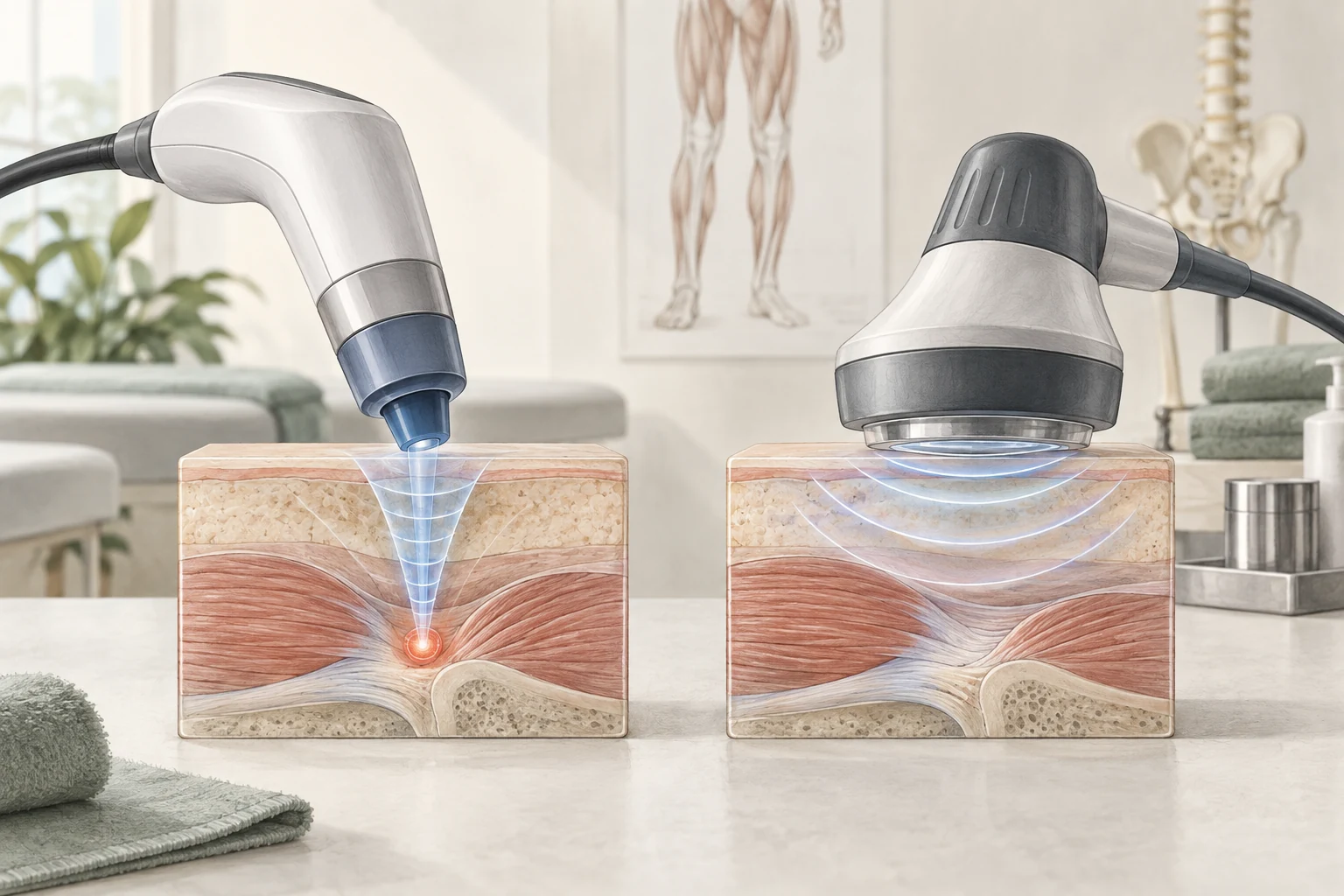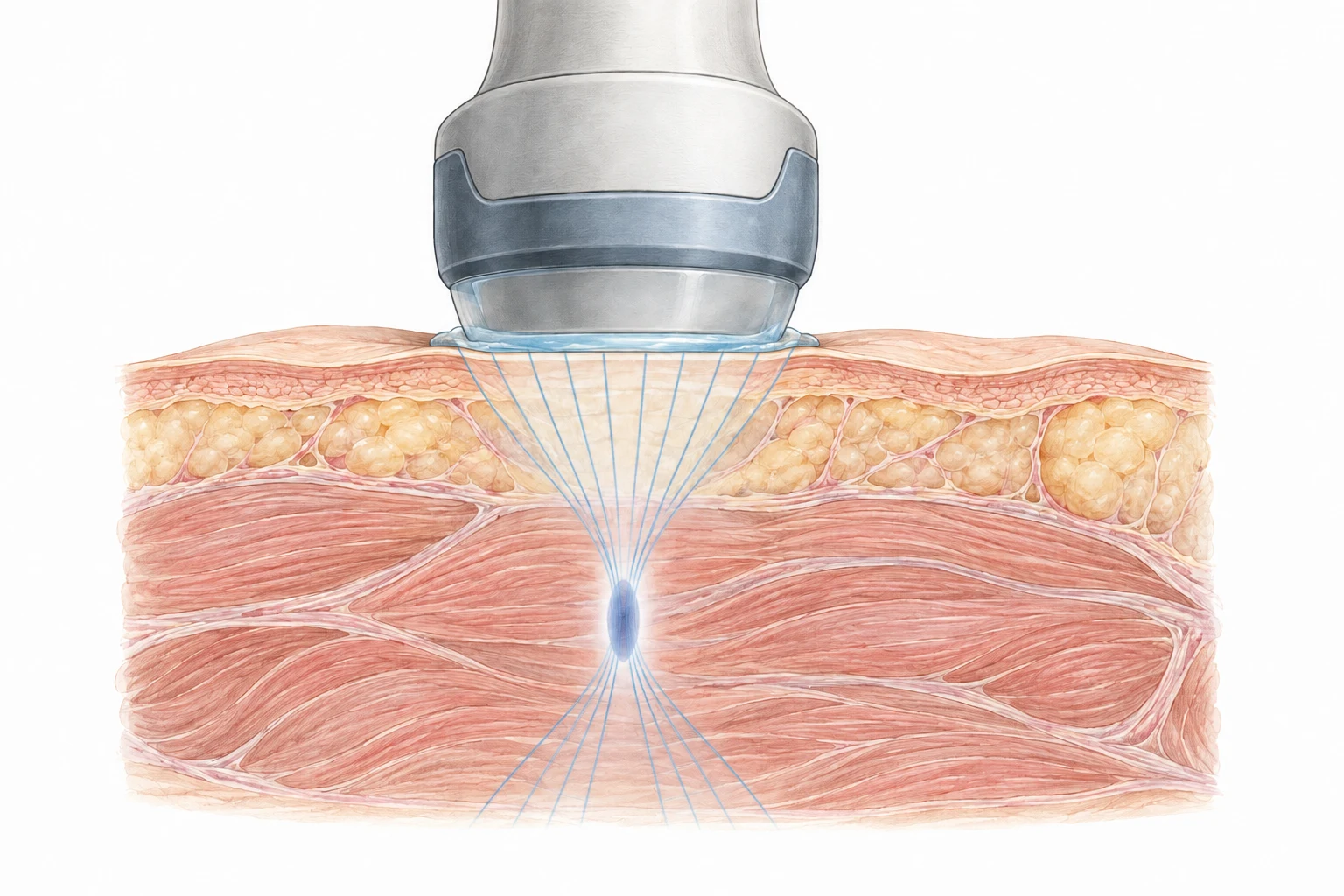
What exactly is being focused?
The word focused refers to the way the acoustic energy is bundled. The operator shall choose an application appropriate to the location and size of the target area. The ISMST describes different ways to generate focused waves, including electromagnetic, electrohydraulic and piezoelectric systems.
The focus is not an imaginary point that can be put in a painful place without judgment. Tissue lies at different depths, the shape of the treatment area counts and behind the target area structures may lie to be taken into account. Therefore, positioning is part of the substantive preparation.
For you as a patient is especially relevant whether the treatment provider can explain which area is being treated and why. The technical setting doesn't have to be a mystery, but you don't have to choose a dosage to make a good decision.
Targeted treatment starts with diagnosis
A clear pain spot sometimes makes the diagnosis more likely, but pain does not always precisely locate the structure involved. Shoulder symptoms, for example, may be associated with multiple tissues. The investigation should therefore first establish which explanation fits sufficiently with the story and findings.
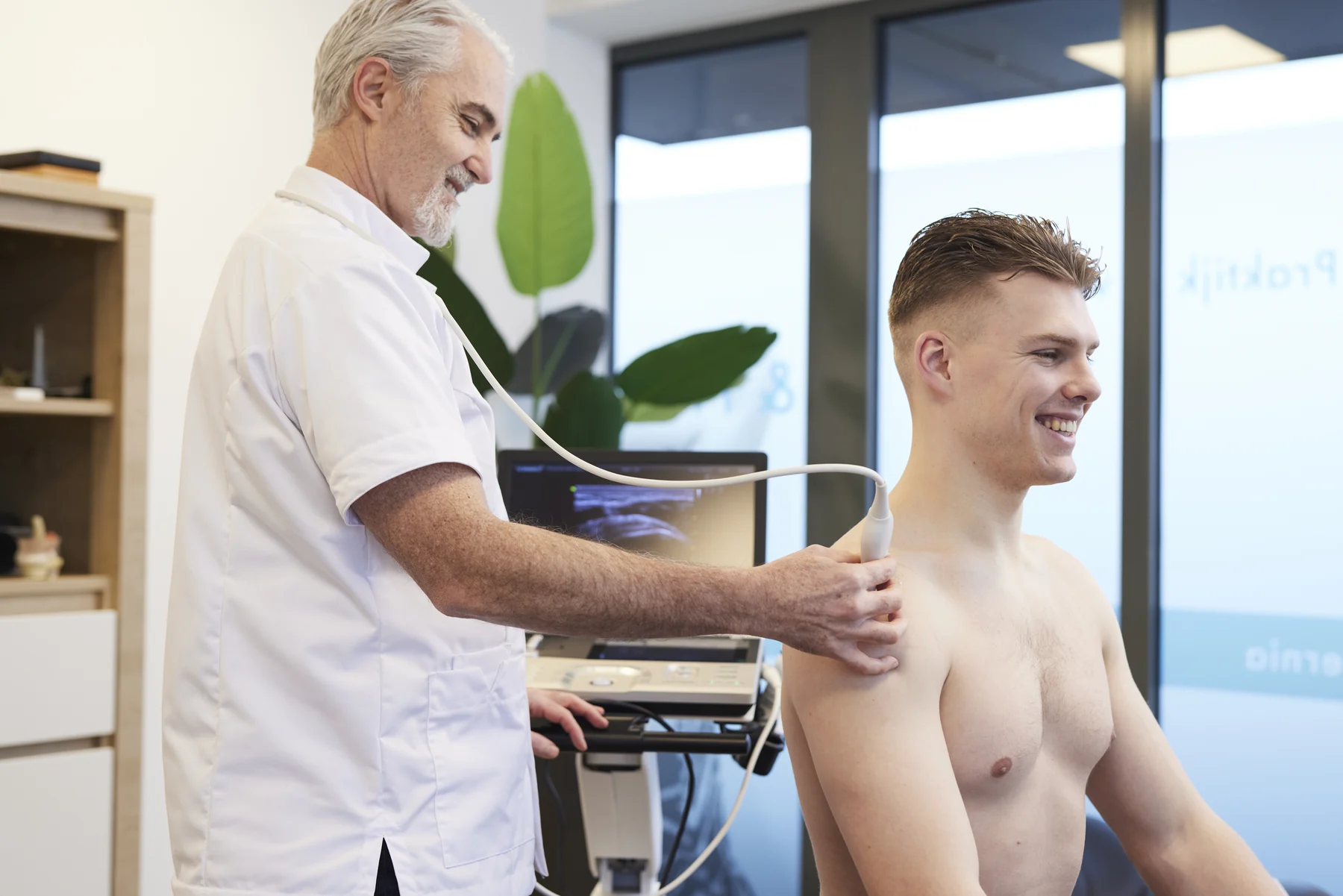
ultrasound can answer a specific question, for example about a lime deposit or the condition of a tendon. An ultrasound is not the same as an automatic treatment indication. The finding must have meaning for your symptoms and for a decision that actually changes.
Ask in advance what a scan will add. If the answer is only that one wants to have everything in one's sight, one can ask what uncertainty is resolved. This makes it clear whether imaging supports diagnostics, the application helps plan or especially adds little to the treatment plan.
Does deeper mean better, too?
A larger range or a more focused energy is something about the possibilities of a technique. It doesn't say in itself that more people are recovering. A superficial symptom does not automatically benefit from an application that can be directed more deeply.
Therefore, do not compare only the maximum capacity of devices. More important are the diagnosis, the treatment protocol examined, the experience of the performer and the way the result is assessed. An institution that has been used in a study in one condition does not necessarily belong to every painful tendon.
The Dutch guideline for fasciopathy plantar allows both radial and focused shockwave as well as option to be considered within the conditions described. It does not follow a general ranking in which focused is always the best treatment.
Opinions shall not be unanimous: Thuisarts doesn't recommend shockwave with long heel spur. Discuss this difference with your clinician; an additional option is not a self-evident standard treatment.
What does careful application look like?
A treatment begins with the control of the target area and the relevant safety information. After that, applicator, contact and setting are aligned to the plan. Your response during the session is information that the clinician should take into account.
Please indicate when something feels different than expected. A sharp radiating sensation, an unpleasant posture or tension to the treatment are negotiable. Adjusting or stopping during a session is a normal option. Continuing to achieve a pre-selected number of pulses is not in itself a meaningful treatment goal.
Also ask which reaction may be normal later and which change you should contact. So you leave with an understandable follow-up plan. It helps when you know whether you can perform daily activities unchanged or need to adjust temporarily based on your situation.
A comparison that goes beyond device names
Use these questions to put two proposals side by side:
| Component | What do you want to know? |
|---|---|
| Target area | What structure and what symptom are being dealt with? |
| Substitution | Does the research used fit in with this diagnosis? |
| Technique | Why does the focused application make sense here? |
| Continuation | How does the treatment connect to exercises and activities? |
| Evaluation | To what change do you notice that the approach has value? |
Device names can help to describe an application precisely, but do not form an independent quality measure. Also the presence of the latest equipment does not yet tell how carefully the clinical decision is made.
An answer like this is the strongest treatment leaves many of these questions open. A specific proposal will explain what problem one is trying to influence and how it will be monitored.
Where are the boundaries?
Focused shockwave is not suitable for every cause of pain. Sometimes another diagnosis has to be excluded first or another treatment route makes more sense. The safety weighting depends partly on the treatment area, the energy used and the device.
A carefully selected treatment may also have insufficient effect. Therefore arrange a moment when pain and functioning are compared to baseline. Think of the same stairs, the same walking route or the same stretch motion. That's more useful than just asking if the session felt comfortable.
If the result is left behind, the follow-up question is not automatic whether more energy is needed. The diagnosis, load, selected goals and previous treatment response can all be reviewed. This also includes targeted decisions when a different approach is needed.
Frequently asked questions
Is focused shockwave always stronger than radial shockwave?
The techniques have different physical properties and institutions are not directly comparable. In addition, it is not synonymous with better. The right choice depends on the target area and the clinical justification, not on a contest to the highest device position.
Should treatment be performed with an ultrasound?
That depends on the demand and application. ultrasound can help in diagnostics or positioning, but not every tendon symptom requires continuous ultrasound-guided treatment. Ask what concrete advantage imaging has in your situation and whether it really changes the choice.
Can focused shockwave lime be removed?
In some calcified shoulder paws, shockwave is examined and applied. Reduction of lime and improvement of pain are different outcomes. It is not justified to promise that lime will disappear or that the symptoms will always disappear. The assessment requires diagnosis-related explanation.
How do I know this technique suits me?
Let us first assess the most likely cause and which first treatment has already been sufficiently tried. A proposal is only complete if alternatives, safety information, costs and evaluation are also discussed. The technical name alone doesn't answer those questions.
Sources and evidence
- ISMST – Recommendations and definitions ↗
Technical differences, clinical selection and safety balances in shockwave.
- guideline Fasciopathy plantar – shockwave therapy (2026) ↗
Place of ESWT after education and practice therapy; effects, evaluation and adverse reactions in fasciopathy plantar.
- Thuisarts – long-term heel track and treatment selection (2026) ↗
Patient advice in sustained heel pain; negative advice on shockwave differs from the specialist guidance.
A personal follow-up step
From insight
to an appropriate plan.
At a paid intake, we'll discuss your symptom and do targeted research. ultrasound is included at no extra cost when it makes sense. Any treatments are agreed separately.
View the initial consultation