The seatbone as a lead
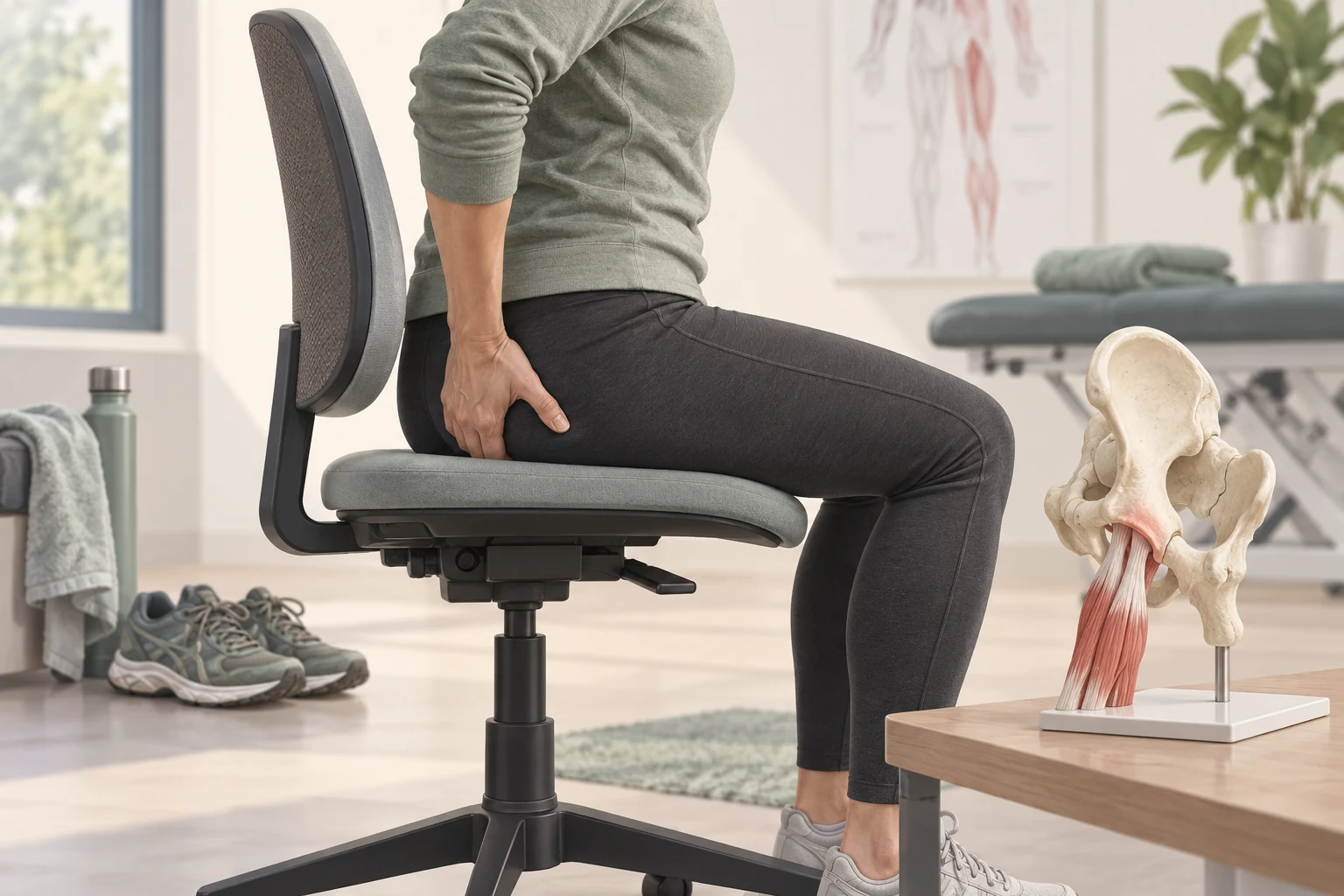
The hamstrings run at the back of the upper leg. Part of these muscles attach via tendons to the sitting bone. A long-term symptom to that high attachment is called proximal hamstringtendinopathy. Pain is often low in the buttocks and may be noticeable during running or prolonged sitting. The description does not automatically fit every painful buttock: the conversation and physical examination remain necessary.
One Clinical commentary on proximal hamstringtendinopathy describes these identifiable load patterns. It is an explanation of treatment principles by experts, no evidence that one exercise schedule cures everyone. You can use the landmarks to tell symptoms more accurately, without even establishing a diagnosis.
Gradual onset or sudden injury
Make a distinction between slowly increasing sitting or walking symptoms and sudden pain when sprinting, slipping or deep movement. In case of acute injury, a different injury may occur than a long-term sensitive tendon insertion. A clear handsome, extensive bruising, severe power loss or difficult walking requires medical assessment. Thuisarts describes the acute upper leg injury apart from gradual overload symptoms.
Prepare the conversation with the exact order: what did you do, what did you feel immediately and what didn't work after that? In the case of gradual symptoms, what is useful is the change that preceded: more hills, longer sitting in succession, new strength training or a combination. Those are clues, not automatically proven causes. A busy training week can happen to coincide with pain; a clinician weighs the whole story.
Why sitting and stretching can differ
With the high hamstring attachment, pressure can also play a role. Deep hip bending and some stretching positions can provoke the sensitive region. Therefore, increasing stretching is not a self-evident solution to a pulling feeling. The above mentioned clinical publication discusses the adaptation of such incentives within an individual programme.
Practically you can explore which seating conditions make a difference: the duration without interruption, the hardness of the seat and the position of the hip. Change one circumstance and note what that does to your comfort. Another chair is a tool to make an activity feasible, not a treatment which thus establishes that it restores the tendon.
Don't use pain as a match between postures. The aim is to provide sufficient information to choose a workable daily schedule. Every few minutes deep bending to check whether things are improving rarely provides a clear overview.
What research on shockwave shows
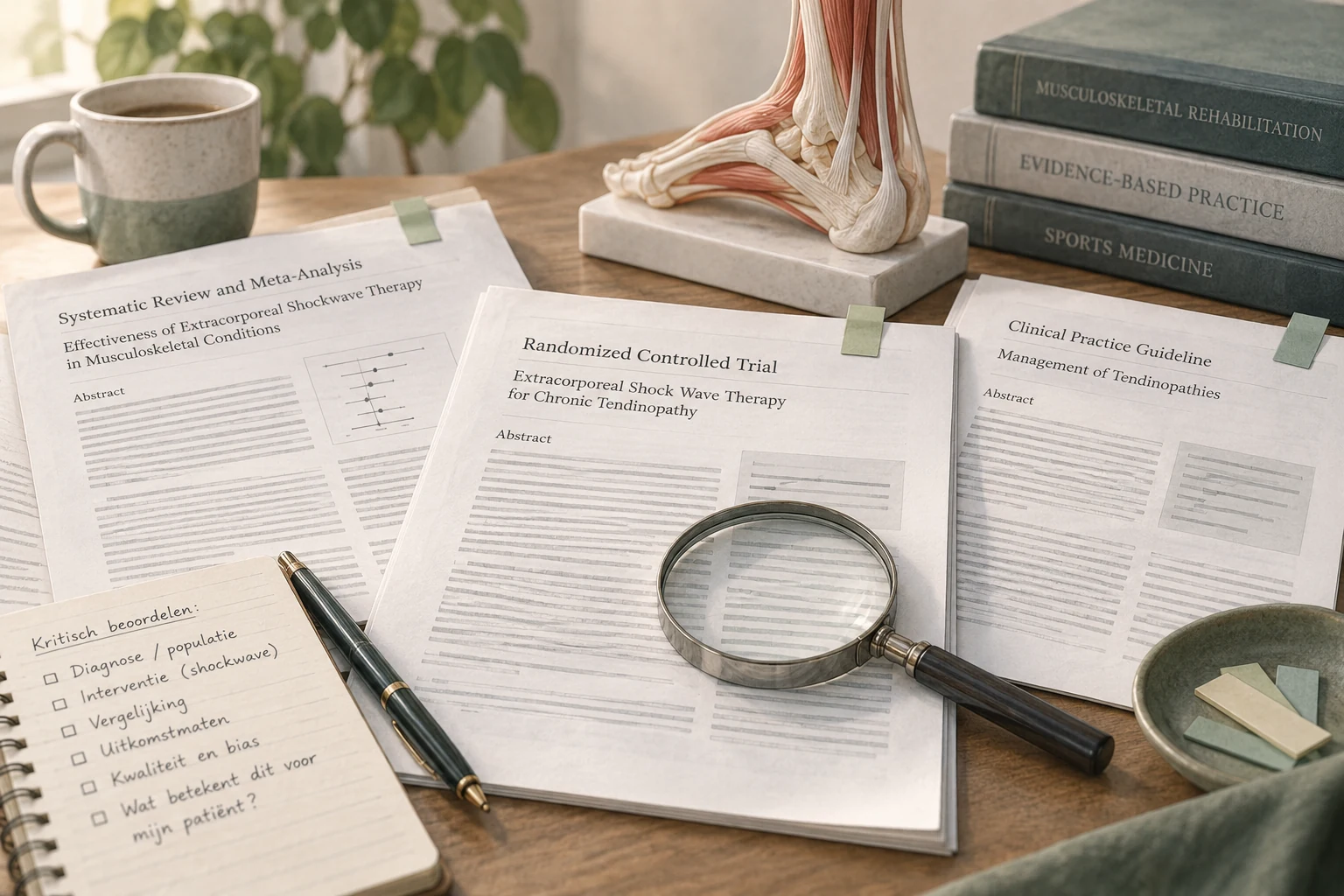
In a randomised study in 100 people with proximal hamstringtendinopathy individual physiotherapy and shockwave were compared. Both groups also received standardised information. The researchers found no clear difference between the treatments during follow-up up to 52 weeks on the main outcomes.
That result does not mean that both options work equally well for everyone. Also, a comparison without an untreated or a dummy group does not prove how much improvement the treatment itself brought. The study mainly gives reason not to promise general superiority of shockwave.
A treatment choice can therefore depend on previous guidance, feasibility, preferences and costs. Ask also what a possible treatment adds to the exercise and adjustment of load. An agreement on evaluation is more valuable than deciding in advance that a fixed number of sessions is necessary.
Make a map of your seat and running load
A simple overview can show where the plan should begin. The following is a filling-in tool, not a medical test schedule.
| Situation | What are you writing? | What kind of question helps? |
|---|---|---|
| Travel | Seattime, breaks and seat | Can the longest uninterrupted period be shorter? |
| Work | Meeting, driving, working at home | Is variety practical to organize? |
| Running | Move, hills, expensive | What change came first? |
| Strength training | Motion and load | Is a less deep variant negotiable? |
| Response after | Sitting comfort and daily functioning | Was the dose chosen repeatable? |
Then choose one activity that you want to keep and one that can be adjusted for the time being. This does not prohibit the plan from a long list. As an example, someone wants to maintain necessary commuting and can temporarily replace the hill training. That's a choice of priorities, not standard advice for all hamstring symptoms.
Discuss with the clinician how exercises fit next to that daily load. Adding more loose recovery activities without viewing the existing day can result in an unfeasible program. Find out what information you're linking back and when you're changing one step.
When to review the plan
In the event of insufficient progress, it is appropriate to first examine whether the work diagnosis, execution and targets still fit. Is sitting especially limited while only running loads are followed? Are exercises practically feasible? Is there a new appearance, a change of feeling or a clear loss of power? Such changes deserve a new assessment and should not simply be attributed to the same tendon.
An ultrasound or other scan is only useful when the outcome can answer a specific question. Therefore, discuss in advance what one is looking for and what treatment choice depends on it. A new term on a report doesn't help much if the meaning for your symptoms remains unclear.
Following recovery can start with something small but relevant: attend a meeting, a car ride with agreed breaks or complete a chosen training. I want you to identify the circumstances. Thus, assessment remains related to what you really want to do, without promising a pain-free calendar date.
Frequently asked questions
Is pain on a hard seat proof of a hamstring Tendon symptom?
No. The pattern may fit, but is not specific enough to diagnose it. Also tell whether the pain occurs when walking, ducking or forceing, how it began and whether there is any appearance or sensational change.
Do I need to stretch my hamstrings?
Not automatically. In case of a sensitive high attachment, deep bending or firm racks can cause symptoms. Discuss the purpose of racks and an appropriate result of movement; a pulling sensation does not necessarily mean that more racks are needed.
Is shockwave better than physical therapy for this symptom?
The above mentioned study among 100 participants found no clear difference in the main outcomes. That doesn't provide a basis for a general promise that shockwave is better. Based on your situation, choose support and an evaluation appointment.
Can I keep running?
That depends on the diagnosis, severity and response to load. Discuss tempo, hills, expensive and sitting symptoms later in the day. In case of acute handsome, severe loss of function or difficult running, assessment is required first.
Sources and evidence
- Rich et al.: individueel oefenprogramma bij proximale hamstringtendinopathie (2025) ↗
Recognizable symptoms about high hamstring attachment and expert principles for compression, stress and individual practice.
- Rich et al.: fysiotherapie versus shockwave bij proximale hamstringtendinopathie (2025) ↗
RCT in 100 participants: no difference in primary outcomes between physical therapy and shockwave up to 52 weeks.
- Thuisarts: sudden upper leg injury (2025) ↗
Distinctive with acute upper leg injury and relevant cause for medical assessment.
A personal follow-up step
From insight
to an appropriate plan.
At a paid intake, we'll discuss your symptom and do targeted research. ultrasound is included at no extra cost when it makes sense. Any treatments are agreed separately.
View the initial consultation