Describe the work more accurately than many standing
A hairdresser, a warehouse worker and a teacher can all stand a lot, but their work demands something else. Staying in one place, walking with goods and short trips through a local are different patterns. Break options, mandatory footwear and the route to and from work also play along. With only the number of working hours, an important part remains invisible.
Create a task overview for one usual service. Note when you are mainly standing, walking, lifting or sitting. Add commuting and necessary home tasks. The goal is not a minute control of your movement, but discover which moments accumulate. This gives a discussion about adaptation more content than the general advice to slow down.
Choose an adjustment that is really executable
Short variety can be useful if long standing makes the symptom worse. Perhaps an administrative task can sit, a consultation at a chair or part of the preparation at another work height. Sometimes job rotation is possible; sometimes working safely requires a fixed position. The adjustment must be appropriate to the work.
Thuisarts describes long-term standing and walking as relevant load to heel pain. This does not result in an identical schedule of breaks for each occupation. Discuss which moments are problematic for you and which alternative is practically available. An appointment that only exists on paper doesn't provide much information about what helps. Rather make one concrete change that you can actually implement.
Work load and practice must fit side by side
When you get exercises, they are added to a day that can already be incriminating. A firm practice session after an exceptionally busy shift has a different context than the same session on a quiet day. Therefore, tell the clinician about schedules, peak days and irregular services. This allows the training structure to match the life in which it has to be carried out.
The guideline on education Emphasises personal load advice. The goal is not a competition to handle as much load as possible. A workable plan makes clear what you want to keep doing, which can temporarily be reduced and when adjustment is needed. Even at home, appointments about groceries or long cooking can give room without removing all the relaxing movement.
Shoes, floor and tools: assess the combination
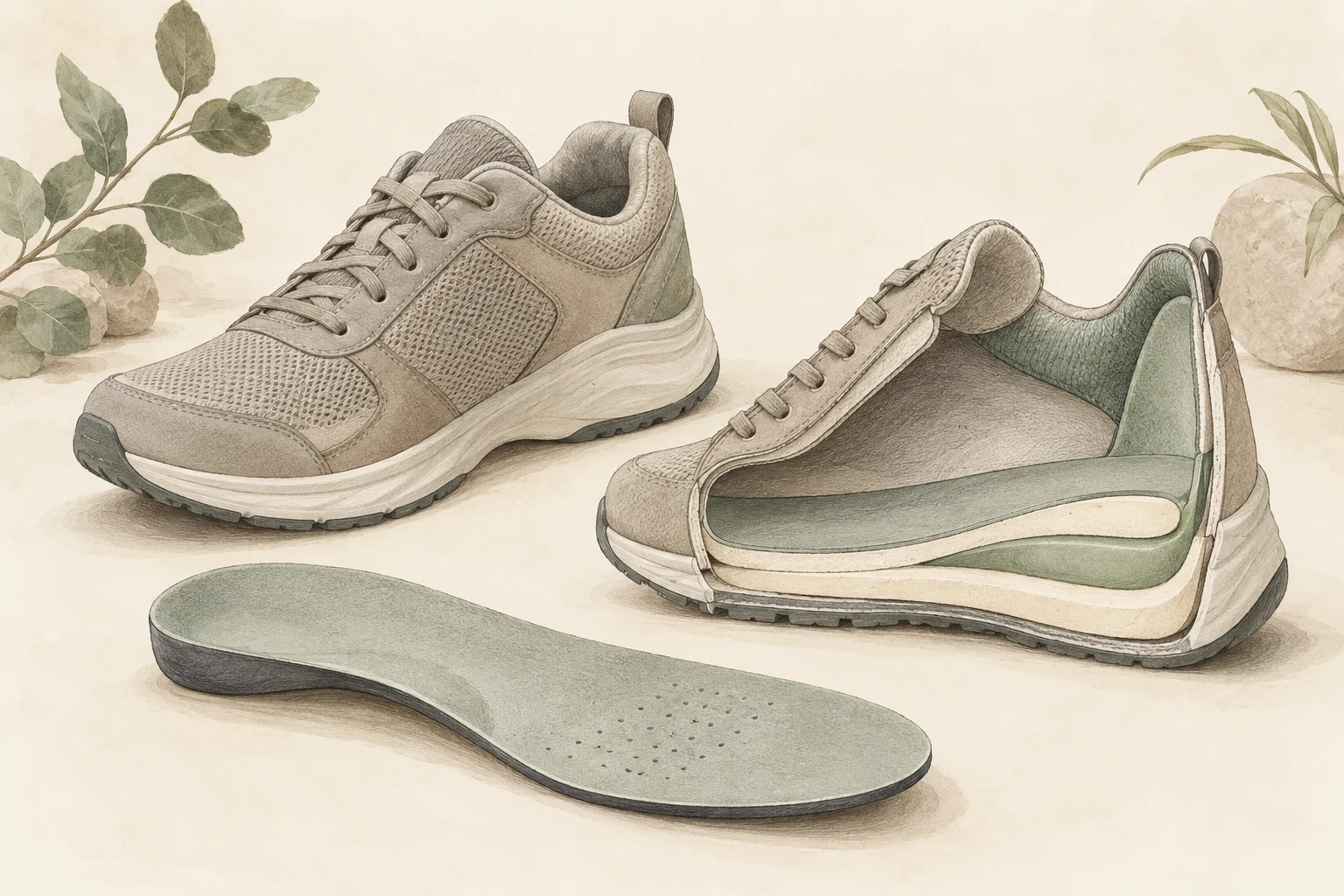
Comfortable shoes deserve attention, but a new pair does not solve an unfavourable day schedule automatically. In addition, safety shoes are subject to requirements that cannot be ignored. Ask which models or adjustments within the working situation are allowed. Note fit, sufficient space and how the heel reacts during real tasks.
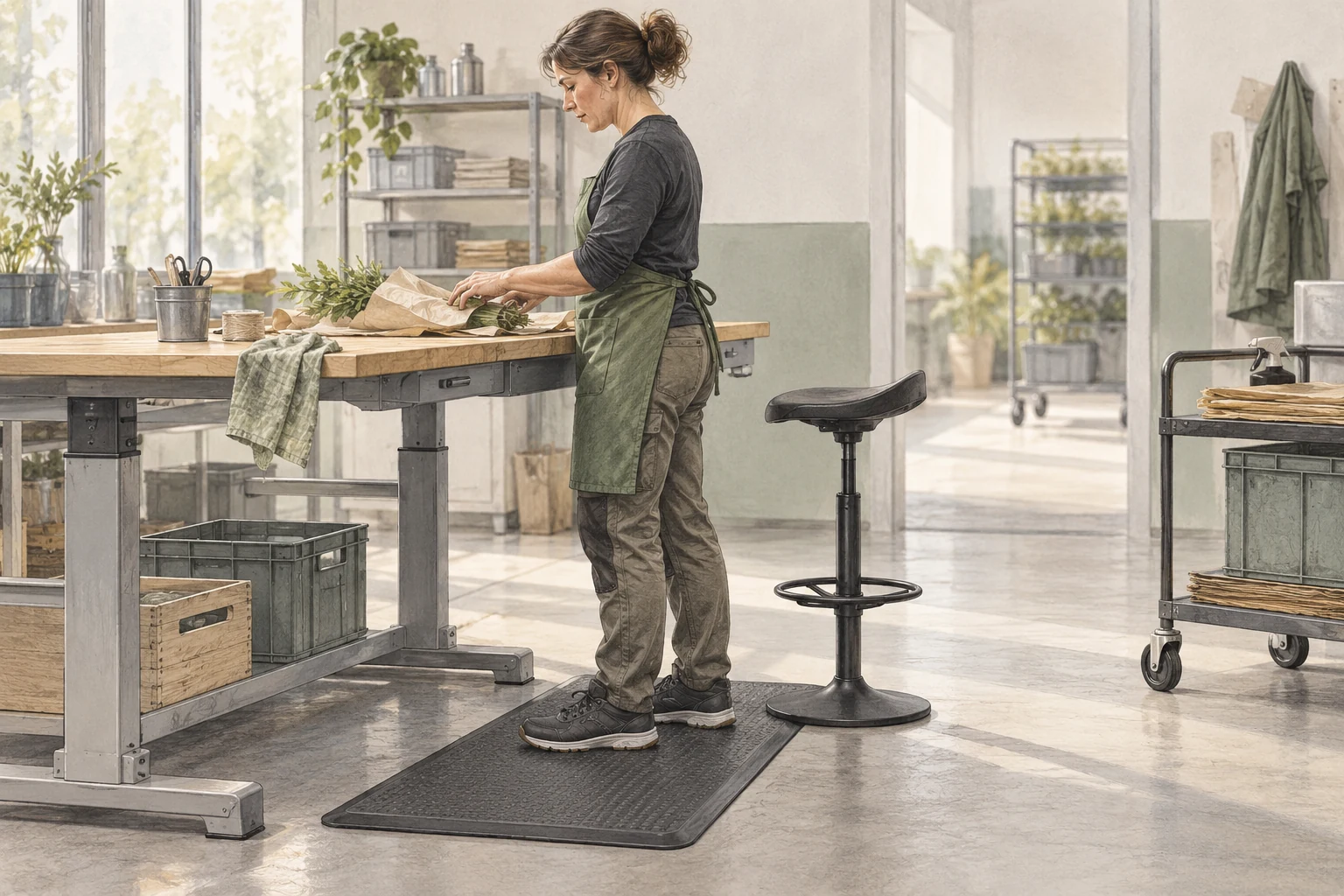
A mat, chair or support can be practically attractive. In addition, assess trip risk, hygiene and accessibility of materials. Do not try to judge a change solely on the first soft feeling. A device shall also remain usable during the service. Keep other changes as limited as possible, so you can better estimate what the new part adds for you.
A call sheet for employer or company doctor
You don't have to share your entire medical history with everyone at work. A functional description helps the conversation about feasible tasks. For example, you can prepare:
| Subject matter | Which you can actually write down. |
|---|---|
| Problem | What kind of task does walking or standing become more difficult? |
| What's going to work? | Which tasks do you still perform pleasantly and reliably? |
| Proposal | What task, order or workplace can change temporarily? |
| Implementation | Who arranges the practical change and from when? |
| Evaluation | To what do you see whether the agreement is feasible? |
This is a call help, not an assessment of fitness to work. The company doctor can have an appropriate role for this. One example is moving a sitting administration job to the moment when otherwise a long continuous period arises. Whether that works depends on the real work organization.
Avoid every day off becoming a catch-up day
After a lighter service it sometimes feels possible to do all delayed messages and household tasks in succession. As a result, the total load remains high while it seems as if the work has been adapted. So look at a normal week and not just at the service that went best.
Discuss again when the agreed changes are not carried out, symptoms continue to rise or you will move differently to avoid the heel. In the event of a change in pain or new injury, a new assessment may also be necessary. Work resumption or expansion becomes stronger when you know in advance what task you are trying, what you are observing and who will help if the first version is not feasible.
Frequently asked questions
You want me to call in sick to help?
That depends on your limitations and the work you do. This article cannot assess fitness to work. Discuss which tasks are still successful and which adjustments are possible. In the event of persistent problems, the company doctor can help to align health and workload.
Does a softer floor always help?
Not necessarily. Comfort can change, but a floor or mat must also be safe and practical. Assess the effect during the actual tasks and pay attention to stability. A choice of material does not replace a consideration of the duration and distribution of standing.
Do I have to do extra exercises on working days?
More practice is not automatically better. The load on your shift counts in total. Let the exercise plan connect to your schedule, possibilities and response. Also tell us if the practical execution after a service is always unsuccessful.
What do I discuss if the employer has no other duties?
Describe as concrete as possible where the restriction is located and which minor changes are still conceivable, such as work order or seating. If necessary, involve the company doctor in a feasible assessment. Avoid appointments that you can't physically or organizationally deliver.
Sources and evidence
- Thuisarts — I have pain under my foot (hilt trail) (2026) ↗
Load during standing and walking, comfortable footwear and symptoms pattern.
- guideline Fasciopathy plantar — Education (2026) ↗
Personal load advice, footwear and realistic expectations.
A personal follow-up step
From insight
to an appropriate plan.
At a paid intake, we'll discuss your symptom and do targeted research. ultrasound is included at no extra cost when it makes sense. Any treatments are agreed separately.
View the initial consultation