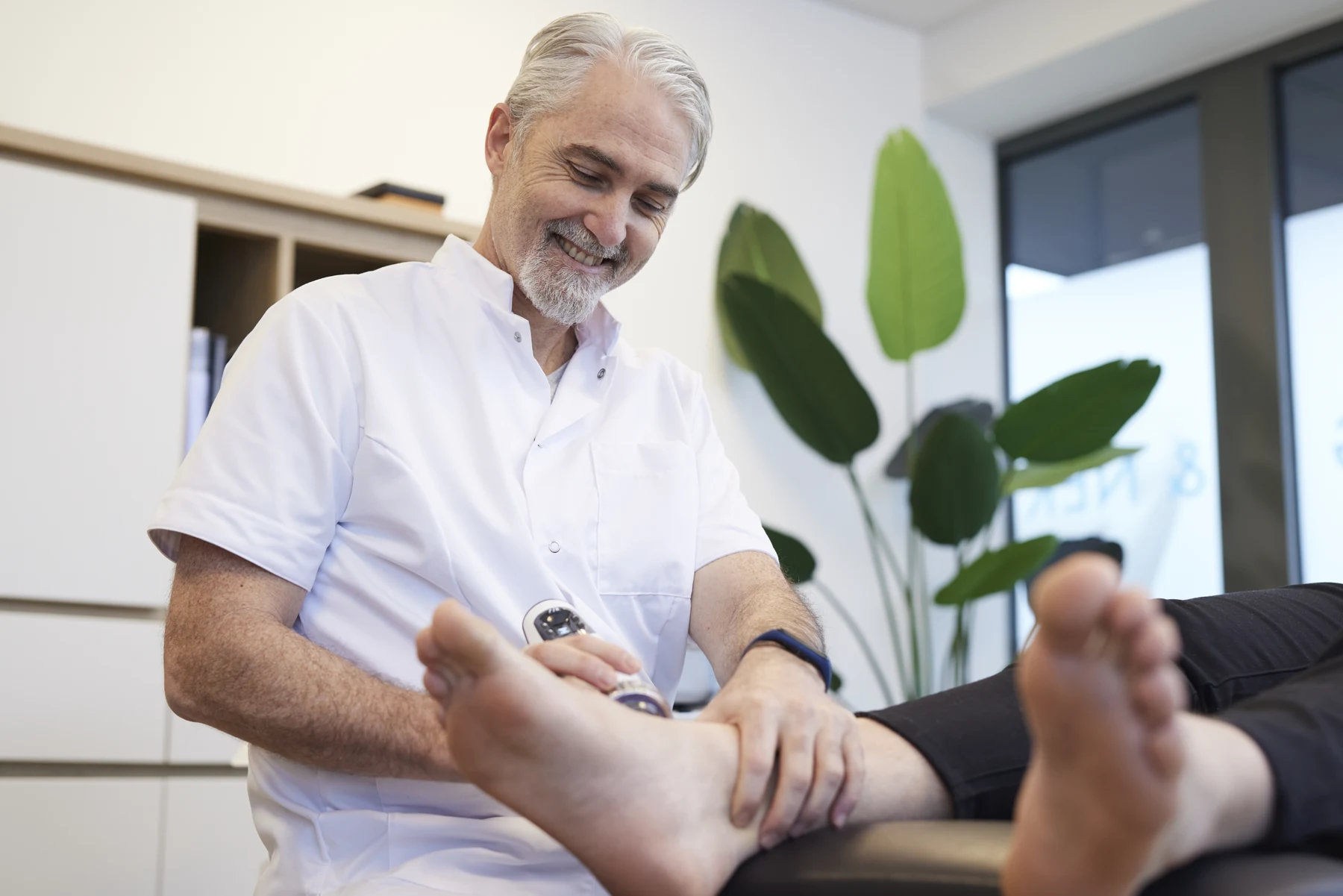
Three reasons not to start
A treatment may be unsafe, not sufficiently substantiated for the symptom or not adding much at the moment. Those are different reasons. Someone can be treated medically, while explanation and better load building are a more logical first step.
The opposite is also true: a condition fits in general with an application, but personal circumstances make that choice undesirable. Therefore, the diagnosis is only part of the assessment.
In the event of rejection or postponement, ask what reason is applicable. It cannot be less helpful than an explanation about the risk, uncertainty or the missing benefit. With that information you can understand which follow-up step is useful.
Why the treatment area matters
The ISMST mentions contraindications associated with the shockwave field, technique and energy. Examples are a malignant tumor or a pacemaker in the treatment field. Additional limitations are described for focused high-energy applications.
This means that a medical history cannot always be judged yes or no in one word. The operator must know where something is located, what application is being considered and what the instructions for use of the device in question prescribe.
Therefore, do not try to use a general Internet list as final approval. Such a list may help to gather information, but is not a substitute for the assessment of your situation. Rather mention a little too much relevant medical information than that you decide yourself that it probably has nothing to do with the pain site.
What information are you taking?
Make a brief overview of diseases, surgeries, implants and medication. If possible, write down the type and location of implants. Report pregnancy or its possibility. Also describe recent changes, such as a wound, unusual swelling or a new trauma.
Medication sometimes requires extra consideration, for example if the risk of bruising or bleeding changes. That doesn't mean that any drug treatment makes it impossible. It means that a controller must assess the meaning and, if necessary, agree with the prescriber.
Take the overview to the intake instead of trying to memorize everything. For multiple traders, an up-to-date list can prevent anyone from relying on other information.
First examine another explanation.
Sustained pain is not an automatic indication for shockwave. Sometimes the working diagnosis is not sufficiently consistent with the course. New failure, a clear traumatic change or symptoms that do not fit the original pattern may lead to re-evaluation.
For example, in case of sudden beauty and loss of function, an acute injury should be investigated first. Then treating a painful place as if it were just an overload is not a logical first choice.
Another route can also fit better without rush. Perhaps it is mainly unclear which activities trigger the symptom, or the previous diagnosis is only based on a loose scan finding. A careful conversation can have more value than adding a technique directly.
Starting early can't add much
In some conditions, a guideline describes a place for shockwave after initial treatment has not helped sufficiently. For fasciopathy plantaris, this is in the Dutch guideline of 2026 linked to at least 12 weeks of adequate education and practice therapy without effect.
That example shows why the content of previous care counts. Calendar weeks alone are not enough. If you did not have an understandable plan or exercises were not feasible, that approach may first need to be improved.
Therefore, delay does not mean that your symptom is not taken seriously. It may mean that a probably meaningful basic step has not yet been worked out. Ask what that step means in concrete terms and when the decision will be discussed again.
Opinions shall not be unanimous: Thuisarts doesn't recommend shockwave with long heel spur. Discuss this difference with your clinician; an additional option is not a self-evident standard treatment.
In case of symptoms of tendons in the shoulder without calcification, the JOSPT guideline from 2025 Shockwave off. An indication per diagnosis should therefore also be substantiated.
A practical decision-making review
You can summarize the conversation by four lines:
- The most likely explanation for my symptom is...
- The reason not to start a shockwave right now is...
- The next fitting step is...
- We'll reevaluate the situation when...
This overview prevents you from only remembering that a treatment wastes. It also makes it visible whether there is any information missing, such as an implant card or a previous study result.
If you do not agree with the choice, ask for the justification or a second assessment. A different assessment is possible, but the same safety information should remain available. The aim is to make a better fitting decision, not to find someone who wants to deal with it without explanation.
Frequently asked questions
Are metal implants always a problem?
A general statement about all metal implants is too coarse. Type, location, technique and device regulations count. Report the implant and take available data with you. Also do not draw conclusions from safety information about EMTT, because that is a different technology than shockwave.
Can shockwave during pregnancy?
Always report a pregnancy or possible pregnancy in advance. The assessment is related to the application, treatment area and device requirements. A general website cannot give personal consent. Let the clinician determine whether any other approach is necessary.
Can I stop blood thinners for shockwave?
Do not stop blood thinning or other prescribed medication independently. The reason you're using the drug remains important. If treatment presents a risk, it should be discussed whether another approach is more appropriate or whether consultation with the prescriber is necessary.
Isn't a shockwave the same as doing nothing?
No. An alternative may consist of targeted explanation, adjustment of load, exercise, further examination or any other reference. Ask for a concrete follow-up plan. A decision not to start a device treatment can be part of active and careful supervision.
Sources and evidence
- ISMST – Recommendations and definitions ↗
Technical differences, clinical selection and safety balances in shockwave.
- guideline Fasciopathy plantar – shockwave therapy (2026) ↗
Place of ESWT after education and practice therapy; effects, evaluation and adverse reactions in fasciopathy plantar.
- Thuisarts – long-term heel track and treatment selection (2026) ↗
Patient advice in sustained heel pain; negative advice on shockwave differs from the specialist guidance.
- Desmeules et al. – Rotator-cufftendinopathy guidance (2025) ↗
Diagnostics and active treatment of rotator-cuff symptoms; ESWT not recommended without calcification and possible option for calcification.
A personal follow-up step
From insight
to an appropriate plan.
At a paid intake, we'll discuss your symptom and do targeted research. ultrasound is included at no extra cost when it makes sense. Any treatments are agreed separately.
View the initial consultation