Start with what you want back
A training program becomes more useful when it is clear what you are training for. Do you want to be able to walk for another hour, stand at work without interruption or lie more comfortably on your side? These goals do not all require the same first step. Describe the task so concrete that you can see later what has changed.
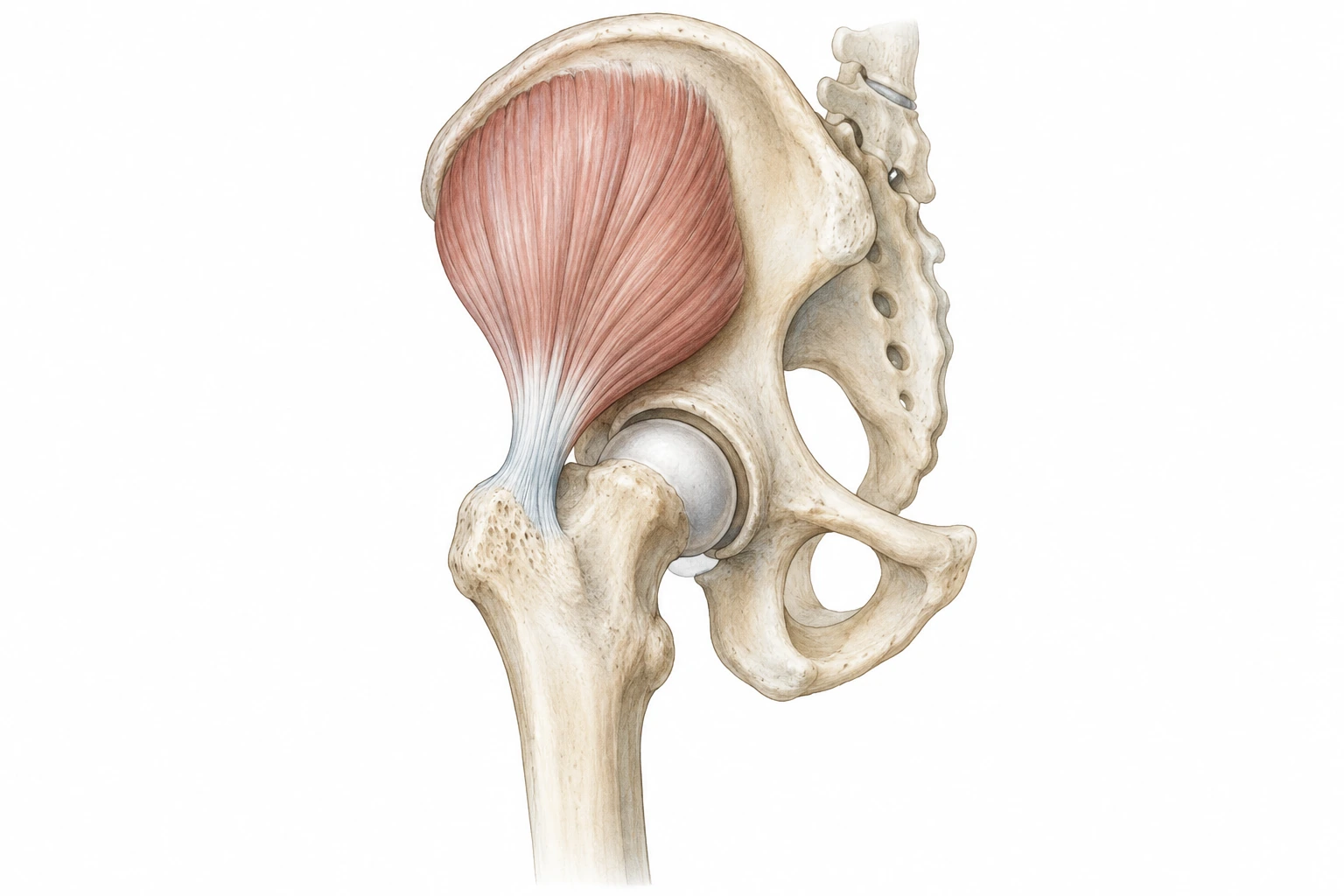
Gluteal tendinopathy involves tendons of gluteal muscles around the outside of the hip. A plan can therefore pay attention to strength and control around hip and pelvis. That's not proof that your glutes are simply too weak or that one wrong attitude caused the symptom. The assessment needs to explain which factors actually seem relevant to you.
Bring your current possibilities, too. What goes well, what activity is important for relaxation and what obligation can you hardly change? A feasible program uses that information. It makes little sense to create a training schedule that collides with every working day and therefore stays still.
What does research show about education and exercises?
One randomised study in 204 people with gluteal tendinopathy compared explanations plus exercises with a corticosteroid injection and wait. The guided combination gave better results for pain and experienced improvement after eight weeks. At 52 weeks, the experienced improvement was better than after injection, but the pain intensity did not differ between those two groups.
The research therefore supports a combined programme. It doesn't prove that one specific exercise cures everyone, or that the duration of research predicts your recovery time. Participants were given guidance and explanation about physical load; that part disappears when you only take over a picture of an exercise.
A useful question to your treatment is therefore: what should I learn about my own response through this program? If you understand when you can expand and adjust what you can do in a relapse, the plan is more useful than a list of movements without context.
Choose a starting posture that is feasible
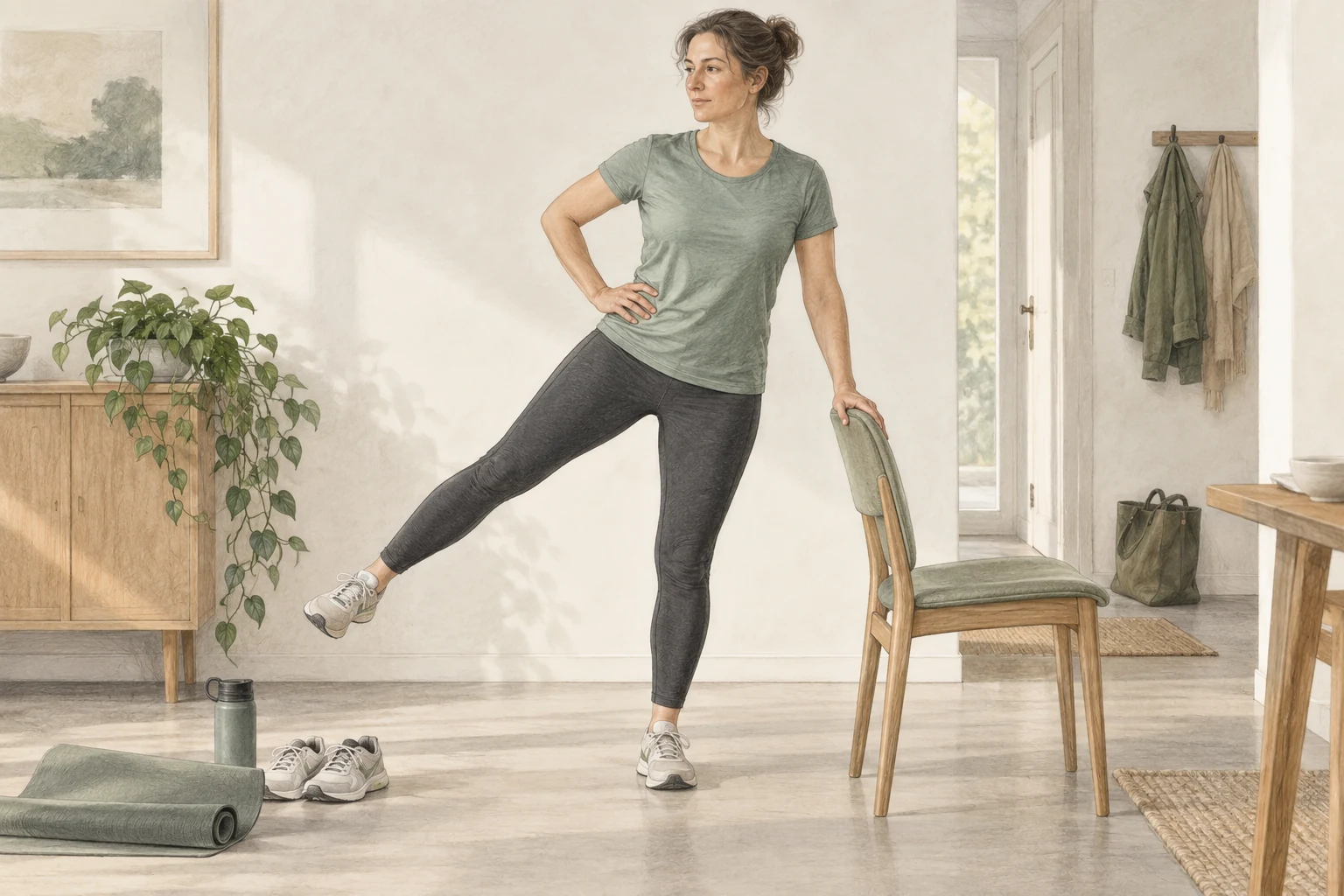
Exercises may differ in attitude, resistance and how much support you have. Not every known gluteal exercise is pleasant at any time. For example, lateral position can be sensitive before the movement begins. Then it makes sense to discuss a different position instead of constantly practicing the same pressure pain.
Cambridge University Hospitals describes a gradual build-up of strength in addition to reducing provocative compression. The practical translation is that the execution and start load must be appropriate to the irritability. A exercise card can help remember the movement; the appropriate dosage is determined individually.
Ask with each exercise what the purpose is, where you may feel effort and what response is reason to contact. Have the execution checked when you're in doubt. An exercise that remains technically complicated or painful does not have to be the only way to achieve the same training goal.
Make the load visible outside the exercise moment
You can follow a modest program and still have a hard hip day. Walking, standing, stairs and long-term postures count. The information from South Tees Hospitals discusses for example the effect of long-term hanging on one hip or with crossed legs sitting on the pressure around the sensitive area.
Create a simple overview with three columns:
| Part of the day | What does the hip ask? | What is practically customizable? |
|---|---|---|
| Work or household | Walk, stand, lift, stairs | Task order, support, variety |
| Move and practice | Walk, sports, strength program | Duration, resistance, planning |
| Rest and night | Seats and lying positions | Other attitude or support |
The table is a conversational instrument, not a list prohibited. Find the situations that clearly raise symptoms from you. An adjustment has to have meaning for your day and doesn't need to be taken over because someone else benefited from it.
Change a recognizable part at once
One example: you walk every afternoon and you also get new strength exercises. On the same day you decide to make the hike longer. When the hip plays more then, it is unclear which change was the most important. A clear structure makes the response easier to understand.
Therefore, discuss which button is currently changing: resistance, repetitions, duration, difficulty or a daily activity. Keep other major changes recognizable where possible. Daily life is not completely controlled, but unexpected hustle and bustle can be included in the interpretation of a reaction.
A heavier feeling during training is not the same as permanent deterioration. Look at the course, sleep and normal activities after that. Please agree in advance when you step back, when you repeat the same level and when you contact us. A universal pain rate can't replace those personal appointments.
Evaluate the plan if it does not yield sufficient results
Progress can become visible in longer walks, less frequent sitting, less nightly discomfort or more confidence. In addition to pain, take with you a functional goal. If you can do more with a similar limited sensitivity, it may have a different meaning than the same pain with less and less activity.
If there is insufficient change, check diagnosis, execution, load level and feasibility. Too difficult a scheme requires a solution other than an appropriate scheme that has been consistently implemented without result. Also discuss whether work, care or sleep interfere with the construction in practice.
A supplementary treatment is not automatically the next step. First, it must be clear which question is answered and what the purpose is. The starting point remains a plan that helps you function and that is critically assessed at an agreed time.
Frequently asked questions
Which exercise is best for symptoms of tendons in the hip?
There is no exercise that is the best choice for everyone. Attitude, resistance and build-up must fit your current loadability and goals. Research supports a guided combination of explanations and exercises, not just performing one popular movement.
Should I stop walking?
It doesn't have to be automatic. Look at expensive, terrain and response later or the next day. Sometimes a shorter or otherwise divided walk is more feasible. The goal is to maintain a manageable amount of movement and then appropriately expand it.
Why does racking sometimes cause more pain?
Certain stretch positions move the leg over the body line and can increase the pressure on the outside of the hip. Stretching is therefore not suitable for every phase or person. Discuss an alternative if this increases the recognizable pain.
When can the program become heavier?
If the current step is sufficiently tolerated and the implementation and day-to-day response are in line with the agreements. That's not just determined by the calendar. Make concrete what change you're trying to make and at what point you're judging if it fits well.
Sources and evidence
- Mellor and colleagues: education plus exercise in gluteal tendinopathy (2018) ↗
RCT with 204 participants supports the combination of education and exercises; different outcomes at eight and 52 weeks.
- Cambridge University Hospitals: Gluteal tendinopathy ↗
Load and compression in gluteal symptoms of tendons, posture adjustments and individual practice.
- South Tees Hospitals: Gluteal tendinopathy (GTPS) (2024) ↗
Daily postures and lateral position can give compression; support between the legs as practical adjustment.
A personal follow-up step
From insight
to an appropriate plan.
At a paid intake, we'll discuss your symptom and do targeted research. ultrasound is included at no extra cost when it makes sense. Any treatments are agreed separately.
View the initial consultation