Why lying down can be annoying
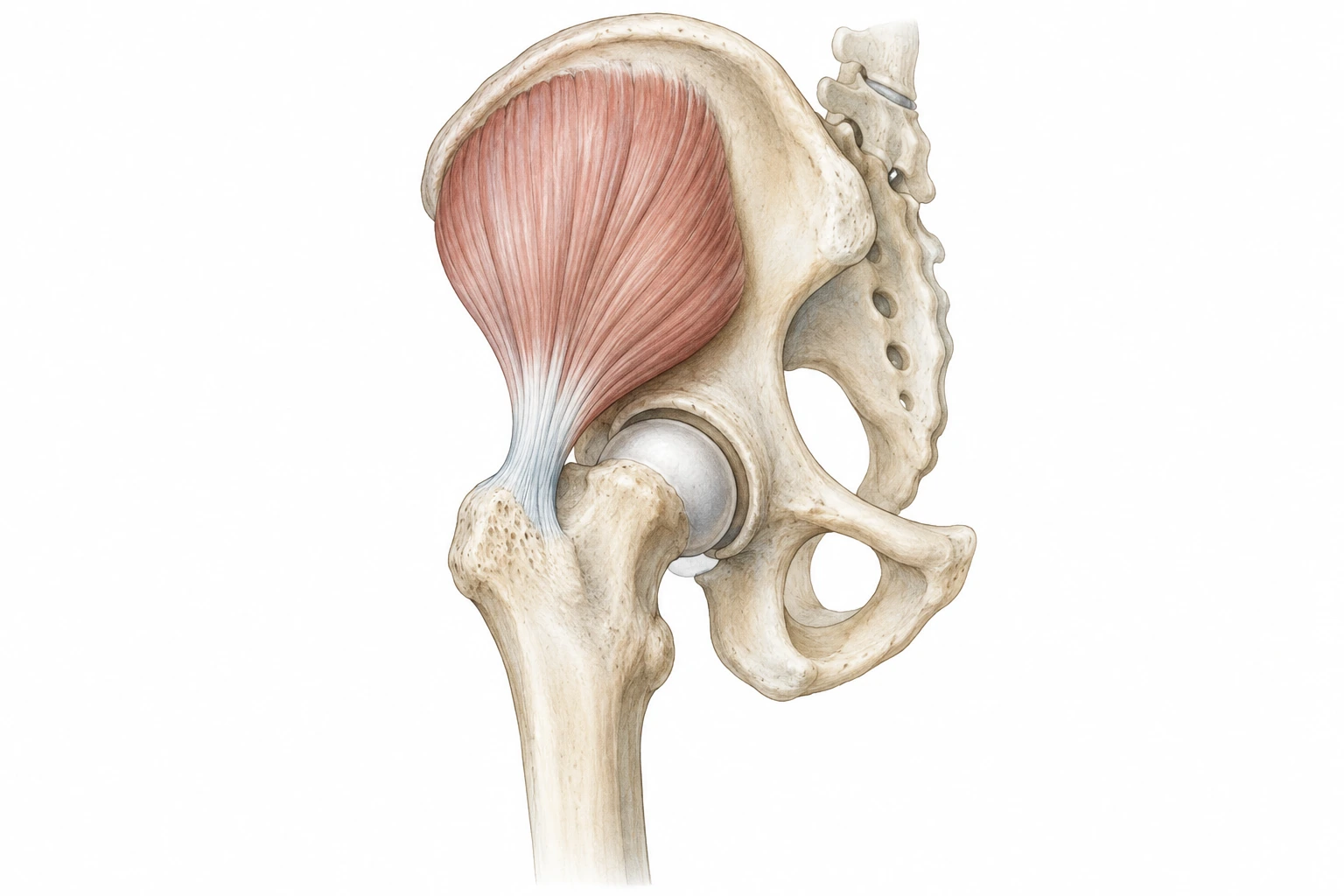
Rest doesn't mean that a painful hip is completely unburdened. When you lie on your side, part of your weight rests on the outside of the lower hip. The tendons and other structures in that region can become sensitive. That explains why walking sometimes goes reasonably while lying down is difficult.
The patients information of South Tees Hospitals also describes that the upper leg can give extra pressure around the tendons when it sinks to the other side of the body. Therefore, turning only to the non-painful side is not always enough. The position of the upper leg therefore deserves attention.
This explanation fits with gluteal tendinopathy or GTPS, but does not diagnose it. Pain deep in the groin, back symptoms or pain after a fall may ask for other questions. First discuss whether the statement is consistent with the full pattern of symptoms, especially if the hip has not yet been assessed.
Try support that really changes the attitude
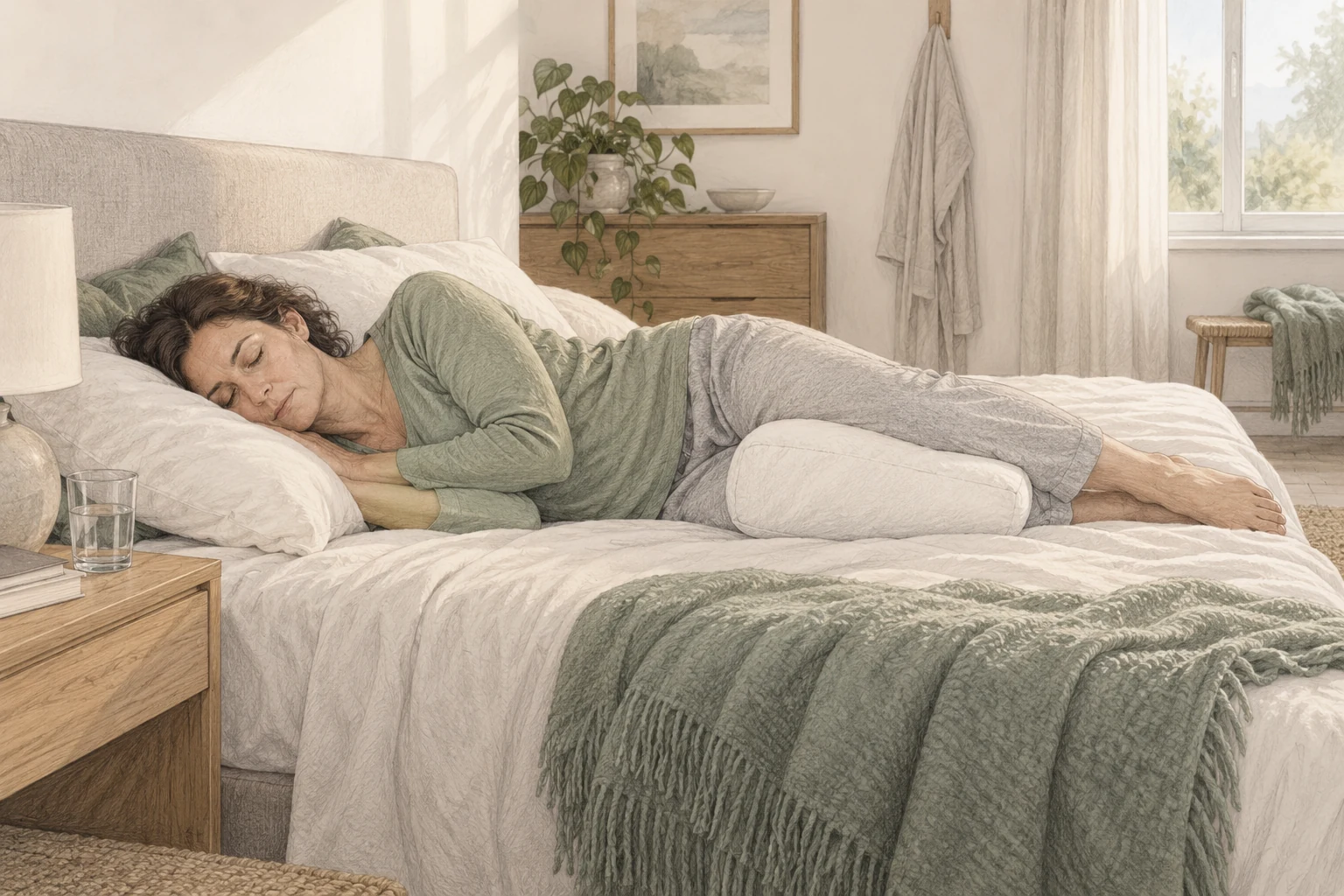
When lying on the less painful side you can try a pillow between the legs. The goal is that the upper leg remains supported and does not fall far over the lower leg. There is no universal cushion height: physique, mattress and some comfortable feels differences.
Note the result instead of a perfect photo. Does the hip feel calmer? Can you relax? Does the support remain in place without having to apply yourself all the time? An attitude that looks ideal on paper but makes sleeping impossible is not a useful solution.
Cambridge University Hospitals also mentions back position with support below the knees as a possibility, for example, when both hips are sensitive. A partially forward-looking attitude may be an alternative for some people. It's options to discuss and try, not an obligation to lie still all night.
A small sleep log with no nightly reading
You don't have to time every waking moment or fill in pain scores at night. That could be an extra focus on the problem. A short note in the morning is often enough to discuss a pattern with your clinician.
For example, use four simple questions:
- What attitude did I start the night in?
- Did I wake up from pressure in one place or from another kind of pain?
- Turn around or extra support lights?
- Was the previous day in terms of walking, standing or practicing different from normal?
Look at multiple nights instead of one outlier. A bad night after an exceptionally busy day gives information other than a pattern that continues to worsen despite practical adjustments. The log helps the call, but cannot determine the cause on its own.
Also look at the hours before going to bed
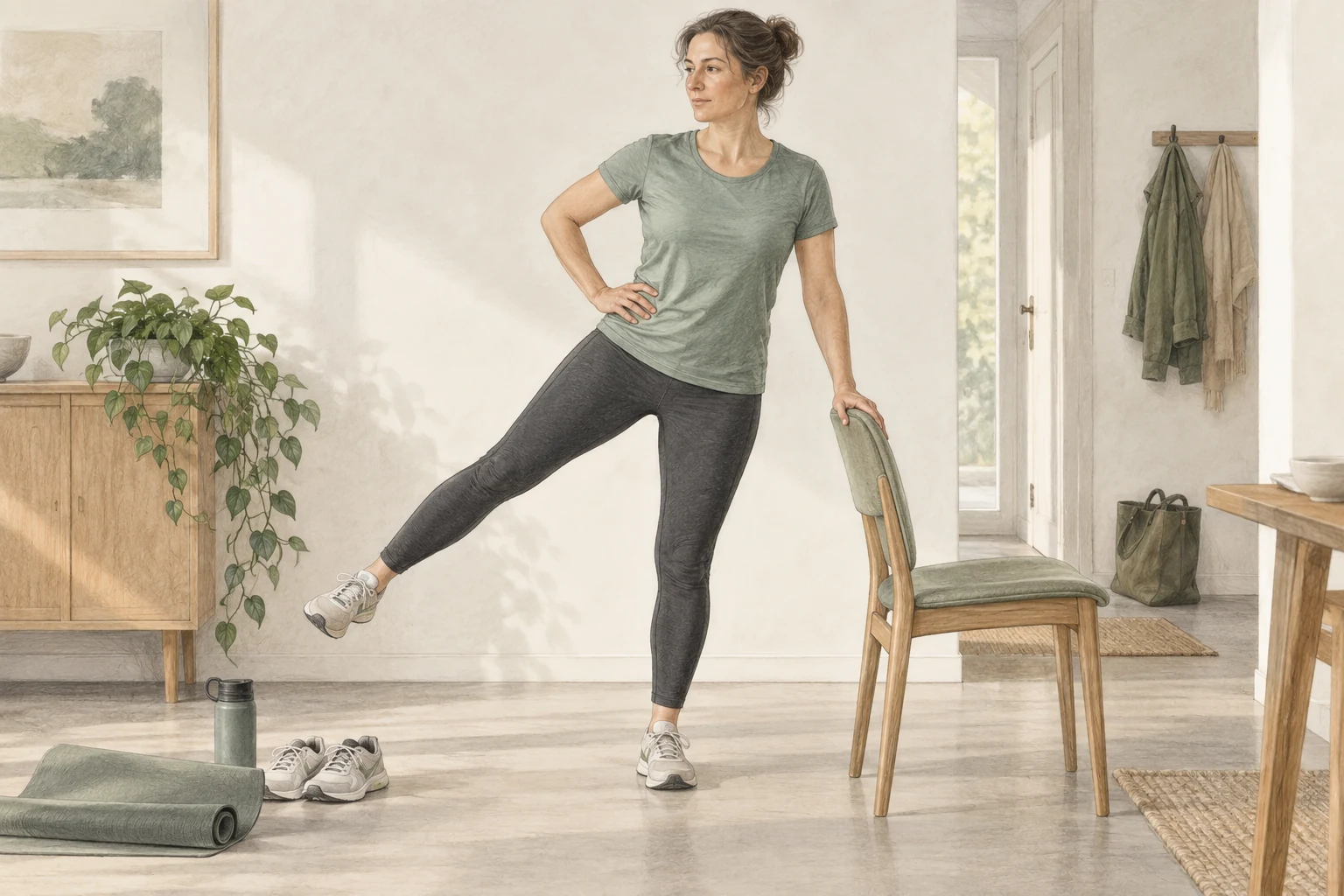
The night doesn't start when you put your head down. A long walk, a lot of stairs or a hard practice session for you can be part of the total load. Long-term sitting in one position can also be relevant. That doesn't mean that you have to cancel all evening activities; it means that you watch the night and day together.
One example: you always do your exercises right in front of bed and especially then notice unrest on the outside of the hip. You can discuss with the clinician whether execution, load or timing requires adjustment. Just buying a new mattress doesn't solve that question. The other way around, a quiet training day can still contain an uncomfortable lying position.
Preferably select a clear change, such as another support or an adapted distribution of a burdensome activity. If you enter five pillows, new exercises and a completely different daily schedule at the same time, it is more difficult to judge what makes a difference. Practical simplicity helps to sustain the change.
A pillow supports the plan, but does not replace it
Less pain by adjusting an attitude can be valuable for your night's sleep. That doesn't mean that the hip can handle all the desired activities again. The treatment plan may also consist of gradual training and agreements on daily load. Therefore, discuss sleep as your own recovery goal next to walking, working or sports.
A useful goal is, for example, to sleep more comfortably or to wake up less often due to hip pain. That's more concrete than sleeping the job better. If an adjustment helps, you don't have to stop immediately as soon as one night is right; discuss later how to change between postures more freely.
A special product is not necessarily necessary. Start with what is available and safe to use. For an expensive mattress or a special tool it is wise to first examine whether the problem is indeed related to pressure and support. No sleep product can replace a reliable diagnosis or restoration promise.
If sleep disturbance causes contact
Sustained hip pain that limits your sleep or normal activities is, according to the NHS hip pain information reason to seek medical attention. In the Netherlands you can contact the general practitioner. Please indicate in particular whether the pain changes with posture, or increases and what other symptoms are present.
Contact us urgently in case of sudden severe hip pain, a warm or swollen hip with fever or feeling sick, or severe pain after a fall in which you cannot stand or walk. That's a different pattern than a sensitive side that calms down after turning. In case of unexplained or changing symptoms, do not just try new sleep postures.
Frequently asked questions
Do I always sleep on my back?
No. Backing is one possibility when side lying gives symptoms, but not for everyone comfortable. Support between legs at side lying can be an alternative. Choose a viable posture and discuss permanent pain or new symptoms with a treatment.
Why does the upper hip hurt?
The upper leg can fall over the body line, changing the position around the tendons. A pillow can support the leg. This is a possible explanation for symptoms from the tendons in the hip, but pain on both sides deserves a broader assessment when persisting.
Is nocturnal hip pain always serious?
No. Pain that is clearly related to pressure in lateral position occurs when symptoms are made by the tendons in the hip. However, permanent sleep disturbance should be discussed, especially with a new or unexplained pattern. Fever, feeling sick or severe symptoms after a fall require medical help more quickly.
Does stretching help before bedtime?
Stretching is not automatic. Some postures pull the leg over the body line and can provoke the outside of the hip. Let us assess which movements fit for you and discuss whether your evening program needs to be modified.
Sources and evidence
- South Tees Hospitals: Gluteal tendinopathy (GTPS) (2024) ↗
Daily postures and lateral position can give compression; support between the legs as practical adjustment.
- Cambridge University Hospitals: Gluteal tendinopathy ↗
Load and compression in gluteal symptoms of tendons, posture adjustments and individual practice.
- NHS: Hip pain in adults (2025) ↗
Medical assessment in sleep-limiting hip pain, acute symptoms after trauma and symptoms with fever or feeling sick.
A personal follow-up step
From insight
to an appropriate plan.
At a paid intake, we'll discuss your symptom and do targeted research. ultrasound is included at no extra cost when it makes sense. Any treatments are agreed separately.
View the initial consultation