Why the term bursitis doesn't explain everything
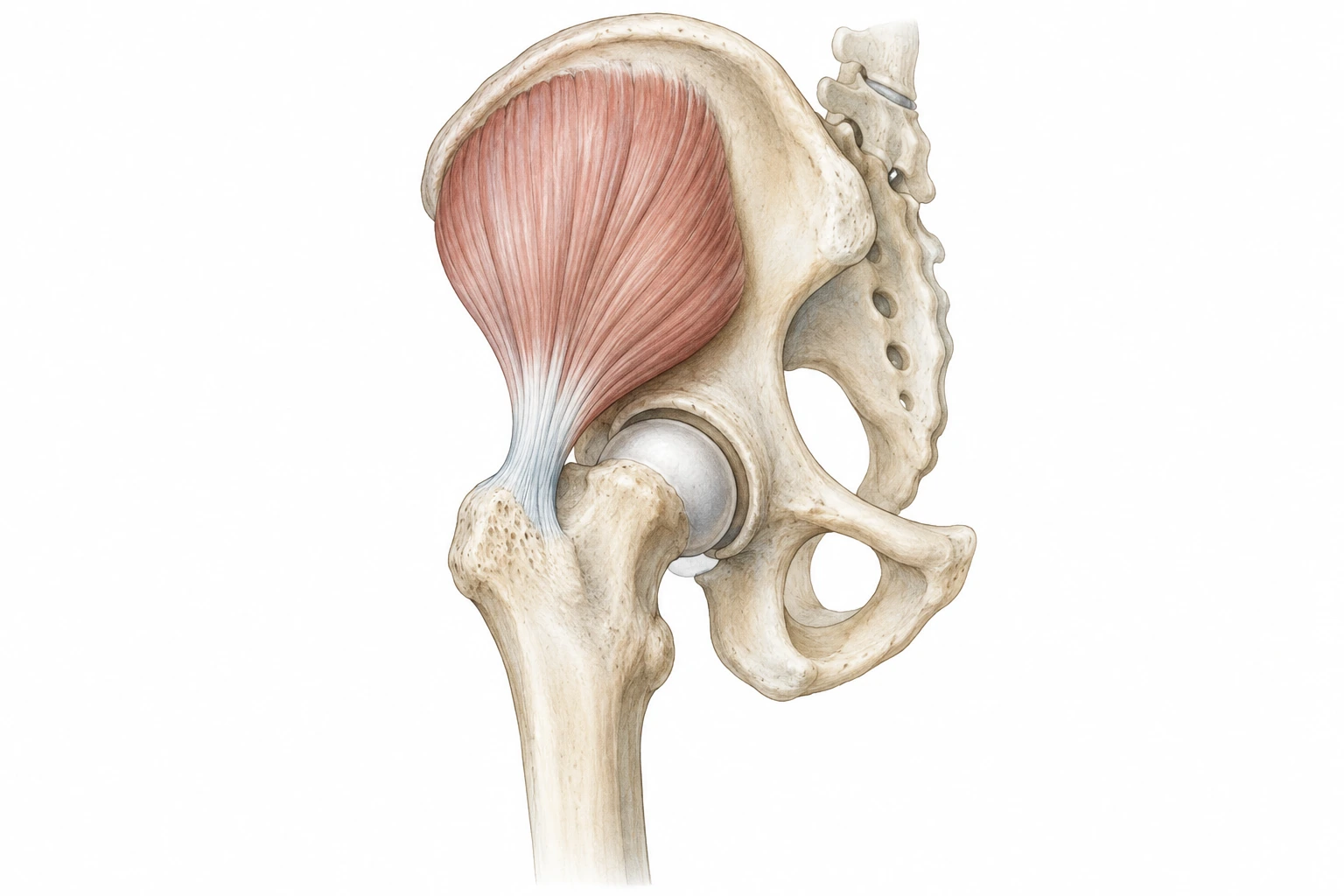
On the outside of the upper leg is a bone protrude where tendons of the gluteal muscles attach. Bursae are also in that area. When this area hurts, a bursitis is quickly mentioned. This name may be too limited: symptoms from tendons can be an important part of the same problem.
Cambridge University Hospitals explains that the gluteal tendons are often involved in lateral hip pain and that an isolated problem of a bursa is not the obvious explanation. GTPS is therefore a useful combination term. It says where and how the symptom occurs, without one tissue having the same share in everyone.
For the patient, this makes a difference. If you think only an inflamed bag should disappear, it is less clear why stress adjustment and muscle training are discussed. In a tendon-related symptom, the plan also deals with what should be tolerated during walking, standing and lying.
What daily situations give information?
Symptoms on the outside of the hip are often noticeable when lying on your side, walking, climbing stairs or standing on one leg for a long time. Pain may extend down the outside of the thigh. This pattern can guide assessment, but no single feature confirms the diagnosis.
Notice the difference between pressure and movement. Does lying on the painful side hurt? Or is the symptom coming after a long walk? And is it also sensitive when you lie on the other side with the upper leg down forward? Such details help to understand which daily situations require attention.
Also indicate pain in groin, radiance from the back, tingling, loss of strength or a prior fall. Those aren't automatic evidence of another condition, but they can broaden the assessment. A recognizable sensitive spot on the outside should not make the rest of the story invisible.
What's a clinician investigating?
An assessment begins with the origin, the pain site and the consequences for your functioning. Afterwards, the clinician can look at walking, movement of hip and back, strength and response to targeted tests. The findings are interpreted as a whole. The aim is not to incite as much pain as possible, but to find an appropriate explanation and approach.
There's no need for a scan in every situation. Cambridge's patient information indicates that the diagnosis is usually based on symptoms and physical examination. ultrasound or MRI can be used in addition to a targeted demand. Then discuss what would change the results and how the images will be linked to your symptoms.
A practical preparation list for that conversation is:
- Point out the main pain site and describe any appearance.
- Note which activity or attitude is the most restrictive.
- Please indicate changes in walking distance, work or sport.
- Describe whether sleep is disturbed and in what position.
- Bring previous reports and an overview of tried treatments.
Why explanation and practice are examined together
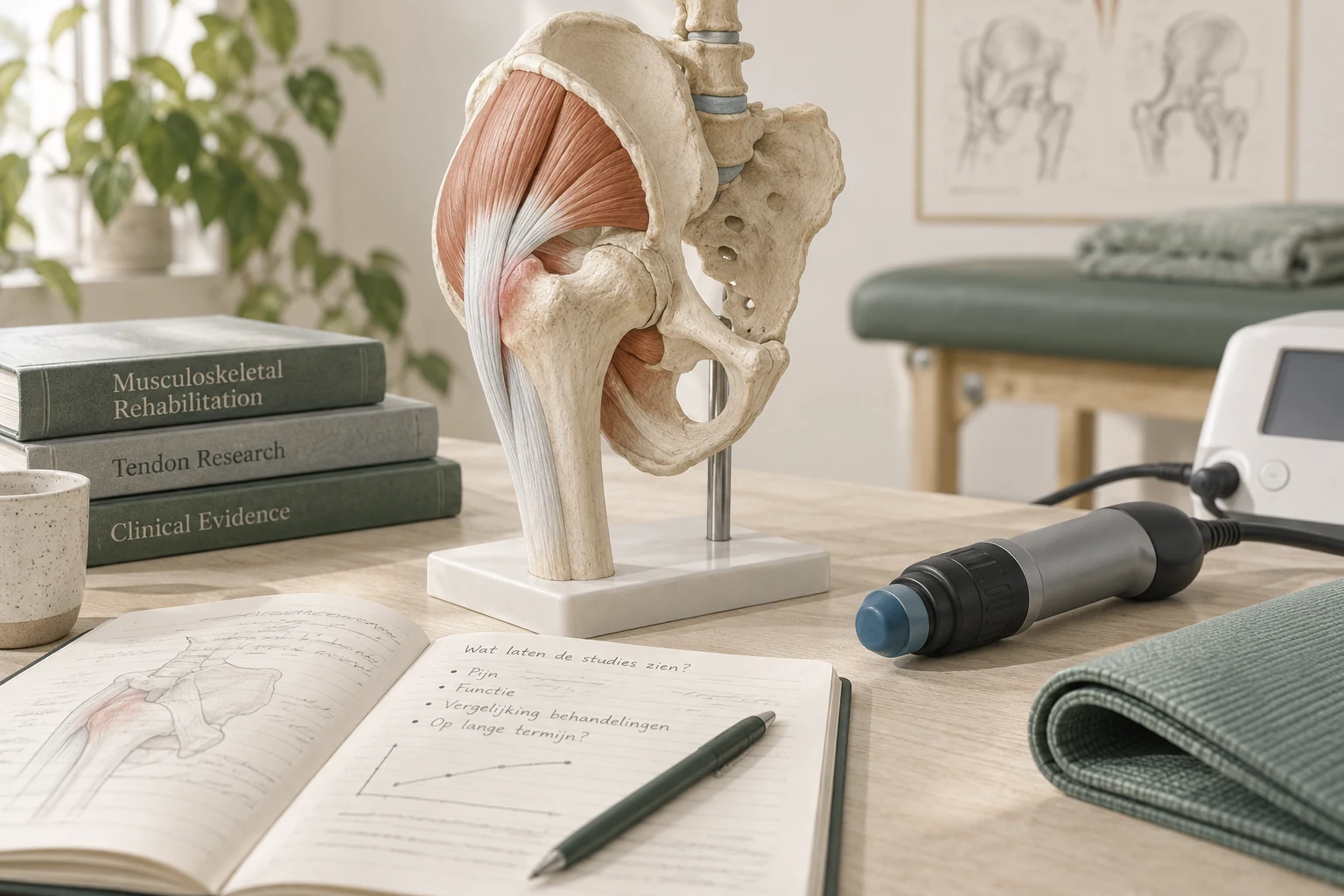
In a randomised study with 204 participants Education plus exercises were compared with corticosteroid injection and waited. The combination of explanation and practice gave more favourable outcomes for pain and experienced improvement than the other approaches after eight weeks. After 52 weeks, the improvement experienced remained more favourable than after injection, while the pain intensity did not differ between those two groups.
This supports an active treatment plan, but does not offer a recovery guarantee. The study tested a guided combination: information about load and a specific exercise program. It does not follow that one loose gluteal exercise is sufficient for everyone or that each injection would be wrong.
For your own plan is especially relevant whether you understand what you are adjusting, what you are training and how you assess the response. Ask for an explanation that fits your daily problem. For someone who is especially awake, another first practical goal is conceivable than for someone who gets symptoms after hill walks.
Start with an overview of the whole day
One example: you have a sitting profession, walks at night and sleeps on your side. It may seem like the walk is the only load. However, long sitting in the same position and pressure during sleep can also be relevant. A plan that only changes the walking distance lacks possible useful adjustments.
Therefore, make a simple division between moving, long postures and sleep. Then choose one or two changes to discuss and try out. Changing everything at the same time makes it harder to see what helps and can make your daily life unnecessarily complicated.
Adapting does not mean that any attitude is now prohibited. It's about reducing situations that are currently clearly provoking, while maintaining a viable basis of activity and training. The build-up is supposed to fit back into what you want to be able to do.
When is new or wider research needed?
If a plausible plan does not improve, the diagnosis should be re-examined. Discuss whether the exercises were feasible, the load was correct and the pain remained the same. New symptoms or another pattern sometimes require a different investigation, rather than just more treatment of the known place.
The NHS calls severe hip pain after a fall with unable to stand or walk a reason for immediate medical assessment. You should also discuss unexplained, persistent pain that does not change with posture or load, or pain associated with fever and feeling sick, with the GP. Side-position pain that clearly decreases after turning around has a different pattern, but also deserves a targeted assessment in the event of permanent discomfort.
Frequently asked questions
Are GTPS and symptoms from the tendons in the hip the same?
GTPS is a collective name for pain surrounding the bone protrusion on the outside of the hip. Gluteal tendinopathy describes involvement of the buttocks. The terms overlap, but lay a different accent; research needs to clarify what suits your situation.
Does lying down means the bursa's infected?
No. Pressure in lateral position may also be sensitive to tendon-related symptoms. The reaction to lying is useful information, but does not make it clear exactly which tissue is responsible. Also discuss your reaction to walking, standing and other attitudes.
Can an injection solve the problem immediately?
An injection can be discussed in some situations, but is not a guarantee of lasting recovery. Research also supports education and exercises. The choice depends on diagnosis, previous approach, goals and the advantages and disadvantages you discuss with the treatment provider.
Should I have an ultrasound done right away?
Not automatically. First, the story and physical examination are important. An ultrasound can be useful if there is a targeted diagnostic question and the outcome can have consequences for the plan. A deviant image alone doesn't tell how much you can burden.
Sources and evidence
- Cambridge University Hospitals: Gluteal tendinopathy ↗
Gluteal tendons and lateral hip pain, association with bursa, clinical assessment and load adjustment.
- Mellor and colleagues: education plus exercise in gluteal tendinopathy (2018) ↗
RCT with 204 participants: education plus training compared to injection and waiting; outcomes after eight and 52 weeks.
- NHS: Hip pain in adults (2025) ↗
Medical assessment in sleep-limiting hip pain, acute symptoms after trauma and symptoms with fever or feeling sick.
A personal follow-up step
From insight
to an appropriate plan.
At a paid intake, we'll discuss your symptom and do targeted research. ultrasound is included at no extra cost when it makes sense. Any treatments are agreed separately.
View the initial consultation