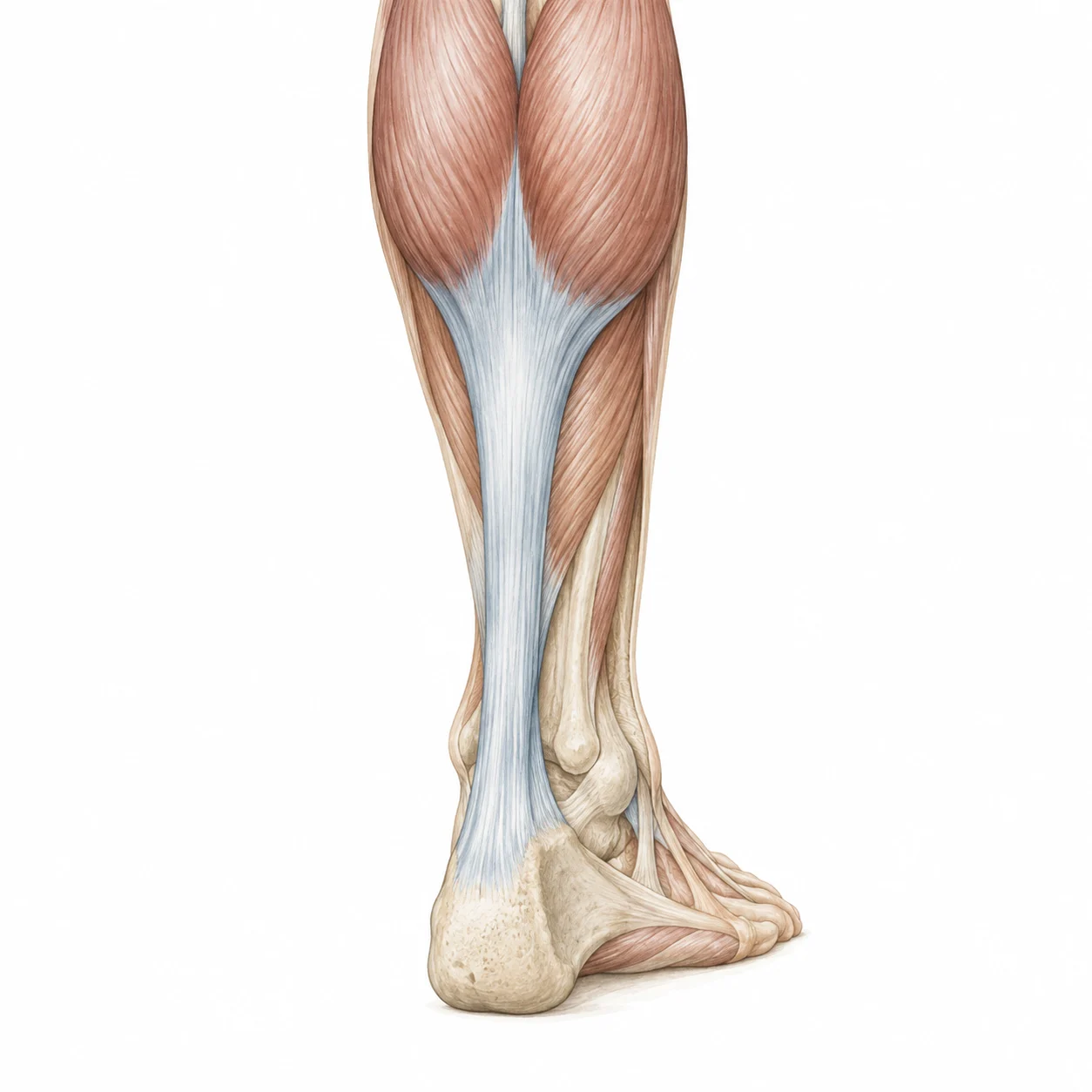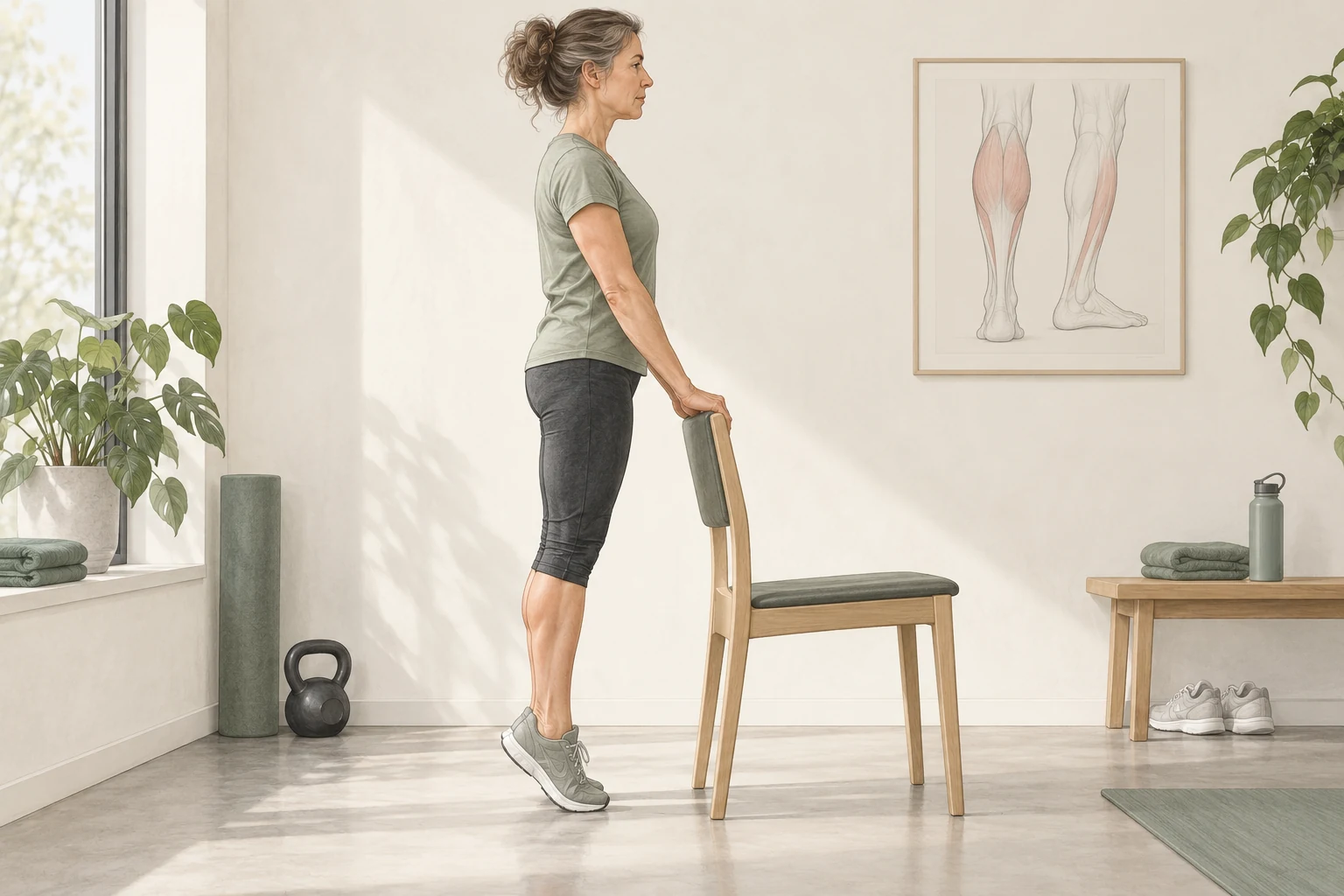
First get the active base clear
The Dutch Treatment guideline starts with explanation, load advice and constructive calf power. Additional options may be discussed in the event of insufficient improvement after a structural process. The uncertainty about the additional effect should be explicitly taken into account.
An additional option is not the same as a necessary step. First, look at the actual program. Was it clear which exercises were intended, did the load fit the working week and could the plan be carried out? If the main problem is an unfeasible planning, an additional treatment does not have to solve it. The conversation should therefore go beyond the observation that the tendon has been hurting for a long time.
Attachment and middle piece request a reading of your own
Research into the middle part of the Achilles Tendon cannot simply be used to give the same expectation for pain on the heel bone. The technique used, institutions, comparison group and other treatment also differ between studies. A general success rate for Achilles tendon' hides this variation.
In case of a proposal, ask which patient group is involved in the underlying study. Is the location similar? Were there long-term symptoms? Did participants get any exercises? These details help determine how relevant a result is. They do not make the choice entirely predictable, but prevent a favourable outcome from another situation being presented as a personal promise.
New investigation on attachment charges is reluctant
One randomised study published in 2025 compared radial shockwave with sham treatment in 76 adults with longer-standing attachment symptoms. Both groups received the same education and exercises. At six and twelve weeks, no convincing difference between the groups was found for the results studied.
The main message is the lack of proven additional profit in this scheme. That doesn't prove that no individual can ever make a difference. There is no reason to automatically claim that focused shockwave works better. Such a ruling requires its own appropriate justification. The technique and diagnosis used must remain visible in the explanation.
What does insecure evidence mean for your decision?
In uncertainty, practical consequences become extra important: costs, time, possible sensitivity and what you hope to win. A choice can only be considered if it does not add or improve the basic plan is discussed first. You don't need to be pre-convinced that a treatment works to ask targeted questions.
An example: you can now walk well, but fast sports load is not yet possible. Then the question is whether your current structure prepares that fast load sufficiently. A temporary change in pain after a session doesn't answer that automatically. The intended benefit of shockwave should be consistent with the remaining limitation and balanced against other logical adjustments.
Make a proposal verifiable
Take these questions with you to the treatment interview:
- Which diagnosis and pain location are the reasons for the proposal?
- Which elements of basic care have been demonstrated and evaluated?
- What study or guideline supports the expected additional profit in this situation?
- Is that source about the same technique and a similar patient group?
- What are we going to do about exercises and load?
- What costs, moments of evaluation and stopping criteria do we agree on?
Write down the main goal in daily words. For example, you can walk a particular piece or repeat a training part. This means that the assessment later is less dependent on the feeling immediately after the treatment or the expectation that a device evokes.
No effect is information for a new consideration
A treatment pathway should have room for the outcome that the additional treatment does not add enough. Then a longer package or higher intensity is not automatically required. Review the diagnosis, total load and target choice. Sometimes it turns out that a different restriction demands more attention than the tendon spot that was initially central.
Also discuss temporary reactions and what to do in case of an unexpected course. Do not change all exercises or sports activities independently as soon as a session feels different. A clear joint approach distinguishes between a short response and a sustained deterioration. The value of a careful shockwave conversation is precisely in that consideration, even when the conclusion is that another route fits better.
Frequently asked questions
Does the guideline recommend shockwave for every Achilles Tendon?
No. The guideline mentions it as a possible supplement after insufficient impact of active basic care and calls for uncertainty to be discussed. The location, the route followed and the individual targets remain decisive for the assessment.
What does the 2025 research say about radial shockwave?
In adults with long-term attachment symptoms, no demonstrable additional improvement was found compared to sham when both groups received the same education and exercises. That result should be taken into account in the conversation. It's not evidence for any other device or technique.
Can focused shockwave bypass the outcome of that investigation?
You can't just conclude that. A study of radial treatment does not provide positive evidence of focused treatment. This requires research that fits in with technique, diagnosis and outcome. More technical possibilities do not automatically mean more clinical profit.
Should I go on when a few sessions don't change much?
Ask for an evaluation of the agreed goal, the response and the basis for further consideration. Staying effect does not automatically justify additional sessions. It may be more useful to re-examine the basic plan, diagnosis or any other follow-up step.
Sources and evidence
- guideline Achilles tendinopathy — Conservative treatment options (2020) ↗
Basic treatment and uncertain additional value of, among others, shockwave.
- Alsulaimani et al. — Radial shockwave versus sham for inertial Achilles tendinopathy (2025) ↗
RCT with 76 participants: no demonstrable added value of radial ESWT in addition to equal education and practice therapy at 6 and 12 weeks.
A personal follow-up step
From insight
to an appropriate plan.
At a paid intake, we'll discuss your symptom and do targeted research. ultrasound is included at no extra cost when it makes sense. Any treatments are agreed separately.
View the initial consultation